Global buyers need pipe fittings that perform reliably across water, energy, construction, and industrial systems. Supplier selection is not a simple price comparison. Material grade, pressure rating, dimensional accuracy, corrosion resistance, and delivery consistency can all affect project outcomes. Small details matter.
The International Energy Agency’s World Energy Investment 2024 report estimated that global energy investment would exceed US$3 trillion that year, with about US$2 trillion directed to clean energy. This is not a direct measure of pipe fittings demand, but it signals the scale of infrastructure investment shaping supply chains. For buyers, the practical question is whether a supplier can support that work with documented specifications, dependable production, and responsive logistics.
This guide introduces 10 pipe fittings suppliers for global buyers and offers a starting point for comparison. It considers product range, materials, manufacturing capabilities, quality documentation, export experience, and customer support. Certifications and test records should be checked against the project’s requirements; a polished catalog alone is not proof. Supplier information can also change, and public listings may leave important gaps. That is worth remembering. Use the shortlist to guide due diligence, then confirm current capacity, lead times, traceability, and applicable standards directly with each supplier. A ranking can narrow the search, but careful verification still belongs to the buyer.
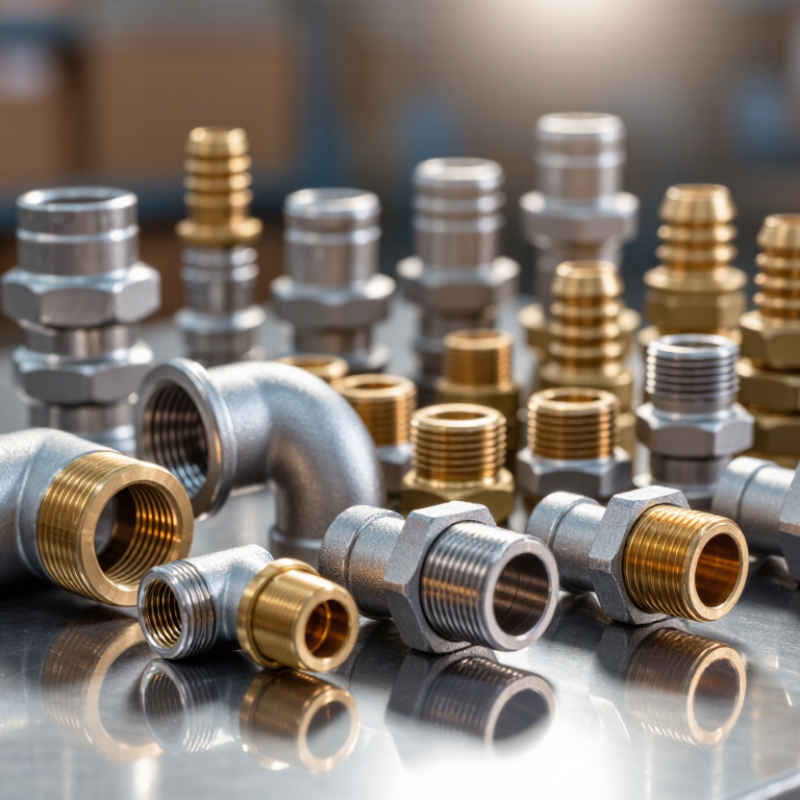
Pipe fittings are small, but they determine how reliably a piping system connects, changes direction, branches, or transitions between sizes. Elbows, tees, reducers, and couplings must match the pipe’s dimensions, material, pressure rating, and operating temperature. A mismatch can mean leaks, rework, or a delayed installation. Small parts, large consequences.
Their role extends beyond the job site. Suppliers coordinate materials, machining, inspection, packaging, and shipping across borders. The World Bank’s 2023 Logistics Performance Index report covers 139 economies and reports an average international shipment time of 44 days. About 60% of delays occur at ports, airports, and other hubs. Those delays can disrupt project schedules when a fitting is missing or its documentation does not match the order. Even experienced teams can over-trust a familiar drawing; that assumption deserves a second look.
Tips: Confirm dimensions, material grade, pressure class, and applicable technical standards before ordering. Request traceability and inspection records, and check that labels match the packing list. For long routes, discuss protective packaging and delivery buffers with the supplier. A quick review can prevent an expensive wait.
The profiles below describe common supplier types, not named companies or a ranked list. Standards and material grades are examples; confirm the applicable edition, dimensions, certification, and service requirements for each order.
| No. | Supplier profile | Typical products and materials | Relevant standards or examples | Global supply-chain strengths | Key buyer checks |
|---|---|---|---|---|---|
| 1 | Butt-weld fitting manufacturer | Elbows, tees, reducers, and caps; commonly carbon, stainless, or alloy steel. | ASME B16.9 covers factory-made wrought butt-welding fittings. ASTM A234, A403, and A420 cover commonly specified material groups for different service conditions. | Useful for process plants, power projects, and pipeline packages requiring coordinated size ranges and material traceability. | Confirm schedule or wall thickness, material grade, heat-number traceability, inspection documents, and project-specific testing. |
| 2 | Forged fitting specialist | Socket-weld and threaded elbows, tees, couplings, unions, and branch outlets; carbon, stainless, and alloy steel. | ASME B16.11 covers forged socket-welding and threaded fittings. ASTM A105, A182, and A350 are examples of material specifications used for different applications. | Suitable for compact piping systems, instrumentation connections, and specified high-pressure piping components. | Check pressure class, connection type, material specification, thread form where applicable, and temperature-service suitability. |
| 3 | Stainless and corrosion-resistant alloy supplier | Butt-weld, forged, and specialty fittings in stainless steel and selected corrosion-resistant alloys. | ASTM A403 is commonly used for wrought austenitic stainless-steel piping fittings; applicable product dimensions depend on fitting type and specification. | Can support chemical processing, water treatment, food-related utilities, and other applications where corrosion resistance is important. | Verify alloy grade, corrosion-service compatibility, surface finish if required, and material test reports. |
| 4 | High-pressure forged fitting supplier | Forged socket-weld and threaded fittings, including fittings ordered by pressure class. | ASME B16.11 includes Class 2000, 3000, and 6000 threaded fittings and Class 3000, 6000, and 9000 socket-welding fittings; applicability depends on fitting type and size. | Relevant to compact, higher-pressure piping assemblies where the design specifies forged fittings and compatible end connections. | Do not treat a class designation as a universal pressure rating; confirm design pressure, temperature, size, material, and governing code. |
| 5 | Low-temperature carbon-steel fitting supplier | Butt-weld and forged fittings specified for low-temperature service, subject to project design requirements. | ASTM A420 covers wrought carbon and alloy steel fittings for low-temperature service; the specified grade and testing requirements matter. | Can serve energy, refrigeration, and other projects that specify impact-tested materials for low-temperature conditions. | Check minimum design temperature, specified grade, impact-test requirements, heat treatment, and documentation. |
| 6 | Large-diameter and line-pipe fitting manufacturer | Large-diameter elbows, tees, reducers, and other butt-weld fittings, often specified for pipeline or infrastructure projects. | ASME B16.9 and MSS SP-75 are examples of dimensional or product standards used for particular fitting types and applications; ASTM A860 covers high-strength wrought fittings for specified pipeline service. | May support project-based orders with defined diameter, wall thickness, material, and inspection schedules. | Confirm the governing standard, outside diameter, wall thickness, end preparation, grade, and project inspection plan. |
| 7 | Hygienic and sanitary fitting supplier | Stainless-steel fittings and connections designed for hygienic process systems, with finish options defined by the application. | ASME BPE is a standard for bioprocessing equipment and systems that includes requirements relevant to hygienic piping components. | Relevant to biopharmaceutical, food, and other process systems with defined cleanliness and surface-finish requirements. | Specify connection type, surface finish, material, cleaning requirements, and the exact standard or customer specification. |
| 8 | PVC and CPVC fitting manufacturer | Molded or fabricated thermoplastic fittings, including socket and threaded types for compatible PVC or CPVC systems. | ASTM D2466 and D2467 cover specified PVC fitting types; ASTM F439 covers CPVC socket-type fittings. Select the standard that matches the product and system. | Useful for compatible water, drainage, and chemical-service applications where the system design permits thermoplastic components. | Check resin type, schedule or pressure class, chemical compatibility, temperature limits, joining method, and local approvals. |
| 9 | HDPE fusion fitting manufacturer | Butt-fusion and socket-fusion fittings, including elbows, tees, reducers, and transition fittings for compatible polyethylene systems. | ASTM D3261 covers polyethylene plastic fittings for butt-fusion joining; ASTM D2683 covers socket-type polyethylene fittings. | Supports water, utility, and infrastructure networks designed for polyethylene pipe and fusion joining. | Confirm resin designation, dimensional compatibility, joining procedure, pressure design, and applicable local utility requirements. |
| 10 | Regional stockist and project distributor | A mixed inventory of fittings sourced from manufacturers; product range varies by market and stock plan. | Standards depend on each supplied item; verify the original product specification rather than relying on a general catalog description. | May consolidate multiple product types, manage local inventory, and coordinate delivery for maintenance or project orders. | Request item-level traceability, origin and conformity documents where required, stock confirmation, and clear substitution approval. |