Call Us

(905) 670-0113

Who Are the Top Pipe Fittings Manufacturers in China?

China’s pipe fittings industry spans large export manufacturers, specialist workshops, and integrated producers. Their catalogs may look similar. The differences often appear in material traceability, dimensional consistency, testing records, and delivery discipline.

A fitting must do more than match a drawing. It must hold its dimensions, withstand the specified service conditions, and arrive with records buyers can verify. A small mismatch at a flange face can slow installation. A missing heat number can complicate inspection. Details matter.

Engineering author Henry Petroski is not a pipe fittings specialist, so I won’t attribute an invented quotation to him. The guiding line for this article is an editorial principle, not a sourced quote: “Trust the evidence behind every fitting.” It reflects a practical buyer’s concern.

This guide compares Chinese manufacturers through useful questions. Which materials and product ranges do they offer? What inspection and testing evidence can they provide? How clearly do they explain standards, customization, lead times, and quality controls? Factory photos can help, but they are not proof on their own. Ask for documents. Check the details.

No ranking can fit every project. A strong supplier for a water-treatment plant may not suit a high-pressure process line. Buyers should confirm technical requirements directly and review current documentation before placing an order. This comparison aims to make that work clearer, though supplier information can change. Some gaps may remain.
Who Are the Top Pipe Fittings Manufacturers in China?

Understanding Pipe Fittings and Their Role in Industrial Systems

Pipe fittings connect straight runs, change direction, branch flow, and provide points for isolation or maintenance. Elbows, tees, reducers, flanges, and couplings may look modest, but each affects pressure loss, alignment, and access. Small parts. Big consequences. An incorrect size or material can cause stress, leakage, or difficult replacement, especially near pumps, hot lines, and vibrating equipment. Selection should reflect the fluid, pressure, temperature, corrosion exposure, and joining method—not appearance.

The U.S. Department of Energy’s Improving Steam System Performance: A Sourcebook for Industry reports that steam systems account for about 45% of fuel burned by U.S. manufacturers. That figure is not a fittings-only measurement. Still, it shows why dependable joints and accessible maintenance matter in energy-intensive plants. ASME B31.3 provides widely used requirements for process piping design, materials, fabrication, and inspection. One caveat: no fitting can compensate for poor alignment or an unsuitable installation. Drawings may look perfect; real sites rarely do.

Tips: Match material and pressure ratings to line conditions. Check dimensions before ordering, then inspect joints after installation. Keep records.

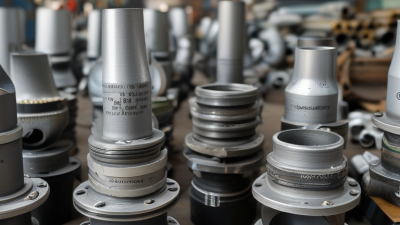
How to Evaluate Pipe Fittings Manufacturers in China

Choosing a Chinese pipe fittings manufacturer starts with evidence, not catalogue size. The World Steel Association’s World Steel in Figures 2025 reports that China produced 1,005.1 million tonnes of crude steel in 2024. That scale supports a broad supply base, but it does not prove any fitting’s quality. Treat capacity claims cautiously. Request material certificates with traceable heat numbers, then check that markings match the delivered elbows, tees, and reducers. Ask how the factory controls wall thickness, ovality, and dimensional tolerances.

For dimensions and pressure ratings, compare product documents with the relevant standards, such as ASME B16.9 or EN 10253. Require inspection records, including chemical analysis, tensile results, and non-destructive testing where specified. For welded fittings, ask how weld procedures and operator qualifications are documented. A supplier should explain what happens when a batch fails inspection, not just show a polished certificate. I would not treat a clean showroom as evidence; that is an easy mistake. Compare sample reports against independently selected production pieces, and confirm that the same controls apply to repeat orders.

Profiles of China’s Leading Pipe Fittings Manufacturers

China’s leading pipe fittings manufacturers often specialize rather than serve every application equally. Some focus on forged fittings for high-pressure systems, while others produce stainless steel elbows, tees, and reducers for demanding environments. A third group handles large-diameter or made-to-order components. These differences matter. A capable supplier should explain its material grades, dimensional tolerances, and production limits in plain terms.

A useful manufacturer profile includes more than product range. Buyers can ask how incoming steel is checked, whether heat numbers remain traceable, and which inspections occur before shipment. For a sample order, compare measured wall thickness and end preparation with the drawing. Ask for relevant test records, but verify that they match the actual batch. Paperwork alone is not proof.

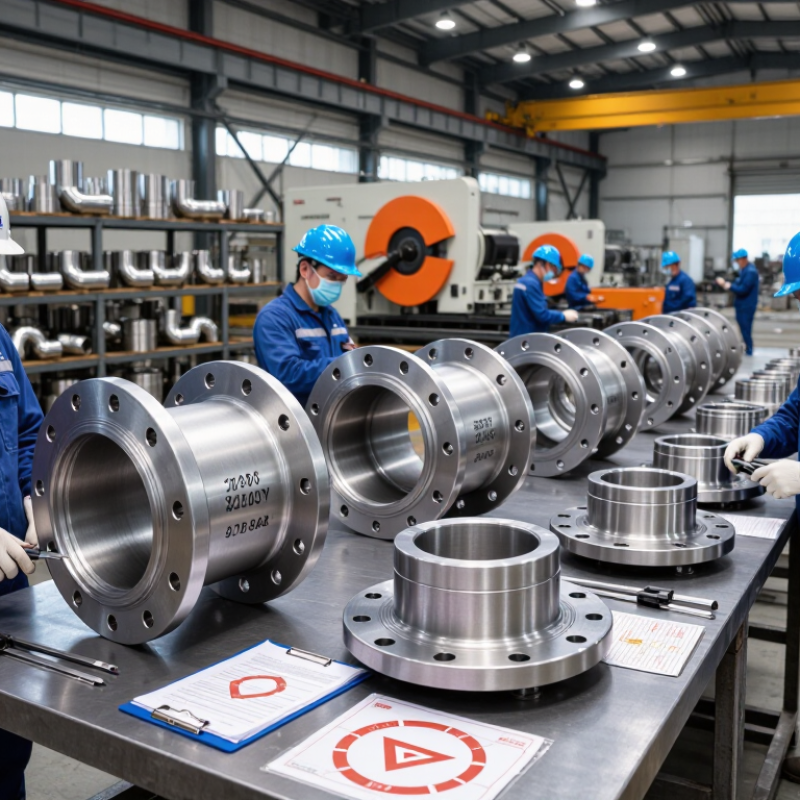
Factory visits can reveal practical details: organized storage, calibrated measuring tools, and clear separation of materials. Yet a polished showroom tells little about routine production. This is easy to overlook. Smaller suppliers may offer flexible customization, though delivery consistency can vary. Larger facilities may provide broader capacity, but response times are not always quick. A profile should therefore describe demonstrated capabilities, not just impressive equipment or export claims.

Comparing Manufacturers by Products, Standards, and Export Reach

Comparing Chinese pipe-fitting manufacturers requires more than a catalog review. Check whether each supplier makes elbows, tees, reducers, flanges, and forged fittings in the sizes your project needs. Then examine material traceability, test records, and stated standards. ASTM A234 covers wrought carbon and alloy steel fittings for moderate and high temperatures; ASME B16.9 specifies dimensions for factory-made butt-welding fittings. Ask for certificates tied to actual production lots, not generic sample files. Small detail. A polished brochure cannot prove consistent wall thickness.

Export reach offers another useful comparison. The World Steel Association’s World Steel in Figures 2025 reports that China produced 1,005.1 million tonnes of crude steel in 2024, about 53% of global output. This signals a large upstream steel base, not guaranteed fitting quality. For trade context, UN Comtrade tracks iron and steel pipe fittings under HS 7307. Compare a supplier’s destination markets with that trade category, then verify shipment records, packaging, and delivery performance directly. Export volume alone can mislead. Some buyers also overlook whether a factory can provide the inspection documents their own project requires. That gap matters.

How to Select a Suitable Chinese Pipe Fittings Supplier

Choosing a Chinese pipe fittings supplier requires more than comparing prices. Start with the fitting’s service conditions: fluid type, operating pressure, temperature, and connection method. Ask for material certificates and dimensional drawings, then compare them with your project specifications. Small differences in wall thickness or thread dimensions can cause installation delays. Details matter.

Check how the supplier verifies quality. Request recent inspection records, pressure-test procedures, and clear information about material traceability. If possible, review a sample or arrange a factory assessment. Look closely at markings, surface finish, and packaging; these details can reveal gaps between a polished catalog and actual production. A low quote may exclude testing or protective packing, so compare the full delivered cost.

Communication is another practical test. Send a technical question and note whether the reply is specific, timely, and supported by documents. Confirm production lead time, minimum order quantities, packaging, and how defects are handled. Keep requirements in writing. No checklist catches everything, and a sample may not represent every production batch. For critical applications, agree on inspection points before manufacturing begins, and retain approved drawings and test records for future orders.