What makes the best hydraulic hoses in 2026? The answer depends on the machine, working conditions, and system requirements. A hose that performs well on a compact lift may not suit an excavator exposed to heat, vibration, and rough terrain. Pressure rating matters, but it is only one part of the decision. Fluid compatibility, operating temperature, bend radius, abrasion resistance, and fitting design also affect reliability.
Details matter. A hose routed too tightly around a pump can wear prematurely, while an incorrect fitting may cause leaks or unsafe pressure loss. Compare manufacturer specifications with the equipment manual, and have a qualified technician verify the hose assembly before installation. Industry standards can help frame the comparison, but they do not replace checking the exact application. Marketing claims alone are not enough.
This guide examines common hose types, materials, and construction, then explains how to compare options for different hydraulic systems. It also considers service life, maintenance, and signs of damage, such as exposed reinforcement or blistering. There is no universal winner. Even careful selection can miss a real-world factor, like a hose rubbing against a bracket during machine movement. A second inspection is worthwhile. By focusing on verifiable specifications and practical fit, buyers can identify hydraulic hoses suited to their equipment—not simply the most heavily promoted option.
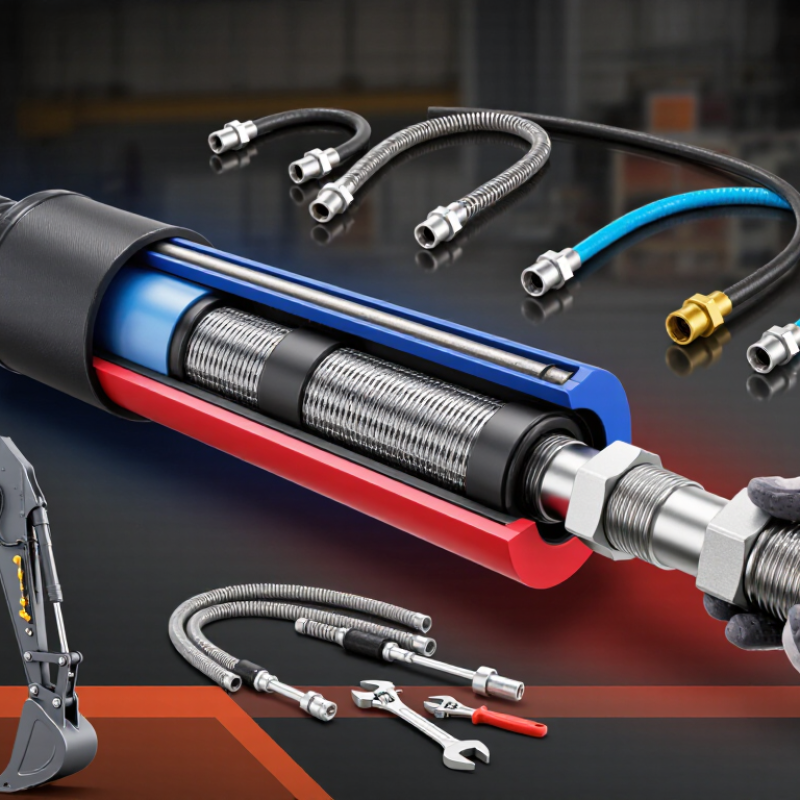
A hydraulic hose carries pressurized fluid between pumps, valves, and moving parts. Its inner tube contains the oil; reinforcement layers resist pressure, while the outer cover shields against abrasion, heat, and weather. Under pressure, a hose expands slightly and flexes with machine movement. That movement matters. Tight bends, twisting, or rubbing against a frame can shorten service life, even when the hose’s pressure rating looks adequate.
“Best” depends on the machine’s working pressure, temperature, fluid, bend radius, and pressure surges. ISO 18752 classifies hydraulic hoses by pressure and impulse-performance requirements, giving buyers a clearer basis for comparing products than appearance alone. Grand View Research estimated the global hydraulic hose market at about US$10.6 billion in 2023; that market figure signals broad demand, not a quality ranking. Check the manufacturer’s documented working-pressure and temperature limits, then match them to the equipment’s real operating conditions. Inspect routing and fittings, too. Small details count.
A high rating can still be the wrong choice. A hose that is too stiff may strain its connections; one routed against a sharp edge may wear through. I’d also question any selection based only on price or a single pressure number. Specs help. Installation decides much.
Fluid velocity helps determine the hose bore needed for a hydraulic circuit. These typical design ranges are guidelines, not hose pressure ratings; confirm sizing against system requirements and hose-manufacturer specifications.
Typical guidance: suction lines 0.6–1.2 m/s, return lines 2.1–4.6 m/s, and pressure lines 4.6–7.6 m/s. The best hose also needs to match working pressure, temperature, fluid compatibility, bend radius, and abrasion conditions.
The best hydraulic hose depends on pressure, fluid, temperature, and movement—not one specification alone. A return line may need a different hose than a high-pressure circuit. Suction hoses also need to resist collapse as fluid enters the pump. Details matter.
Most hoses combine an inner tube, reinforcement, and outer cover. The tube must tolerate the hydraulic fluid; unsuitable materials can swell, soften, or crack. Rubber offers flexibility for many installations, while thermoplastic hoses can suit compact routing. PTFE is useful with certain demanding fluids and temperatures, but it may require different fittings. Check compatibility against the hose maker’s technical data.
Reinforcement may use braided wire or multiple spiral-wire layers. Braided construction can fit many flexible applications, while spiral reinforcement is often selected for demanding pressure cycles. The outer cover protects against abrasion, oil, and weather exposure. Measure the route, note nearby heat sources, and respect the stated bend radius. A hose forced around a sharp corner can fail early. Not always obvious. Pressure ratings, fittings, and operating temperature should match the equipment, with room for movement and regular inspection. A small mismatch can matter more than a premium-sounding description.
Performance Ratings, Standards, and Operating Conditions
A hose’s pressure rating is a starting point, not a complete selection rule. ISO 18752 classifies hydraulic hoses by pressure and impulse-performance requirements; SAE J517 sets requirements for common hydraulic hose types. Compare the exact hose and assembly specifications, not just their appearance. A 21 MPa working-pressure rating equals 210 bar. It does not mean the hose should operate at its burst pressure. Pressure is only one measure.
Operating conditions decide whether that rating is useful. Check fluid compatibility, temperature range, bend radius, abrasion exposure, and pressure spikes. ISO 6803 describes impulse testing for hydraulic hose assemblies, helping assess repeated pressure cycling. In a workshop, a hose forced around a tight frame can kink or wear against a sharp edge, even when its pressure rating looks adequate. Leave room for movement. Inspect fittings and outer covers, too; small cracks or leaks deserve attention, not a quick wipe and dismissal.
Treat published ratings as controlled test data, not a promise that every installation will perform identically. A cold start, hot fluid, or frequent flexing can change service demands. Match the assembly to the equipment maker’s pressure and temperature limits, and verify the specified minimum bend radius. I would not choose on pressure alone. That shortcut is tempting, and still incomplete.
Hydraulic hose selection starts with the job, not a “heavy-duty” label. For mobile equipment with repeated flexing, a two-wire braided hose often balances pressure capacity and bendability. High-pressure circuits with shock loads may need spiral-wire construction, if the equipment specification allows it. Check working pressure, impulse rating, temperature range, fluid compatibility, and minimum bend radius against the machine manual. Small details matter. A tight bend near a fitting can kink during movement and shorten service life.
For compact machinery, thermoplastic hose can reduce weight and fit narrow routes, but its temperature and abrasion limits need checking. Low-pressure return lines require hose designed for return service; suction lines need reinforcement against collapse under vacuum. A cover suited to oil, heat, and contact with nearby steel can help prevent premature wear. Clamps should support the line without crushing it, and fittings must match the hose construction. There is no universal winner. Catalog specifications cannot capture every vibration point or heat pocket on a real machine, so inspect routing and clearances after installation.
Selecting a hydraulic hose starts with the machine, not the catalog. Check working pressure, pressure spikes, fluid type, temperature, and bend radius. Then match the fitting and hose assembly to the equipment maker’s specifications. ISO 18752:2022 classifies hydraulic hoses by pressure performance and impulse testing, giving buyers a more useful comparison than cover appearance alone. Small details matter. A hose forced around a tight frame can kink, rub, and fail early. A common shop-floor shortcut is judging condition by the outer cover; it is imperfect, since internal damage may not show.
Maintenance needs a routine. Inspect hoses while the system is depressurized: look for cracks, bubbles, abrasion, leaks, and loose fittings. UK Health and Safety Executive guidance warns that high-pressure fluid can penetrate skin at pressures as low as 7 bar, or about 100 psi. Never search for a leak with bare hands; use a suitable barrier and follow site procedures. Do not guess. Replace damaged assemblies with correctly rated parts, and record installation dates and inspection findings. SAE J517 provides hose performance requirements, but the correct choice still depends on the machine’s actual duty. A clean hose can still be tired. When service life is uncertain, check operating history and consult a qualified hydraulic technician before returning equipment to work.
The best hose depends on operating pressure, fluid, temperature, movement, abrasion exposure, and the applicable equipment requirements. The pressure and bend-radius figures for any finished assembly must be confirmed against the hose and fitting manufacturer’s specifications.
| Hose Type | Typical Construction | Suitable Uses | Selection Considerations | Inspection and Maintenance |
|---|---|---|---|---|
| Textile-reinforced hose | Elastomer tube with textile reinforcement and an outer cover; some designs include more than one textile braid. | Lower-pressure hydraulic circuits, return lines, and applications where the hose specification permits textile reinforcement. | Check the rated working pressure, fluid compatibility, temperature limits, and vacuum rating where relevant. Do not assume all textile-reinforced hoses are suitable for suction service. | Check for exposed reinforcement, cracking, soft or blistered cover, leaks, and damaged fittings. Replace a hose that fails inspection or no longer meets the equipment requirements. |
| Wire-braided hose | Elastomer tube reinforced with one or more layers of high-tensile steel-wire braid. | General-purpose pressure lines on mobile and industrial hydraulic equipment; exact suitability depends on the hose specification and assembly. | Common hose families include SAE 100R1 and 100R2 and EN 853 1SN and 2SN. Confirm the applicable standard, size-specific working pressure, impulse rating, and minimum bend radius. | Look for cover wear that exposes wire, corrosion, kinks, twisting, leaks, and loose or damaged connections. Keep the hose routed away from sharp edges and excessive heat. |
| Spiral-wire hose | Elastomer tube reinforced with multiple helically wound steel-wire layers. | High-pressure, high-impulse applications when specified for the machine, such as demanding equipment circuits. | Hose families include SAE 100R12, 100R13, and 100R15 and EN 856 4SP and 4SH. Select by the exact pressure and impulse requirements, not by construction name alone. | Inspect regularly for abrasion, crushed sections, exposed reinforcement, cover damage, leakage, and fitting movement. Avoid tight bends and follow the specified routing and assembly requirements. |
| Thermoplastic hose | Thermoplastic inner tube with textile or wire reinforcement and a thermoplastic outer cover; construction varies by design. | Applications requiring a compact or lightweight hose, including some control, instrumentation, and high-pressure circuits. | Verify fluid and temperature compatibility, electrical properties where required, pressure rating, bend radius, and fitting compatibility. Do not substitute it for an elastomer hose without checking system requirements. | Check for cuts, flattening, kinks, abrasion, leakage, and damage from heat or chemicals. Protect it from rubbing and observe the specified service and replacement guidance. |
| Compact or reduced-bend-radius hose | A specially designed wire-reinforced or other reinforced hose intended to bend more tightly than a comparable conventional design. | Space-constrained routing where the hose is specifically approved for the required operating conditions. | Confirm the published minimum bend radius and pressure rating for the selected size. A smaller bend radius does not mean the hose can be kinked, twisted, or bent below its stated limit. | Check tight turns and moving sections for kinking, rubbing, flattening, and fatigue. Re-route or support the hose if it contacts nearby parts during machine movement. |
| All hose assemblies | A hose fitted with compatible end connections and assembled to the applicable specifications. | Any hydraulic circuit where a complete, correctly rated hose-and-fitting assembly is required. | Match the hose, fittings, and assembly method. The assembly’s allowable working pressure is limited by its lowest-rated component. Account for pressure surges, fluid, temperature, and external conditions. | Depressurize the system before handling. Never search for a pressurized leak with a hand; high-pressure fluid can penetrate skin. Replace damaged assemblies and investigate the cause of failure before fitting a replacement. |
Standards and safe practice: SAE J517 covers hydraulic hose, while ISO 18752 specifies classifications and performance requirements for hydraulic hoses. Standards and hose families do not provide one universal pressure rating or service life for every size and assembly. Follow the equipment manual, applicable standards, and the hose and fitting supplier’s current specifications. Inspect hoses routinely and after unusual pressure, temperature, impact, or abrasion events.