10 Best Stainless Steel Tube Manufacturers Worldwide?
Choosing a reliable stainless steel tube manufacturer requires more than comparing prices or polished product catalogs. It involves metallurgy, forming accuracy, welding control, surface quality, and traceable testing. In 2024, World Stainless reported global crude stainless steel production of approximately 62.6 million tonnes, a 7% increase from the previous year. That growth reflects strong demand across construction, food processing, energy, transportation, and industrial equipment.
Quality differences can appear in ordinary details. A tube may look bright under warehouse lighting, yet contain inconsistent wall thickness or weak weld zones. Experienced buyers therefore review mill certificates, heat numbers, dimensional tolerances, corrosion testing, and compliance with standards such as ASTM A312, ASTM A269, or EN 10217. Supplier capacity matters too. So does communication.
This guide evaluates ten leading stainless steel tube manufacturers worldwide through practical criteria. These include production scale, alloy availability, quality systems, export experience, customization, delivery reliability, and technical support. Company information is considered alongside public disclosures, certification records, industry publications, and market research from sources such as World Stainless and the International Trade Centre.
No ranking is perfect. Some manufacturers disclose limited plant-level data, while others serve specialized markets that are difficult to compare. That limitation deserves attention. The strongest supplier for a pharmaceutical project may not suit an offshore pipeline. Buyers should verify current certificates, production locations, inspection procedures, and commercial terms before signing a contract. A dependable stainless steel tube partner is measured not only by size, but also by consistent performance when specifications become demanding.
Global Criteria for Evaluating Stainless Steel Tube Manufacturers
Choosing among the 10 best stainless steel tube manufacturers worldwide requires more than comparing prices. World Stainless reported approximately 60 million metric tons of global stainless steel production in 2023. That scale makes material traceability essential. Buyers should request heat numbers, EN 10204 3.1 inspection certificates, and records linking billets to finished tubes. ASTM A269, ASTM A554, and EN 10217 compliance can help verify dimensions, surface quality, and pressure performance. Still, certificates alone are not proof of consistent production.
A reliable evaluation should include independent factory audits, calibrated testing equipment, and documented non-destructive testing. Check weld integrity, ovality, wall-thickness variation, corrosion resistance, and batch-to-batch consistency. The International Organization for Standardization’s ISO Survey shows millions of ISO 9001 certificates worldwide, but certification does not automatically guarantee excellent tubes. It only indicates a documented quality system. That difference matters. Ask for recent customer references, complaint-resolution records, production capacity, and realistic lead times. The World Stainless sustainability reporting framework also supports reviewing energy use, recycled content, and emissions data. Yet these figures may use different boundaries, so comparisons can be imperfect. My practical preference is a supplier that shares failure data honestly, rather than one presenting flawless charts. Site experience often reveals details reports miss, such as poor packaging, damp storage, or scratched polished surfaces.
Global Criteria for Evaluating Stainless Steel Tube Manufacturers
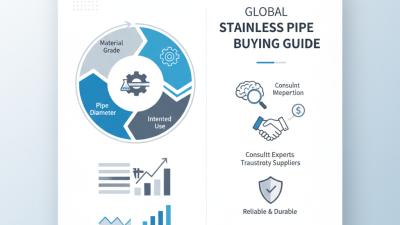
This transparent procurement scorecard prioritizes internationally relevant factors such as standards compliance, material traceability, dimensional control, testing, delivery capability, and quality systems. The percentages are an evaluation framework rather than rankings or performance data for any specific company.
Company Profiles: Products, Technologies, and Production Capabilities
The ten best stainless steel tube manufacturers should be judged by evidence, not polished brochures. World Stainless reported about 58.4 million tonnes of crude stainless steel production in 2023. That scale increases demand for stable tube quality, efficient processing, and traceable materials. Strong manufacturers usually offer welded, seamless, precision, sanitary, and heat-exchanger tubes. Their profiles should show grades such as 304, 316L, duplex, and high-temperature alloys. Product breadth matters, but it can hide weak specialization.
Production technology separates capable suppliers from ordinary mills. Cold drawing can improve dimensional accuracy and surface finish. Pilgering supports demanding seamless applications. Automated welding, online eddy-current testing, ultrasonic inspection, and solution annealing add measurable control.
Buyers should check wall-thickness tolerance, ovality, roughness, and testing frequency. Compliance with ASTM A269, ASTM A312, EN 10217-7, or equivalent standards strengthens credibility. However, certificates alone are not enough.
Factory capability deserves practical attention. Can the mill produce small diameters without excessive scrap? Can it maintain consistent weld geometry across long runs? Does it provide heat numbers, inspection records, and independent test reports? The best profiles also disclose furnace capacity, monthly output, tooling range, and export experience. A 2024 market review by Grand View Research indicates continued growth in stainless steel demand across construction, energy, food processing, and chemical equipment. Yet forecasts are not guarantees. A ranking may still mislead when delivery discipline, after-sales response, and actual batch performance receive less attention than impressive machinery.
Industry Comparison: Quality Standards, Certifications, and Market Reach
The 10 Best Stainless Steel Tube Manufacturers Worldwide?
Comparing global tube manufacturers requires more than production volume. World Stainless reported approximately 58.4 million tonnes of crude stainless steel production in 2023. That figure shows market scale, not manufacturing consistency. Buyers should examine ISO 9001 quality systems, ISO 14001 environmental controls, and product compliance with ASTM A312, EN 10217, or equivalent standards. Certificates matter. Batch evidence matters more.
Certificates matter. Batch evidence matters more.
A reliable manufacturer can provide heat numbers, material test certificates, dimensional records, and positive material identification results. For a 316L tube, the report should confirm chemical composition, wall thickness, tensile strength, and corrosion-related requirements. Hydrostatic or eddy-current testing also deserves attention. The International Organization for Standardization’s 2023 survey recorded more than 1.2 million ISO 9001 certificates worldwide. That broad adoption improves comparability, but it does not guarantee identical inspection depth.
Market reach should be measured through export capability, regional warehouses, technical support, and delivery performance. A supplier serving energy projects may handle strict documentation better than one focused on general fabrication. Still, global presence can hide weak local service.
Some rankings look impressive. They often rely on limited public data. Buyers should request recent nonconformance rates, corrective-action records, and sample inspection reports. My own comparison would score traceability and response time heavily, perhaps more than advertised capacity. That approach is not perfect, but it exposes practical risks before a tube reaches a pressure system or a coastal processing line.
How to Select the Right Stainless Steel Tube Manufacturer
Choosing the right stainless steel tube manufacturer requires more than comparing prices. Product consistency matters under pressure, heat, and repeated fabrication. The International Stainless Steel Forum reported roughly 59 million tonnes of global stainless steel production in 2023. That scale creates choice, but also variation in quality control.
Ask manufacturers for recent mill test certificates, heat numbers, and traceability records. Confirm whether testing follows relevant ASTM, EN, or ISO requirements. Check dimensional tolerances, wall thickness, surface finish, and grade accuracy. A reliable supplier should explain how it controls welding, annealing, straightening, and final inspection. Request samples from different production batches. One perfect sample proves little.
Tips: Visit the facility when possible. Review calibration records and non-destructive testing procedures. Ask how rejected tubes are isolated. Verify delivery performance through documented references, not polished claims. For corrosive service, request chemical analysis and corrosion testing suited to the application. The 2024 ISSF statistics show continued growth in stainless production, yet more capacity does not guarantee better tubes. Specifications can still be misunderstood. I would also compare packaging, storage protection, and complaint response times. These details often appear minor until tubes arrive scratched, mixed by heat number, or delayed at the project site.