Global buyers entering the 2026 industrial market need more than a catalogue of polished product images. They need a clear way to compare stainless steel hose types, connection methods, pressure ratings, and operating environments. A hose that performs well in a food-processing line may fail in a vibrating chemical transfer system. The details matter.
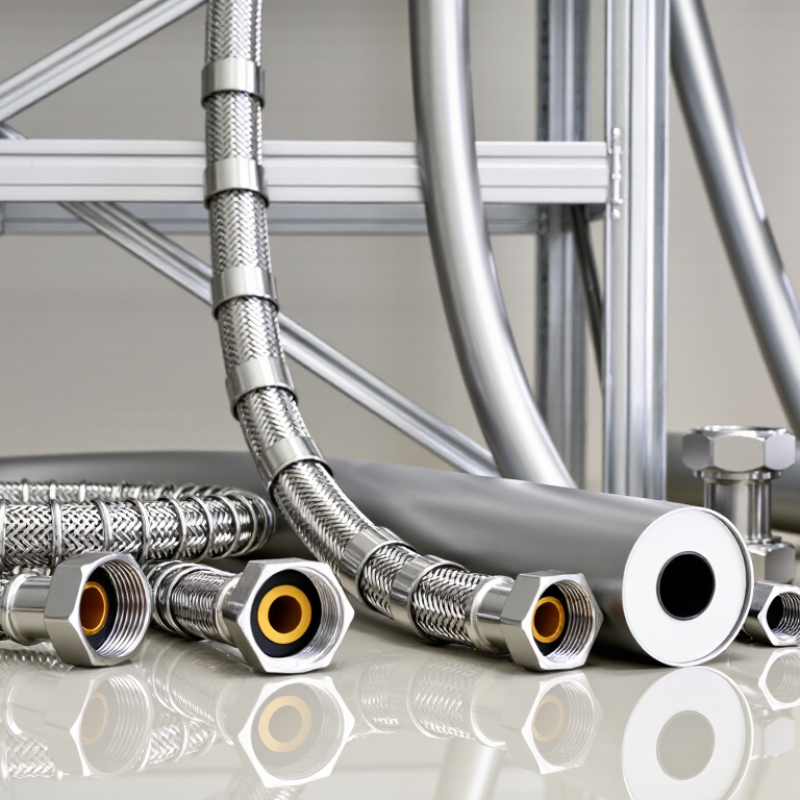
This guide examines corrugated, strip-wound, braided, flexible metal, PTFE-lined, and specialized stainless steel hose designs. Each type serves a different purpose. Corrugated hoses provide flexibility and controlled movement. Braided reinforcement can improve pressure resistance. PTFE-lined options may support cleaner fluid handling and broader chemical compatibility. However, no design fits every project. A specification sheet cannot replace application review, installation checks, or supplier verification.
Experienced buyers should examine temperature cycles, media compatibility, bend radius, vibration, vacuum conditions, and connection quality. They should also confirm material grades, testing records, traceability, and applicable regional standards before ordering. Small details can prevent costly downtime. A poorly supported hose may fatigue near the fitting, even when the tube appears undamaged. That is easy to miss.
This overview is designed to help engineers, distributors, and procurement teams make more reliable comparisons in 2026. It draws attention to practical selection factors rather than exaggerated performance claims. Some recommendations may require further testing. That is the honest part. Real installations differ, and responsible sourcing depends on evidence, communication, and careful validation.
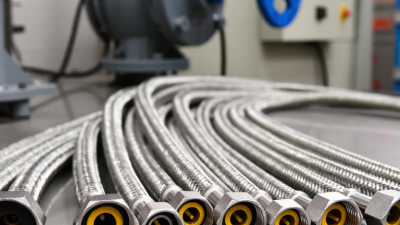
Stainless steel hoses use a corrugated tube, often covered by braided wire. The corrugation allows movement, vibration absorption, and thermal expansion. Common types include annular, helical, single-braid, and double-braid designs. Stainless steel offers strong corrosion resistance, but it is not universally corrosion-proof. Chlorides, acids, and poor cleaning practices can still cause damage.
The International Stainless Steel Forum reported 58.4 million metric tons of global stainless steel production in 2023, up 4.6% from 2022. This broad supply base supports international hose sourcing. However, material grade alone does not confirm performance. Buyers should check working pressure, temperature range, bend radius, burst pressure, and cyclic test results. ISO 10380 provides testing guidance for corrugated metal hoses. The weak point is not always the braid. Fittings, welds, and installation angles often decide service life.
Tips: Match the hose to the actual medium, not its appearance. Request traceable material certificates and pressure-test records. Allow natural bends instead of forcing tight loops. A double braid may improve pressure resistance, but it can reduce flexibility and increase weight. No selection method is perfect. Recheck chemical exposure, vibration, and maintenance conditions before approval.
Stainless steel hoses serve very different applications, so selection should begin with the working environment. Corrugated hoses handle vibration, thermal movement, and repeated bending around pumps or engines. Their braided layer improves pressure resistance, but excessive bending can still cause early fatigue.
For high-pressure hydraulic or gas service, a multi-braided stainless steel hose offers stronger reinforcement. Use it where pressure surges may occur.
PTFE-lined stainless steel hoses suit corrosive chemicals, solvents, and clean fluid transfer because the liner separates the medium from the metal.
In food, pharmaceutical, and hygienic systems, smooth-bore or sanitary designs reduce residue buildup.
Strip-wound stainless steel hoses work well for ventilation, exhaust, and low-pressure air movement, although they are less suitable for liquid pressure lines.
Tips:
Check pressure, temperature, media compatibility, bend radius, and fitting material together. Do not size by diameter alone. A hose may fit perfectly yet fail under vibration. I have seen installations overlook movement frequency, not just movement distance. That mistake is easy to repeat. Confirm inspection requirements and applicable regional standards before purchase. When the application is uncertain, request operating data and test samples. Small details matter.
Material choice controls corrosion resistance, flexibility, pressure, and temperature. Common 304 stainless steel suits general water and air service. 316L performs better near chlorides and coastal environments. However, it still can pit in warm saltwater. The International Stainless Steel Forum reported 58.4 million tonnes of stainless steel production in 2023. That scale reflects strong demand, but it does not guarantee correct hose selection.
Pressure ratings require more than a grade label. A 316L braided hose may handle high pressure, while its fitting or liner becomes the weak point. ASME B31.3 and EN 13480 require design checks for pressure, temperature, fatigue, and chemical exposure. Many 316L assemblies operate near -196°C to 400°C, depending on construction. The actual limit may be lower. Vibration, repeated bending, and pressure surges matter. A neat specification table can mislead.
Tips: Request test certificates, burst-pressure results, and full assembly ratings. Check whether the stated pressure is working pressure or burst pressure. Confirm temperature limits for the liner, braid, gasket, and connections. The European Industrial Gases Association reports that cryogenic systems demand careful control of thermal contraction and material compatibility. I would also review the hose routing on site. Installation errors are common, and even excellent stainless steel cannot correct a sharply bent assembly.
Global buyers compare stainless steel hoses by more than price. In procurement reviews, quality starts with the application. Check media type, temperature, pressure, movement, and installation space. A hose for steam needs different construction from one carrying clean water. Ask for the stainless steel grade, braid structure, wall thickness, and minimum bend radius. Request batch traceability and test records, not only a polished product photograph.
Compliance requires practical evidence. Confirm pressure ratings under stated temperature conditions. Review dimensional tolerances, leakage tests, burst tests, and material certificates. For food, pharmaceutical, or drinking-water service, verify the relevant hygienic documentation for the destination market. Markings should match the paperwork. They often do not. That small mismatch can delay customs clearance or trigger expensive retesting.
Cost comparison should include fittings, delivery, installation, maintenance, and replacement risk. A cheaper hose may use thinner braid or less consistent welding. It may still work, but the decision needs evidence. Compare total service cost over its expected life, not just the unit quotation. I have seen buyers overlook shipping damage because packaging was excluded from the discussion. Include protection, spare lengths, inspection support, and warranty terms. No spreadsheet catches every failure. Human review still matters.
Global buyers should match stainless steel hose construction to the industry, market, and installation environment. The World Stainless Association reported global stainless crude steel production of about 62 million tonnes in 2024, reflecting strong demand for corrosion-resistant materials. However, material choice still needs discipline. Food processors often require smooth, cleanable corrugated hose assemblies. Chemical plants may need alloy selection based on chlorides, acids, and operating temperature. Hydraulic systems usually require braided reinforcement for pressure stability.
Installation conditions can change the correct hose type. ISO 10380 addresses corrugated metal hose design and flexible installation requirements. ASME B31.3 remains a key reference for process piping systems. For medical gas applications, NFPA 99 emphasizes cleanliness, identification, and pressure control. European buyers may also check EN 14800 when selecting flexible gas connectors. Measure movement carefully. Avoid twisting the hose during assembly. Respect the manufacturer’s minimum bend radius.
Field inspections often find failures caused by poor routing, not weak stainless steel. Tight bends near fittings can create fatigue points. Vibration needs a short, properly supported loop. Outdoor systems may require protection from salt spray and thermal cycling. A higher pressure rating is not automatically safer. It can hide an unsuitable connection or excessive movement. Buyers should request test certificates, operating limits, and traceable material data. One detail is easy to miss: local standards and inspection practices may differ, so a globally familiar specification still needs regional review.
| Stainless Steel Hose Type | Construction and Typical Materials | Best-Fit Industries and Applications | Typical Pressure Capability | Temperature Guidance | Installation Conditions | Main Advantages | Important Limitations |
|---|---|---|---|---|---|---|---|
| Annular Corrugated Metal Hose | Formed stainless steel corrugations arranged in annular rings, usually with 304, 321, or 316L stainless steel. One or more external wire braids may be added. | Chemical processing Petrochemical Cryogenic transfer Gas systems | Commonly selected from vacuum service to several dozen bar, depending on diameter, braid layers, corrugation design, and safety factor. | Metal construction can support very low and high temperatures; many assemblies are used approximately from −196°C to +550°C when materials, seals, and fittings are suitable. | Suitable for vibration, thermal expansion, equipment movement, and repeated bending. Install with the recommended bend radius and without torsion. | High flexibility, strong pressure resistance, good temperature capability, and compatibility with many gases and liquids. | Fatigue life decreases with over-bending, twisting, vibration at the wrong frequency, or unsupported weight. The braid is not a substitute for correct routing. |
| Helical Corrugated Metal Hose | Corrugations formed in a helical pattern, generally manufactured from stainless steel strip or tube with an external stainless steel braid for pressure service. | Steam Thermal oil Industrial gas General machinery | Usually selected for low-to-medium and medium-to-high pressure duties, with the allowable pressure determined by bore size, braid construction, and operating temperature. | Commonly suitable for hot service when the hose, braid, gasket, and end connections are rated together. Temperature limits must be confirmed for the complete assembly. | Effective for axial movement, equipment vibration, and moderate lateral movement. Useful where a compact flexible connection is required. | Broad industrial availability, good flexibility, and strong resistance to heat and corrosion when the correct stainless grade is selected. | Not intended to compensate for excessive misalignment. Repeated movement should be controlled by guides, supports, or a calculated hose loop. |
| Stainless Steel Braided PTFE-Lined Hose | Smooth or convoluted PTFE inner tube covered by one or two layers of stainless steel wire braid. Common liner choices include virgin PTFE and conductive or modified PTFE. | Food and beverage Pharmaceutical Chemical transfer Hydraulics | Often used from low pressure to high pressure, with pressure strongly dependent on bore size, braid layers, liner type, and fitting design. | Many PTFE assemblies operate approximately from −60°C to +260°C, but the actual limit depends on pressure, liner formulation, fittings, and cycling conditions. | Good for tight routing, pulsation, chemical transfer, and applications requiring a low-friction or non-stick bore. Avoid sharp bends near fittings. | Excellent chemical resistance, clean internal surface, low friction, and reduced permeation compared with many elastomeric liners. | PTFE can creep under pressure and may be damaged by severe kinking, abrasion, or rapid pressure and temperature cycling. Verify media compatibility and permeation. |
| Interlocked Stainless Steel Hose | Flexible interlocked metal strips, commonly stainless steel, sometimes supplied with packing or an elastomeric seal to reduce leakage. | Furnace exhaust Dust extraction Machine guarding Low-pressure air | Generally intended for low-pressure or non-pressure-tight service. It should not be treated as equivalent to a corrugated pressure hose. | Often selected for hot air, exhaust, and radiant-heat zones; the practical limit depends on strip alloy, packing, seals, and movement frequency. | Useful where flexibility, crush resistance, and external mechanical protection are more important than fluid-tight pressure containment. | Strong resistance to crushing, abrasion, sparks, and external mechanical damage. It can tolerate relatively rough industrial environments. | Not normally suitable for high-pressure liquids or gases. Leakage may occur through the interlocked structure unless a suitable sealed design is used. |
| Exhaust Flexible Metal Hose | Thin-wall corrugated stainless steel tube, often with an outer braid, sleeve, or protective layer for automotive, engine, and industrial exhaust systems. | Automotive exhaust Diesel generators Marine engines Industrial engines | Designed mainly for low-pressure exhaust flow and vibration isolation rather than high-pressure fluid transport. | Must be selected for exhaust-gas temperature, thermal cycling, vibration, and oxidation conditions. The hose surface can become extremely hot in service. | Install with adequate clearance, independent supports, and allowance for thermal expansion. Prevent the hose from carrying the weight of the exhaust system. | Reduces transmission of engine vibration and accommodates thermal movement in exhaust piping. | Short service life may result from unsupported weight, severe vibration, condensate corrosion, thermal shock, or contact with nearby components. |
| Metal Hose with Protective Outer Braid or Armor | Corrugated stainless steel pressure tube combined with stainless braid and, where required, an additional armor, guard, or abrasion-resistant cover. | Outdoor process plants Mining Construction equipment Marine systems | Pressure capability is based on the corrugated core and braid; armor generally protects against damage but does not automatically increase the rated working pressure. | Suitable for hot or cold service when the core, braid, cover, seals, and fittings are rated for the same temperature range. | Recommended for exposed routing, abrasive areas, crossing points, and installations vulnerable to impact or accidental contact. | Improved abrasion, impact, and environmental protection compared with an unprotected braided assembly. | Additional protection can reduce flexibility, increase outside diameter, and make inspection or bend-radius control more difficult. |
| Sanitary Stainless Steel Flexible Hose | Smooth-bore 316L stainless steel or PTFE-lined construction with hygienic fittings such as sanitary clamp, butt-weld, or aseptic-style connections. Internal surfaces may be polished to a specified roughness. | Dairy Beverage Biotechnology Pharmaceutical | Selected according to the sanitary fitting rating, hose bore, braid, pressure, temperature, and cleaning cycle. Static and dynamic ratings may differ. | Must withstand the product temperature and cleaning or sterilization cycle, including hot water, steam, or chemical cleaning where applicable. | Use self-draining routing, hygienic supports, controlled bend radius, and fittings that avoid dead legs. Confirm CIP and SIP requirements before purchase. | Cleanable construction, corrosion resistance, low contamination risk, and compatibility with hygienic process design. | Surface finish, gasket material, fitting geometry, and cleaning procedure are critical. A general industrial hose is not automatically suitable for sanitary service. |
| High-Pressure Stainless Steel Hydraulic Hose | Typically a small-bore elastomeric or thermoplastic tube reinforced with stainless steel wire braid or spiral reinforcement; it is not usually a fully metallic hose. | Hydraulic power units Mobile equipment Automation Heavy machinery | Common working pressures range from approximately 70 bar to more than 400 bar, depending on hose construction, bore, temperature, and applicable hydraulic standard. | Typical hydraulic service may be approximately −40°C to +100°C, but the tube material, fluid, pressure, and fitting assembly determine the actual limit. | Use where compact routing and high-pressure movement are required. Protect against abrasion, maintain minimum bend radius, and prevent hose twisting. | High pressure-to-size ratio, strong impulse performance, and good flexibility for moving hydraulic equipment. | The liner is not stainless steel and may limit chemical or temperature compatibility. Failure can involve dangerous fluid injection, so inspection and replacement controls are essential. |