
Call Us

(905) 670-0113

What Are the Top Custom Bathroom Vanities for Buyers?

Choosing among custom bathroom vanities is not simply a matter of picking the prettiest cabinet. Buyers must consider morning routines, available wall space, plumbing locations, storage needs, and long-term maintenance. A vanity may look impressive in a showroom, yet feel cramped beside a toilet or fail to hold everyday toiletries.

Kerrie Kelly, an NKBA-certified designer, describes the goal clearly: “A vanity must balance beauty, storage, and daily performance.” That balance guides this review of the top custom bathroom vanities for today’s buyers. We will compare floating, freestanding, double-sink, furniture-style, and compact designs. Each option offers different advantages for master bathrooms, guest spaces, and narrow powder rooms.

Real experience matters here. Measuring the wall twice can prevent an expensive mistake. Checking drawer clearance can avoid awkward collisions with knees and plumbing. Even the finish deserves attention. Matte paint hides fingerprints better than glossy surfaces, while natural wood may bring warmth but require more care. Small details matter.

No choice is perfect. A larger vanity provides generous storage, but it can make a modest bathroom feel crowded. A floating model creates visible floor space, yet installation may demand stronger wall support. Buyers should question attractive features that do not improve daily use. The best custom bathroom vanities combine precise dimensions, durable materials, practical hardware, and a style that still feels right years later.
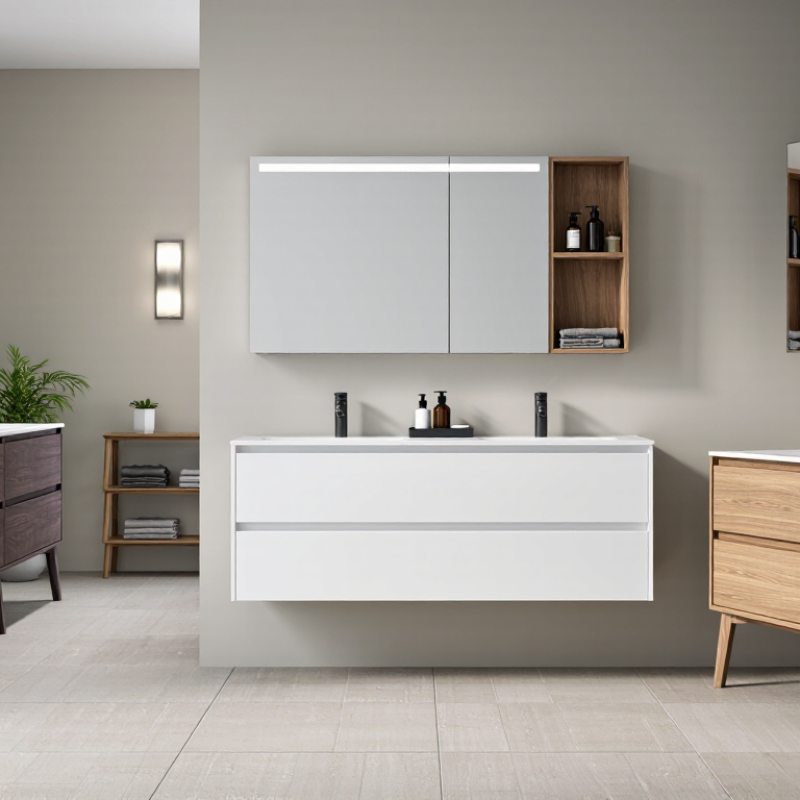
What Are the Top Custom Bathroom Vanities for Buyers?

Types of Custom Bathroom Vanities and Their Distinctive Features

Custom bathroom vanities differ mainly in structure, storage, and installation demands. Freestanding vanities suit traditional bathrooms because their legs create a furniture-like appearance. They are easier to replace. Wall-mounted vanities create visible floor space and simplify cleaning. However, the wall must support the cabinet and countertop weight. Built-in vanities offer continuous storage across a long wall, while corner units protect circulation in compact bathrooms. Furniture-style designs add framed doors, visible hardware, and warmer visual detail.

The 2024 U.S. Houzz Bathroom Trends Study surveyed 1,337 homeowners and reported white vanity cabinets at 31% of selections. Medium wood followed at 22%. These figures show preference, not a rule. I have seen pale cabinets fail when bathroom lighting is cold and weak. Custom sizing matters more than color in narrow rooms. Specify drawer depths around plumbing, moisture-resistant board, soft-close runners, and sealed countertop edges. For shared bathrooms, double-sink vanities improve personal space but consume valuable counter length. A single wide basin may provide better usable storage. The National Kitchen & Bath Association’s 2024 design research also highlights floating storage, integrated lighting, and aging-in-place features. Accessible vanities can include knee clearance, lever hardware, rounded edges, and reachable outlets. Details matter. Yet even expert plans need checking on site; uneven walls, door swings, and drain locations can change the final design.

Key Materials Used in Custom Bathroom Vanity Construction

Choosing a custom bathroom vanity starts with its material, not its color. I have seen beautiful finishes fail when the cabinet core absorbed moisture. Bathroom air changes quickly after a hot shower. Therefore, moisture resistance deserves serious attention.

Solid hardwood offers strength, repairability, and a warm tactile surface. Oak, maple, and walnut can be sealed with durable bathroom-grade coatings. However, wood still expands and contracts with humidity. A poorly sealed edge may swell near the sink. That detail is easy to miss. Careful joinery and sealed cutouts matter as much as the wood species.

Engineered wood is another practical choice for custom construction. High-density fiberboard creates smooth painted doors and consistent panel edges. Quality plywood performs well when its layers are bonded and sealed properly. I prefer plywood for areas exposed to plumbing access, but its quality can vary. Ask about panel thickness, edge sealing, and interior coating. These details reveal more than a sample door.

Stone and ceramic materials often appear on vanity tops. Quartz provides a dense, low-maintenance surface with predictable patterns. Natural stone offers unique veining, yet it may need periodic sealing. Porcelain resists stains and handles daily splashes, but sharp impacts can still cause chips. Recycled glass can add visual texture, although color consistency should be checked under bathroom lighting. Material selection is not perfect. A durable surface can still feel cold, while a warm finish may require extra care.

How to Choose Vanity Size, Layout, and Storage Options

Choosing a custom bathroom vanity starts with accurate measurements, not appearance alone. Measure wall width, door swing, plumbing points, and walking clearance. Leave enough space for comfortable movement. A beautiful vanity can still feel cramped.

For a compact bathroom, a wall-mounted vanity often creates a lighter visual effect. It also makes floor cleaning easier. A single-sink layout suits narrow rooms, while a double-sink design works better when users need separate daily zones. Check the basin position against existing pipes before confirming the cabinet plan. Moving plumbing may increase labor, and this cost is easy to underestimate.

Storage should match real habits. Deep drawers can hold towels, but shallow drawers organize cosmetics and grooming tools more efficiently. Include one tall compartment for cleaning supplies or spare paper products. Open shelving looks attractive, yet it collects dust quickly. That matters.

Choose moisture-resistant panels, sealed edges, and durable hardware. Inspect how drawers close and whether hinges feel stable. I have found that small quality details affect daily comfort more than decorative finishes. Still, my preference for drawers may not suit every household. Families with young children may need safer, higher storage. Confirm the vanity height with every user, especially if accessibility matters. Careful planning prevents expensive changes after installation.

For custom bathroom vanities, compact single-sink layouts commonly use 24–36 inches, while larger single-sink designs often use 48 inches. Double-sink vanities typically start at 60 inches and are most practical at 72 inches or wider. Choose drawer-heavy storage for daily toiletries and include doors or open compartments for larger items.

Essential Design and Installation Considerations for Buyers

Custom bathroom vanities should be judged by fit, storage, and installation risk, not appearance alone.

Houzz’s 2024 U.S. Bathroom Trends Study reports that 78% of renovating homeowners upgraded their vanity. That demand reflects daily usefulness. Buyers should compare drawer capacity, sink placement, countertop height, and door swing before selecting a style.

Measure the finished wall, not the old cabinet. Leave space for wall irregularities, plumbing, electrical outlets, and trim. A wall-mounted vanity can make a small bathroom feel larger, but it needs strong blocking behind the wall. A floor-standing model may hide uneven flooring more effectively.

Moisture-resistant plywood, sealed edges, and soft-close hardware usually provide better long-term performance than decorative features alone. The NKBA’s 2024 Bath Design Trends report also highlights accessible planning and wellness-focused bathroom design, making comfortable reach ranges and clear floor space worth considering.

Tips: Ask for a scaled drawing before ordering. Confirm faucet holes, basin depth, drain location, and delivery access. Check the installer’s tolerance requirements. A beautiful drawer plan can still fail when pipes occupy the usable space.

I would not treat every trend as a rule; household routines matter more. Test storage with real items, including tall bottles, towels, and cleaning supplies. Include task lighting near the mirror, and protect wood components from standing water. Houzz’s findings support strong vanity demand, but they cannot replace an accurate site measurement.

Ways to Compare Quality, Cost, and Long-Term Value

What Are the Top Custom Bathroom Vanities for Buyers?

Ways to Compare Quality, Cost, and Long-Term Value

A high-quality custom bathroom vanity should feel stable before installation begins. I check cabinet joints, drawer movement, edge sealing, and the finish under bright light. Moisture-resistant plywood often performs better than ordinary particleboard in humid bathrooms. However, thicker material does not automatically mean better construction. Poorly sealed edges can still swell near a sink.

Ask for clear specifications, hardware details, and a written warranty. Reliable suppliers should explain how the vanity handles water, heat, and daily cleaning. I also measure wall width, plumbing locations, door swing, and available clearance. Small errors here can create expensive installation changes. Measure twice.

Price comparisons should include delivery, countertop preparation, sink fitting, handles, and labor. A low quotation may exclude these practical costs. I prefer itemized estimates because they reveal where money is being spent. Soft-close hinges and adjustable drawers may cost more, but they can reduce noise and future repairs. Still, premium hardware is not always necessary for a lightly used guest bathroom.

Long-term value depends on repairability and flexibility. Replaceable drawer fronts, standard plumbing access, and durable finishes can extend service life. I once underestimated ventilation in a compact bathroom, and even good cabinetry suffered from persistent humidity. That mistake changed how I judge vanities. Design matters, but the room’s conditions matter more. Leave access for maintenance. A beautiful vanity becomes poor value when one hidden leak requires removing the entire cabinet.

What Are the Top Custom Bathroom Vanities for Buyers? - Ways to Compare Quality, Cost, and Long-Term Value

Comparative benchmark for a custom 36-inch bathroom vanity. Prices are typical U.S. project ranges in USD and generally exclude the countertop, sink, faucet, delivery, and installation.
Custom Vanity Construction Typical Material Specification Moisture Resistance Hardware and Finish Quality Estimated Cost Range Expected Service Life Maintenance Demand Long-Term Value Score Best Use Case
Premium hardwood and plywood cabinet Hardwood face frames and doors; moisture-resistant plywood box; sealed interior surfaces; adjustable concealed hinges Very high when all exposed edges and plumbing cutouts are properly sealed Heavy-duty soft-close slides, durable catalyzed or conversion-varnish finish, precise joinery $2,200–$4,500 20–30 years with normal care Low; wipe spills promptly and inspect plumbing connections periodically 4.8 / 5 Primary bathrooms, high-use homes, and buyers prioritizing durability
Furniture-grade plywood vanity Multi-layer plywood cabinet and shelves; hardwood or plywood doors; sealed edge banding High; plywood is generally more stable than standard particleboard in humid rooms Soft-close hinges and drawer runners; conversion-varnish, polyurethane, or high-quality waterborne finish $1,500–$3,200 15–25 years with normal care Low to moderate; avoid standing water and use non-abrasive cleaners 4.5 / 5 Most buyers seeking a balanced combination of quality, cost, and longevity
Painted hardwood-frame and MDF-panel vanity Hardwood frame with moisture-resistant MDF doors and panels; factory-applied painted finish Moderate to high when edges are sealed; prolonged water exposure can damage unprotected MDF Good soft-close hardware and smooth painted surface; finish can be touched up if matching paint is retained $1,300–$2,800 12–20 years with careful maintenance Moderate; protect corners and repair chips or swelling quickly 4.1 / 5 Contemporary or traditional designs where a uniform painted finish is important
High-density moisture-resistant composite vanity Moisture-resistant engineered panels with laminate, thermofoil, or durable synthetic surface Moderate; surface is water-resistant, but seams and cut edges require careful protection Standard soft-close hardware; consistent factory surface with limited refinishing options $900–$1,900 8–15 years with good moisture control Low for daily cleaning; damaged surfaces are usually harder to repair invisibly 3.7 / 5 Guest bathrooms, rental properties, and budget-conscious renovations
Wall-mounted floating plywood vanity Reinforced plywood cabinet fixed to structural wall blocking; concealed plumbing area; sealed finish High if wall penetrations, bottom edges, and plumbing openings are sealed correctly Quality depends heavily on wall anchoring, drawer support, and installation accuracy $1,700–$3,600 15–25 years with professional installation Low to moderate; clean beneath the cabinet and check wall fasteners after installation 4.3 / 5 Modern bathrooms, accessible cleaning, and rooms where a lighter visual footprint is desired
Reclaimed or solid-wood bespoke vanity Reclaimed timber or solid wood with custom joinery; protective clear coat or hardwax finish Moderate to high depending on wood movement control, sealing, and bathroom ventilation Distinctive craftsmanship; hardware and finish quality can vary significantly by fabricator $2,500–$6,000+ 20–30 years when properly built and maintained Moderate to high; periodic refinishing may be needed in humid or wet environments 4.2 / 5 Design-focused projects where uniqueness and craftsmanship outweigh the lowest cost
How to compare: Prioritize sealed edges, moisture-resistant cabinet construction, reliable soft-close hardware, replaceable components, accurate wall or floor installation, and a finish that can be repaired. The long-term value score considers expected service life, moisture performance, repairability, maintenance effort, and initial cost—not appearance alone.