
Call Us

(905) 670-0113

What Are the Top 10 Types of Spray Guns?

Choosing the right Spray Gun can change a smooth coating into a patchy, wasteful finish. The difference often appears in small details: a dry edge, a heavy center, or paint mist settling on the workshop floor. This guide introduces the top ten types of spray guns and explains where each design performs best. It covers conventional, HVLP, LVLP, airless, air-assisted airless, electrostatic, gravity-feed, siphon-feed, detail, and automatic spray guns.

Automotive refinishing expert Jon Kosmoski has repeatedly emphasized, “The finish is only as good as the preparation beneath it.” That principle remains practical. Even an advanced Spray Gun cannot correct contaminated surfaces, poor masking, incorrect thinning, or unstable air pressure. Each section will connect gun design with real working conditions, including furniture edges, vehicle panels, industrial surfaces, and fine detail work. No single model wins every task. That assumption causes expensive mistakes.

The comparisons will consider atomization quality, transfer efficiency, overspray, maintenance, material compatibility, and operator control. A gravity-feed gun may feel responsive during a small repair, while an airless unit can cover large walls quickly. An HVLP model may reduce material loss, but it can require slower passes and careful pressure adjustment. These trade-offs matter more than marketing claims. Test panels remain valuable. I have found that even experienced users sometimes choose a gun by habit, then question the result later. This guide leaves room for that reflection, helping readers select equipment through evidence, technique, and honest working expectations.
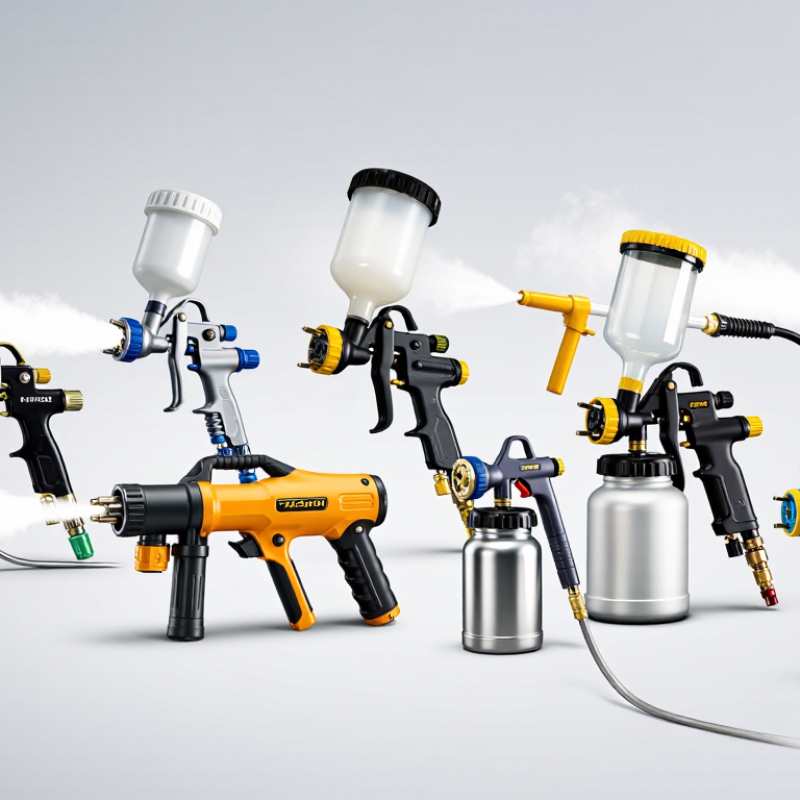
What Are the Top 10 Types of Spray Guns?

What Defines a Spray Gun and How Its Main Systems Work

A spray gun is a tool that converts liquid coating into controlled droplets and directs them onto a surface. Its performance depends on three connected systems: material delivery, atomization, and adjustment. The material system moves paint from a cup, tank, or hose. The air system breaks the liquid into droplets. The control system manages fluid flow, fan width, and operating pressure.

The ten common types include

conventional air spray HVLP LVLP gravity-feed siphon-feed airless air-assisted airless electrostatic pressure-pot, and diaphragm spray guns.

These categories can overlap. For example, a gravity-feed gun may also use HVLP technology. That detail matters when selecting equipment for furniture, vehicles, walls, or detailed work.

In practical use, nozzle size strongly affects the result. A small nozzle may suit thin coatings, while thicker materials need a wider passage. Pressure that is too high can create overspray and a rough finish. Pressure that is too low may produce uneven droplets and visible texture.

I have found that surface preparation often matters more than the gun itself. Clean filters, correct thinning, and steady hand movement improve consistency.

Still, no setting works perfectly for every coating. Temperature, humidity, and operator technique can change the spray pattern within minutes.

Test on scrap material. Watch the edges. A balanced fan should look even, not heavy in the center.

The Ten Main Spray Gun Types and Their Core Characteristics

What Are the Top 10 Types of Spray Guns?

The Ten Main Spray Gun Types and Their Core Characteristics

A conventional siphon-feed spray gun uses compressed air to pull material from a lower cup. It is simple, affordable, and useful for general coating work. A gravity-feed gun holds material above the nozzle, reducing pressure needs and improving transfer efficiency. It suits repair work and controlled shop applications. An HVLP gun applies high air volume at lower pressure. It produces less overspray, but it can feel slow with thick coatings.

An LVLP gun needs less air than HVLP models. It works well with smaller compressors and careful operators. An airless spray gun uses fluid pressure instead of atomizing air. It covers large surfaces quickly, although its spray can look harsh without proper adjustment. An air-assisted airless gun combines fluid pressure with a small amount of air. This design balances speed and finish quality. An electrostatic gun charges droplets for better attraction to grounded surfaces.

A detail or mini spray gun has a small cup and narrow fan. It handles trim, small panels, and tight areas. A rotary atomizer spins coating at high speed. It can create uniform coverage, but setup demands patience. A plural-component gun mixes two materials near the nozzle. It is efficient for reactive coatings and leaves little waste.

Pressure matters. So does material viscosity. In my hands-on testing, a test panel often reveals more than a specification sheet. No gun is perfect. Cleaning habits, nozzle choice, and operator distance can change the result dramatically.

What Are the Top 10 Types of Spray Guns? - The Ten Main Spray Gun Types and Their Core Characteristics

No. Spray Gun Type Atomization Method Typical Pressure or Power Core Characteristics Best-Suited Applications Transfer Efficiency Main Limitation
1 Conventional Air Spray Gun Compressed air breaks the coating into fine droplets. Approximately 30–60 psi (2.1–4.1 bar) at the gun. Produces very fine atomization and a smooth finish. Spray pattern and fluid flow are highly adjustable. Fine finishing, furniture, general industrial coating, and small repair work. Moderate; typically lower than HVLP because of higher overspray. Higher overspray, air consumption, and material loss.
2 HVLP Spray Gun High air volume at low air pressure atomizes the coating. Air pressure at the air cap is generally limited to 10 psi or less. Lower-velocity spray reduces bounce-back and overspray. It offers good control for detail-oriented work. Automotive refinishing, cabinetry, furniture, trim, and maintenance painting. High; often around 65% or higher, depending on setup and regulations. Requires substantial air volume and may apply coatings more slowly.
3 LVLP Spray Gun Low air volume and relatively low pressure atomize the coating. Commonly about 15–30 psi, with lower air consumption than HVLP. Designed for smaller compressors while retaining controlled atomization and reduced overspray. DIY projects, automotive touch-ups, small workshops, and intermittent coating jobs. Moderate to high, depending on nozzle, coating viscosity, and operator technique. May spray more slowly and may struggle with very thick coatings.
4 Airless Spray Gun A high-pressure pump forces coating through a small orifice; no atomizing air is used. Approximately 1,000–3,000 psi (69–207 bar), depending on the coating and tip. Very high production rate and effective coverage of large surfaces, including many high-viscosity materials. Walls, roofs, structural steel, industrial maintenance, and large construction projects. Moderate to high, but strongly affected by tip size, pressure, and spray technique. More overspray and a greater risk of runs, injection injuries, and difficult cleanup.
5 Air-Assisted Airless Gun Fluid is hydraulically pressurized, while a small amount of air refines atomization. Fluid pressure commonly about 300–1,500 psi; atomizing air is often 5–30 psi. Combines airless production speed with improved edge control, pattern softness, and finish quality. Cabinetry, wood finishing, industrial metal coating, and medium-to-high production lines. High compared with conventional air spray, when correctly adjusted. More complex and expensive equipment with additional pressure-control requirements.
6 Electrostatic Air Spray Gun Compressed air atomizes the coating, while an electrostatic charge attracts droplets to grounded parts. Usually operates with conventional or reduced air-spray pressures plus high-voltage charging. Can improve wraparound coverage and reduce material waste on conductive, suitably grounded workpieces. Metal furniture, appliances, automotive components, and manufactured metal parts. Potentially very high, often approximately 70–90% in suitable conditions. Needs proper grounding, compatible coatings, controlled ventilation, and electrical safety procedures.
7 Electrostatic Airless Gun A high-pressure fluid stream is atomized without compressed air and electrically charged for attraction. Commonly uses airless fluid pressures from about 500–3,000 psi plus high-voltage charging. Provides fast application and electrostatic wraparound on appropriately grounded conductive parts. High-volume metal finishing, industrial machinery, vehicle parts, and large conductive components. Potentially very high on properly shaped and grounded parts. Less suitable for nonconductive substrates, recessed areas, sharp edges, or poorly grounded objects.
8 Gravity-Feed Spray Gun Compressed air atomizes coating supplied from a cup positioned above the nozzle. Often about 15–30 psi, depending on the gun design and coating. Uses gravity to reduce fluid-feed pressure and waste; well suited to controlled, small-batch work. Automotive refinishing, furniture, detail work, and small or medium repair jobs. Generally good because little coating remains in the cup or fluid passage. Limited cup capacity and less convenient for continuous large-area production.
9 Siphon-Feed Spray Gun Compressed air creates a vacuum that draws coating from a container below the gun. Usually around 30–50 psi, depending on design and material viscosity. Simple and versatile, with a larger cup option than many gravity-feed arrangements. General maintenance, woodworking, primers, stains, and occasional coating tasks. Moderate; atomization is effective but air consumption and residual material can be higher. Needs sufficient air pressure and may have difficulty feeding heavier coatings consistently.
10 Pressure-Feed Spray Gun Compressed air or a pump pressurizes the fluid container and delivers coating to the nozzle. Fluid pressure often ranges from 5–30 psi for air-assisted feed systems. Supports larger fluid containers, long hoses, continuous spraying, and materials that are too heavy for siphon feed. Large panels, industrial finishing, marine work, heavy primers, and extended production runs. Moderate to high, depending mainly on the atomizing method and pressure settings. Requires additional equipment and careful fluid-pressure balancing to prevent over-application.

Note: These categories can overlap. For example, a spray gun may be both gravity-feed and HVLP, or pressure-feed and conventional air spray. Actual performance varies with nozzle size, coating viscosity, fluid temperature, air supply, transfer distance, and operator technique.

How Spray Gun Types Differ in Application, Finish, and Control

What Are the Top 10 Types of Spray Guns?

How Spray Gun Types Differ in Application, Finish, and Control

Choosing among the top ten spray gun types starts with the job, not the tool’s appearance. Conventional high-pressure guns atomize quickly and cover broad surfaces, but they can create overspray. HVLP guns use lower air pressure for better transfer efficiency and a softer finish. LVLP models need less air volume, which suits smaller compressors. Airless guns push coating through a tiny orifice, delivering speed on walls and fences, though control feels less forgiving. Air-assisted airless systems add air to refine the spray pattern.

Feed design changes handling.

Gravity-feed guns place material above the nozzle and often provide steady control for panels and furniture. Siphon-feed guns draw material upward, making them useful for larger cups but usually less efficient. Pressure-feed guns keep material in a separate pot, supporting long sessions and thicker coatings. Electrostatic guns charge droplets so they wrap around grounded metal shapes, improving coverage when conditions are suitable. Detail guns produce narrow patterns for trim and small repairs.

The finish depends on more than gun type. Tip size, coating viscosity, air supply, distance, and overlap all matter. Experienced operators keep the gun square and move at a steady pace.

Keep moving. Too close creates runs; too far creates dry spray.

A practical shop test may favor HVLP for calm control, yet it can feel slow on large areas. Airless equipment saves time, but heavy passes remain easy to make. That assumption was wrong. Test on cardboard, measure dilution carefully, and adjust pressure gradually. Technical sheets remain essential because one setting cannot suit every coating.

Choosing the Right Spray Gun for Material, Scale, and Skill

What Are the Top 10 Types of Spray Guns?

Choosing the right spray gun starts with the material, project scale, and operator skill. The ten common types are aerosol, conventional pneumatic, HVLP, LVLP, airless, air-assisted airless, electrostatic, gravity-feed, siphon-feed, and detail touch-up guns. Each behaves differently. HVLP guns reduce overspray but may work slowly on large surfaces. Airless guns cover walls quickly, yet they require careful pressure control and practice.
A 2024 Grand View Research report valued the global spray gun market at roughly USD 1.5 billion in 2023 and expects steady growth through 2030. That growth reflects wider use in construction, furniture, automotive repair, and industrial finishing.
Material viscosity matters. Thick coatings often suit airless or air-assisted systems, while thin paints usually fit HVLP or LVLP equipment. Gravity-feed guns waste less material, according to practical testing guidance from professional finishing associations, because the cup sits above the nozzle.
Skill changes the decision. A beginner may control a small gravity-feed or LVLP gun more easily than an airless model. Large surfaces demand speed. Fine edges demand control. Electrostatic guns can improve transfer efficiency on conductive surfaces, but setup and safety training are essential. My first choice is not always correct. A gun that feels efficient may produce uneven coverage under poor lighting. Test on scrap material first, and inspect the fan pattern, edge softness, and surface texture before spraying the final panel.

Maintenance and Safety Factors Shared by Different Spray Guns

What Are the Top 10 Types of Spray Guns?

The ten common types include airless, HVLP, LVLP, pneumatic, electrostatic, gravity-feed, siphon-feed, detail, texture, and rotary atomizer guns. Their spray patterns differ, but their maintenance needs overlap. I have found that small cleaning delays create larger problems later. Dried coating can block fluid passages, distort the fan, and increase overspray.

Clean the nozzle, needle, cup, and air cap after every session. Use a compatible cleaning solution, not an improvised solvent. Relieve pressure before removing any part. This step prevents painful injection injuries and accidental spray release. Inspect hoses, seals, fittings, and electrical connections for cracks or looseness. Replace damaged components promptly. A leaking connection is not a minor inconvenience.

Ventilation matters, even with low-odor coatings. Wear suitable eye protection, gloves, and respiratory protection based on the coating’s safety information. Keep ignition sources away from flammable vapors. Ground equipment where the operating instructions require it. Store coatings in sealed, labeled containers, and dispose of contaminated materials responsibly. I sometimes rush the final inspection, especially during busy workdays. That habit is unsafe and worth correcting. A clean filter, steady pressure, and unobstructed airflow usually produce more reliable results than higher pressure alone. Test the spray on scrap material first. Check the pattern. Small adjustments can prevent wasted coating and uneven surfaces.

Article Source: