
China’s automated parking sector is expanding as cities face tighter land supplies, rising vehicle ownership, and demanding urban mobility targets. Grand View Research estimated the global automated parking system market at approximately USD 1.92 billion in 2023. Its report projects a 15.6% compound annual growth rate from 2024 to 2030. These figures suggest strong commercial potential, but market forecasts are not guarantees.
The phrase Automated Parking Machine covers several technologies. They include puzzle parking systems, stackers, tower garages, shuttle systems, and automated guided vehicles. Each design affects installation cost, retrieval time, maintenance, and user safety. A compact tower may fit beside a crowded commercial building. A mechanical puzzle system may serve apartments with limited excavation space. Small differences matter.
Parking researcher Paul Barter offers an important warning: “Parking is not a technical problem. It is a political problem.” His observation reflects real project experience. Municipal approvals, traffic planning, fire protection, and resident acceptance can determine success. Technology alone cannot solve every parking challenge.
This China Top 10 list considers manufacturing experience, product range, export capability, engineering support, certifications, and documented installations. It also examines software integration and after-sales responsiveness. Public company data remains uneven. Some manufacturers disclose detailed performance figures, while others provide limited evidence. Therefore, the ranking should encourage verification, not blind confidence.
Readers should compare parking capacity, average retrieval time, noise levels, energy use, warranty terms, and emergency procedures. A polished showroom tells only part of the story. Reliable evidence often appears in operating garages, maintenance records, and customer references. That is where this industry becomes measurable.
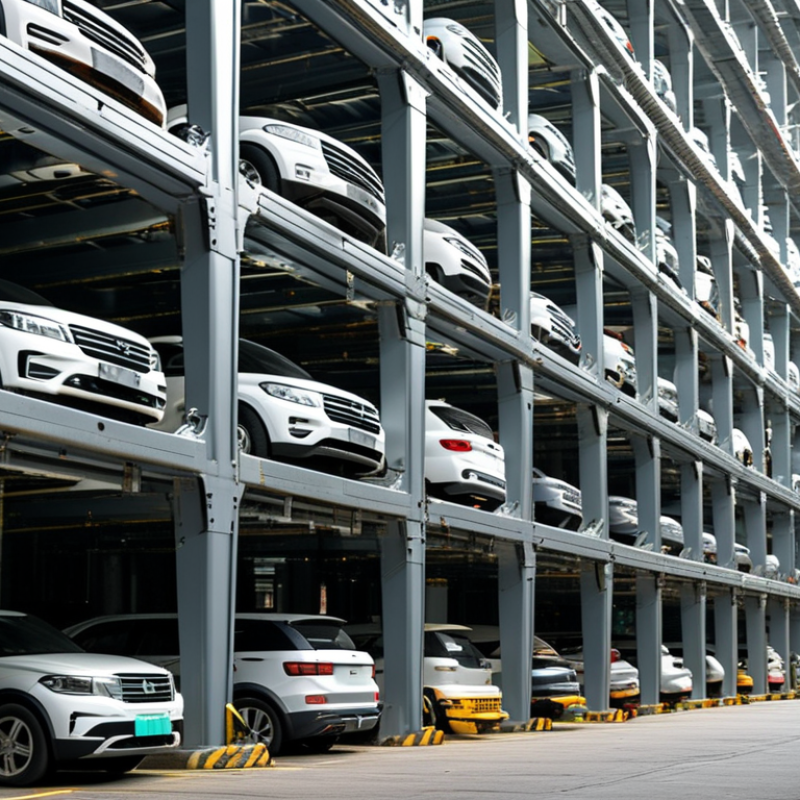
Automated Parking Machines use mechanical movement and software instead of driver circulation. Common types include puzzle, tower, rotary, shuttle, and AGV-based systems. Puzzle units usually serve 10–100 vehicles. Tower systems often hold 30–300 cars. Large shuttle or robotic facilities can exceed 1,000 spaces. These ranges vary with building height, vehicle dimensions, and fire-access design.
The operating principle is practical. A driver stops on an entry platform, where sensors check wheel position, height, weight, and clearance. A lift, conveyor, pallet, or robotic carrier then moves the vehicle into an assigned bay. Retrieval reverses this sequence through a control system, barcode, RFID tag, or mobile request. Typical systems use PLC controls, obstacle detection, emergency stops, and backup power. Capacity is not the same as speed. A 200-space garage may still deliver cars slowly during peak demand.
Industry data supports continued investment. Allied Market Research estimated the global automated parking system market at about USD 1.9 billion in 2021, with projections reaching roughly USD 4.8 billion by 2031. Research and Markets has also reported strong growth driven by urban land shortages and rising construction density. However, market forecasts differ considerably. That deserves caution. Real performance depends on retrieval time, maintenance quality, local codes, and operator training. A compact machine can save valuable floor area, but poor vehicle checking creates delays, noise, and user frustration. Practical testing matters more than impressive capacity claims.
| No. | Automated Parking Machine Type | Typical Capacity Range | Operating Principle | Typical Vehicle Size or Load Parameters | Common Applications | Main Advantages | Key Limitations |
|---|---|---|---|---|---|---|---|
| 1 | Puzzle Parking System | 6–50 vehicles per module | Motor-driven platforms move vertically and horizontally. The control system creates an empty position and shifts platforms to deliver the selected vehicle to the access level. | Passenger cars; commonly designed for vehicles up to approximately 2,000–2,500 kg, subject to project specifications. | Residential buildings, offices, hotels, and small urban parking facilities. | High space efficiency Modular layout Suitable for retrofits | Retrieval time can increase when several platforms must be repositioned; regular maintenance is required for chains, motors, and sensors. |
| 2 | Automated Tower Parking System | 30–120 vehicles per tower | Vehicles are placed on pallets or lifting platforms. A vertical lift moves vehicles between levels, while transfer mechanisms position them in storage spaces. | Passenger cars and SUVs; vehicle height, width, length, and weight must remain within the tower’s approved envelope. | Dense city centers, commercial developments, transport hubs, and high-rise sites. | Small land footprint High vertical utilization Controlled access | Higher construction and installation costs; building height, fire protection, and local planning requirements may affect feasibility. |
| 3 | Shuttle-Based Parking System | 50–1,000+ vehicles | Computer-controlled shuttles transport pallets or vehicles along parking aisles. Vertical lifts connect multiple floors, and transfer units move vehicles into storage positions. | Passenger cars, SUVs, and selected light commercial vehicles, depending on the platform and system design. | Large public garages, airports, hospitals, shopping centers, and mixed-use complexes. | High throughput Scalable architecture Efficient large-site operation | Requires careful software integration and maintenance planning; initial investment is generally higher than simple lift systems. |
| 4 | AGV Parking System | 50–2,000+ vehicles | Automated guided vehicles collect cars from an entry station and transport them to assigned spaces. Navigation may use magnetic markers, QR codes, laser guidance, or other positioning technologies. | Vehicles must comply with the AGV deck size, axle-load, ground-clearance, and weight specifications. | Large underground garages, airports, premium commercial sites, and high-density urban projects. | Flexible layout No driver circulation inside storage area High automation potential | Sensitive to floor conditions, traffic-management software, battery charging, and system availability requirements. |
| 5 | Rotary Parking System | 6–20 vehicles per unit | A continuous chain or belt rotates a series of vehicle platforms vertically, similar to a Ferris wheel, until the requested platform reaches the ground-level access position. | Usually passenger cars; compact layouts commonly support vehicles up to about 2,000 kg, depending on design. | Small plots, dealerships, residential sites, and roadside commercial properties. | Very small footprint Simple operating concept Fast installation | Limited capacity per unit; vehicle retrieval may require platform rotation and the system generally needs a clear vertical zone. |
| 6 | Pallet-Based Automated Parking System | 20–500 vehicles | The driver leaves the vehicle on a standardized pallet. Conveyors, lifts, shuttles, or transfer cars move the pallet through the parking structure and return it to the pickup area. | Passenger vehicles within the specified pallet dimensions; typical systems support loads of approximately 2,000–3,000 kg. | Basements, multi-level garages, hospitals, hotels, and public parking facilities. | Accurate positioning Reduced internal driving Suitable for irregular layouts | Pallets require inspection and maintenance; extra pallet handling can affect retrieval time and operating cost. |
| 7 | Robotic Parking System | 30–1,000+ vehicles | Robotic transfer equipment receives a vehicle at an entry bay, identifies its dimensions, and automatically transports it to an allocated parking position without customer access to the storage area. | Passenger cars and SUVs within the defined length, width, height, wheelbase, and weight limits. | Premium residential buildings, hotels, office towers, and automated public garages. | High convenience Improved security Reduced exhaust emissions indoors | System performance depends on reliable sensors, software, backup power, and professional service support. |
| 8 | Vertical Lift Parking System | 10–70 vehicles per lift unit | A mechanical lift moves platforms or vehicles between parking levels. Horizontal transfer equipment may be added to place vehicles into side-by-side storage spaces. | Passenger cars and SUVs; rated load commonly falls in the range of approximately 2,000–3,500 kg per platform. | Residential developments, offices, hotels, and narrow urban lots. | Good vertical utilization Adaptable to narrow sites Straightforward controls | A single lift can become a throughput bottleneck; pit depth, overhead clearance, and structural capacity must be checked. |
| 9 | Horizontal Sliding Parking System | 10–100 vehicles per installation | Platforms slide laterally on rails or guided tracks. One or more empty spaces are used to allow vehicles to move between the access position and the storage position. | Passenger cars; platform dimensions and rated loads are selected according to the vehicle fleet and site requirements. | Existing garages, low-ceiling basements, residential car parks, and office buildings. | Low installation height Uses existing floor area efficiently Relatively simple structure | A vacant space may be needed for movement; capacity and flexibility are affected by column spacing and floor geometry. |
| 10 | Stacker Parking System | 2–6 vehicles per unit | Hydraulic or electromechanical lifting equipment raises one platform above another, allowing vehicles to be stored vertically in a compact bay. | Passenger cars and light SUVs; typical platform ratings are approximately 2,000–3,500 kg, depending on the configuration. | Private residences, dealerships, workshops, small commercial sites, and parking expansions. | Cost-effective Compact installation Suitable for small capacity | The lower vehicle may need to be removed before accessing the upper vehicle in dependent configurations; safety clearance and floor strength are essential. |