
Call Us

(905) 670-0113

7 Tips for Choosing a Galvanized Steel Wire Manufacturer

Choosing a Galvanized Steel Wire Manufacturer can shape product quality, delivery reliability, and long-term costs. A wire coil may look uniform at first glance, yet small differences in zinc coating, diameter, or tensile strength can affect performance. Details matter. Buyers should compare more than quoted prices and polished catalog photos.

This guide presents seven practical tips for assessing potential manufacturers. It covers product specifications, coating methods, production capacity, quality checks, certifications, sample testing, and customer communication. Ask for clear data on wire gauge, coating weight, strength, and applicable tolerances. Where possible, compare a physical sample with the supplier’s technical documents. A neat certificate is useful, but it does not replace evidence that matches your order. That distinction is easy to overlook.

Experience also means asking specific questions. Can the manufacturer maintain consistent dimensions across repeated batches? How are defects recorded, and what happens when a shipment misses agreed specifications? Reliable answers should be precise, not merely reassuring. Still, no checklist removes every risk; production needs and shipping conditions vary. One detail may deserve another conversation. Use these tips to build a shortlist, verify claims, and choose a partner whose capabilities fit your actual application—not simply the lowest number on a quote.
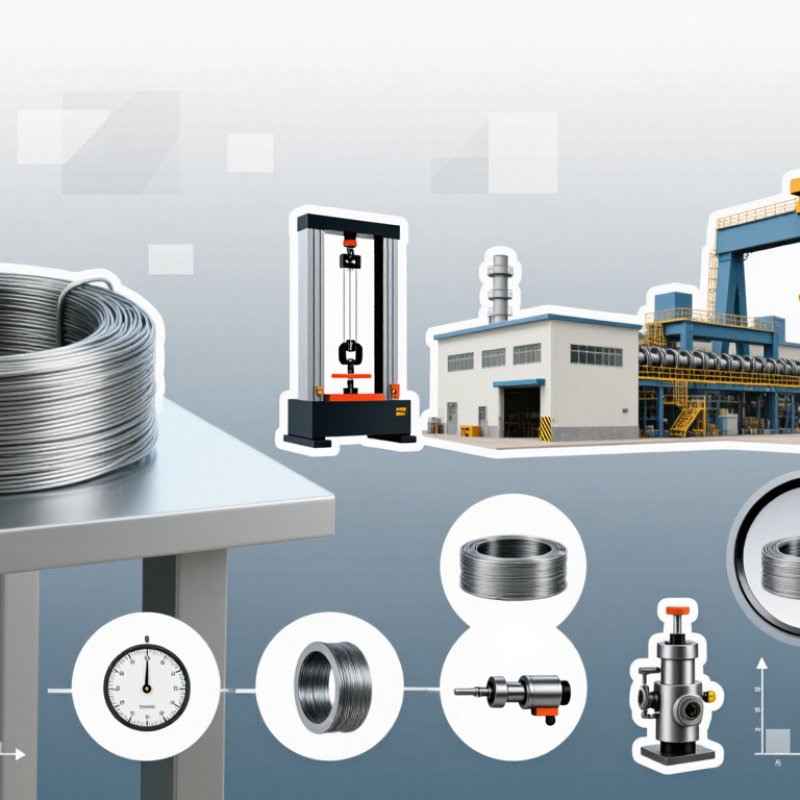
7 Tips for Choosing a Galvanized Steel Wire Manufacturer

Define Your Wire Requirements and Application Conditions

Before requesting quotes, define what the wire must do. Is it for fencing, cable armouring, mesh, or a formed component? Record finished diameter, tensile strength, flexibility, and whether the wire will be welded or bent. These details affect coating choice and production tolerances. Small details matter. Specify the environment, too: coastal spray, road de-icing salts, indoor humidity, or contact with soil. “Outdoor use” is not precise enough.

ISO 9223:2012 classifies atmospheric corrosivity using estimated first-year zinc corrosion rates. Its data range from no more than 0.1 micrometre per year in C1 environments to over 8.4–25 micrometres per year in CX environments. These are classification ranges, not a guaranteed service-life forecast. Still, they help frame questions about coating mass and inspection. ASTM A641/A641M covers zinc-coated carbon steel wire requirements, including coating and mechanical properties. Ask a manufacturer to identify the applicable requirements and provide test records for the offered wire. Request a sample if forming or welding is critical; a specification can look complete while missing a real production problem. That happens. Include storage and handling conditions in your request, since wet coils or damaged packaging may affect the wire before installation.

7 Tips for Choosing a Galvanized Steel Wire Manufacturer: Define Your Wire Requirements and Application Conditions

Start by specifying wire diameter and the conditions it must withstand. The chart shows the geometric steel cross-sectional area for each diameter, calculated as π × diameter² ÷ 4. It is a sizing reference—not a strength rating or a coating recommendation.

When requesting a quote, also define tensile-strength requirements, zinc-coating requirements, tolerances, and exposure conditions such as moisture, salt, or industrial pollutants. Confirm that the proposed specification suits the application.

Evaluate the Manufacturer’s Galvanizing Process and Quality Controls

Evaluate how the manufacturer applies zinc, not just how the finished wire looks. Ask whether it uses hot-dip or electrogalvanizing, and why that process suits your application. Tip: Request coating-weight or thickness results from recent production lots. The values should match your specification, with the test method clearly identified. Look for consistent coverage around the wire, including at bends and coil edges. Small bare spots matter.

Quality controls should be visible and repeatable. Ask how often operators sample coils, what they measure, and how instruments are calibrated. Useful checks may include coating-weight tests, adhesion checks after bending, and visual inspections under steady lighting. Ask for records linking test results to coil numbers. Clear records help trace a concern back to a production run. A tidy certificate is not the whole story.

Tip: Compare a production sample with the written results. Check for flaking after a controlled bend, uneven zinc buildup, or surface marks. Ask how rejected coils are isolated, too. Strong manufacturers can explain their process without dodging practical questions. Still, one sample cannot represent every coil; that limitation is easy to forget. Specify acceptable variation before ordering, and confirm that the chosen test method reflects how the wire will actually be used.

Verify Material Standards, Testing, and Product Traceability

A dependable Galvanized Steel Wire Supplier can name the applicable specification and show how each requirement is checked. For carbon steel wire, ASTM A641/A641M covers zinc-coated wire, including coating, tensile, and adherence requirements. Ask for the standard’s edition, wire diameter, coating class, and acceptance limits—not just a certificate saying “compliant.” Small detail. Check that the values match your order.

Testing records should connect measurable results to the actual production lot. Request zinc-coating mass, tensile strength, diameter readings, and the test method used. For independent results, verify that the laboratory’s ISO/IEC 17025 accreditation covers the relevant tests. World Steel Association’s World Steel in Figures 2024 reports 1,892.2 million tonnes of global crude steel production in 2023; at that scale, clear material identification matters. The figure is industry context, not proof of any wire’s quality.

Traceability should run from the finished coil back to its material batch. Look for matching heat or lot numbers on labels, inspection reports, and mill certificates. Check whether a supplier can retrieve those records after shipment; paperwork that cannot be linked to the coil is weak evidence. I would also ask how mismatched results are handled. That answer can reveal gaps the certificate alone won’t show. Keep the records.

7 Tips for Choosing a Galvanized Steel Wire Manufacturer - Verify Material Standards, Testing, and Product Traceability

Tip What to Verify Useful Evidence Why It Matters Buyer Check
1. Confirm the applicable material standard Check that the quoted product specification matches its intended use, wire type, and market. ASTM A641/A641M covers zinc-coated (galvanized) carbon steel wire; EN 10244-2 covers metallic coatings on steel wire, including zinc and zinc-alloy coatings. A product specification identifying the standard, grade or class, and edition or year of issue. Standards may cover different product requirements and are not automatically interchangeable. Ask the supplier to state the exact standard and confirm any customer-specific requirements in writing.
2. Match dimensions and mechanical properties to the application Review nominal diameter and permitted tolerance, tensile-strength range, and any required ductility or bend performance. A dimensional and mechanical-property schedule, plus representative inspection or test results for the ordered specification. Wire that does not meet the specified size or mechanical requirements can affect forming, assembly, and service performance. Compare the offered values and tolerances with the drawing or purchase specification; do not rely on nominal diameter alone.
3. Specify the zinc coating requirement Identify the required coating class or coating mass, as applicable, along with wire size and exposure conditions. Confirm that the chosen requirement is defined by the governing product specification. The coating designation on the quotation and order, with test results reported in the units and format required by the specification. A clear coating requirement helps avoid assumptions about corrosion protection and product acceptance. State the required class or minimum coating value in the purchase order rather than using “heavy galvanizing” alone.
4. Review the testing and inspection plan Check which tests are performed for the ordered product, how samples are selected, and how results are assessed against the applicable specification. A test or inspection plan covering relevant dimensions, mechanical properties, coating requirements, and visual checks. A documented plan clarifies what is checked and how nonconforming material is handled. Confirm test frequency, acceptance criteria, and whether inspection records can be supplied with each shipment or lot.
5. Ask for test reports tied to the supplied lot Verify that reported results identify the product specification and the production lot or coil they represent. A certificate of conformity or inspection report containing the product description, lot identification, relevant results, and issue date. A generic sample report does not demonstrate that the delivered material was checked against the order requirements. Check that the report identifiers match the shipping documents and physical coil labels.
6. Confirm end-to-end product traceability Ensure each coil or bundle can be linked to its production batch and relevant inspection records. Unique coil or bundle IDs on labels and documents, with a documented method for retrieving associated production and quality records. Traceability supports investigation, segregation, and follow-up if a quality issue arises. Request a sample label and confirm that its ID can be traced through the supplier’s records.
7. Evaluate quality controls and change communication Review how the supplier controls inspection equipment, records nonconformities, and communicates changes to materials or manufacturing processes. Treat quality-system certification as supporting evidence, not proof that every shipment meets the product specification. Documented quality procedures, calibration or verification records where relevant, and an agreed process for notifying customers of significant changes. Consistent controls and clear communication help manage specification changes and recurring quality risks. Agree on notification, approval, and corrective-action expectations before placing repeat orders.

Assess Production Capacity, Customization, and Delivery Reliability

A galvanized steel wire manufacturer should prove its real capacity, not just quote an impressive annual figure. Ask for monthly output, current order load, and the bottleneck process, such as galvanizing line speed or drawing capacity. The World Steel Association’s World Steel in Figures 2024 reports global crude steel production of 1,888.2 million tonnes in 2023. That scale is useful context, but it does not verify any wire mill’s capacity. Request recent production records and a sample inspection report. Numbers can flatter. Check the evidence.

Customization also needs practical proof. Confirm available wire diameters, zinc coating weights, tensile strength ranges, coil weights, and packaging dimensions. Ask whether a change in coating or diameter requires a new production setup, and how that affects lead time. A detailed trial order can expose mismatches before a large shipment is scheduled. Keep a buffer.

Delivery reliability depends on more than the factory schedule. UNCTAD’s Review of Maritime Transport 2024 reported that container ship sailing distances rose by 31% by mid-2024 compared with late 2023, amid route disruptions. This is market context, not a prediction for every shipment. Ask suppliers to separate production time from transit time, provide milestone updates, and explain how delays are handled. Compare their promised dates with shipment records. A little skepticism helps. A polished answer is not the same as a dependable delivery record.

Compare Technical Support, Pricing, and Long-Term Value

Technical support is easy to overlook when several quotes arrive at once. Ask how quickly the manufacturer answers questions about wire diameter, tensile strength, zinc coating, and tolerances. Can its team explain test reports and traceability records in plain language? Request a sample certificate and a written specification before placing an order. Good answers matter. If details remain vague, that is useful information too.

Compare prices on equal terms, including coating requirements, spool size, packaging, freight, and lead time. A lower unit price may look attractive, but inconsistent dimensions can cause machine adjustments, scrap, or delays. It may not. Check how claims, replacement material, and delivery changes are handled. These details are easy to miss. For long-term value, consider consistency across repeat batches and whether the supplier can support your forecasted volume. A small trial order can reveal winding quality, surface condition, and documentation gaps before a larger commitment. No comparison removes every uncertainty, and a spreadsheet cannot capture every production disruption. Still, clear specifications and responsive support make the trade-offs easier to judge.