What is a Switching Power Supply and How Does It Work?
A Switching Power Supply (SPS) is a vital component in modern electronic devices. It converts electrical power efficiently, making it the heart of many systems. Unlike traditional linear power supplies, SPS uses high-frequency switching. This method allows for smaller and lighter designs.
The inner workings of a Switching Power Supply involve various steps. It first transforms the incoming voltage. Then, it regulates the output to a desired level. This process minimizes energy loss. However, SPS is not without flaws. Electromagnetic interference (EMI) can be a concern. It’s essential to consider these factors during design.
SPS technology has evolved significantly. It powers everything from computers to mobile devices. The efficiency and compact size make it popular. Engineers must balance performance with potential issues. Understanding the nuances of a Switching Power Supply is crucial. It can be the difference between a reliable device and one that fails.
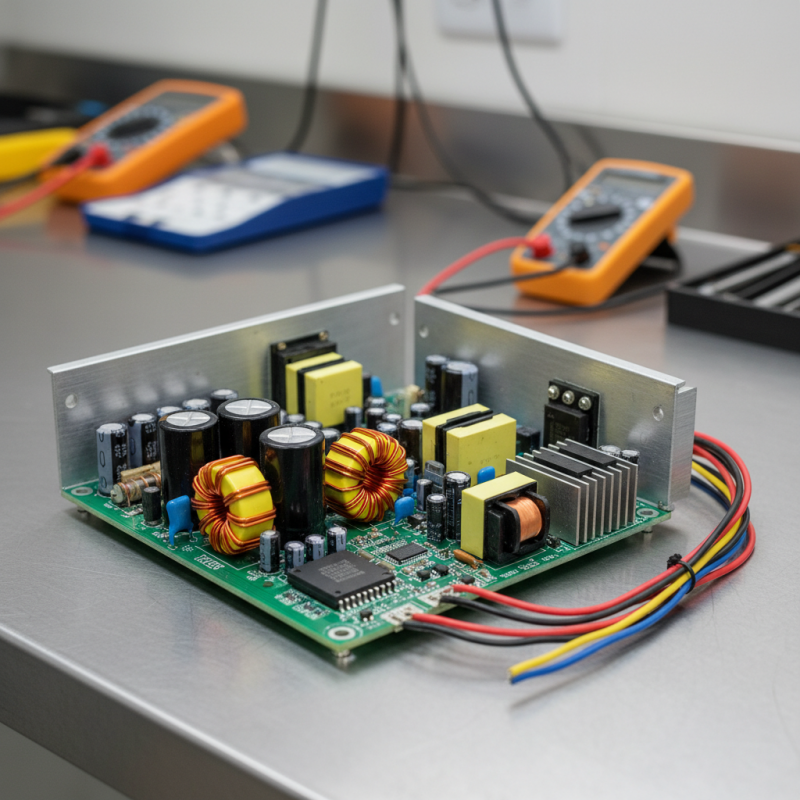
What is a Switching Power Supply?
A switching power supply (SPS) is a type of power supply that efficiently converts electrical power. Instead of using a transformer like traditional supplies, it employs a high-frequency switching method. This technique reduces energy loss and provides a smaller, lighter design. The SPS is common in computer power adapters and many electronic devices.
The basic operation involves turning the input voltage on and off rapidly. This creates a series of pulses that can be transformed and smoothed into a steady output. The feedback mechanism ensures the voltage remains stable. However, the complexity of these systems can lead to unexpected issues, such as electromagnetic interference or noise. It's crucial for designers to address these imperfections.
Additionally, while switching power supplies are efficient, they aren't perfect. They can generate heat, which must be managed. If neglected, overheating can lead to component failure. Users must consider their environment when using these power supplies. The more one understands SPS technology, the better they can use it effectively.
Key Components of a Switching Power Supply
Switching power supplies are widely used in various electronic devices. The design of these supplies includes several key components. Understanding these can improve efficiency and performance.
A transformer is essential in a switching power supply. It regulates voltage while ensuring minimal loss. According to industry reports, these transformers can achieve up to 90% efficiency in ideal conditions. However, real-world usage can often lead to lower performance.
Capacitors are also crucial. They smooth out voltage fluctuations. Poor quality capacitors can reduce the overall reliability of the power supply.
Another critical component is the switching element, usually a transistor. This component rapidly switches the power on and off. It helps control the voltage and current supplied to the device. Switching frequencies can range from 20 kHz to over 1 MHz. Despite the benefits, running at high frequencies can introduce issues like electromagnetic interference. It is important to manage this effectively.
In addition, inductors play a significant role in energy storage and filtering. They help maintain stable output during load changes. Designing these elements isn't always straightforward. Engineers face challenges in balancing size, efficiency, and cost. Each component is interconnected, which means one weak link can affect the entire system.
How Switching Power Supplies Operate
Switching power supplies are fascinating devices that efficiently convert electrical power. Their operation relies on semiconductor technology. This method reduces energy loss during the conversion process. As a result, they are more compact than traditional power supplies.
In a typical switching power supply, components include a switch, transformer, and rectifier. The switch alternates between on and off states to regulate voltage. This rapid switching allows for the control of output power without generating excessive heat. The transformer then steps voltage up or down, adapting to the required levels.
However, switching power supplies can be complex. They may introduce noise into the output voltage. This might impact sensitive electronic devices. Balancing efficiency and stability is a challenge. Engineers must carefully design circuits to mitigate these issues. It's a continuous learning process for professionals in the field.
Advantages of Switching Power Supplies
Switching power supplies are increasingly popular in various applications. They offer several notable advantages that set them apart from traditional power supplies. One key benefit is their efficiency. Switching power supplies convert electrical power efficiently, typically achieving over 80% efficiency. This means less energy is wasted, which is critical in conserving electricity.
Another advantage is their compact size. These power supplies can be smaller and lighter than linear power supplies. Their design allows for cost-effectiveness in manufacturing. This is particularly useful in portable devices and gadgets where space is limited.
Switching power supplies also provide better performance under varying load conditions. They can dynamically adjust to changes in power requirements, ensuring stable output. However, they can produce electromagnetic interference, which is an area for improvement. Balancing efficiency and noise levels remains a challenge for engineers. Overall, switching power supplies represent a significant advancement, but they also have areas that need careful consideration.
Common Applications of Switching Power Supplies
Switching power supplies (SPS) play a critical role in modern electronics. These devices convert electrical energy efficiently. They are widely used in various applications, enhancing performance while minimizing energy waste.
One major application of switching power supplies is in consumer electronics. Reports indicate that over 80% of electronic devices utilize SPS. Televisions, computers, and smartphones rely on SPS for their compact size and versatility. In these devices, SPS can adapt to different power requirements, making them ideal for the varying energy demands of modern technology.
Industrial applications also benefit significantly from SPS. Data from industry studies reveal that SPS usage in industrial machinery has increased by over 25% in recent years. This growth stems from their ability to provide stable power in challenging environments. However, not all implementations are flawless. Issues such as electromagnetic interference (EMI) can arise, necessitating careful design considerations. Addressing these challenges requires ongoing research and innovation within the industry.
What is a Switching Power Supply and How Does It Work? - Common Applications of Switching Power Supplies
| Parameter | Description |
| Input Voltage | Typically AC 100-240V |
| Output Voltage | Varies; common values are 5V, 12V, 24V |
| Efficiency | Typically 80% to 95% |
| Ripple Voltage | Usually less than 1% of the output voltage |
| Common Applications | Computers, LED lighting, industrial automation |
| Advantages | Compact size, lightweight, high efficiency |
| Disadvantages | Complex circuitry, potential for electromagnetic interference |
