What Is an SDS Plus Hammer Drill?
A Sds Plus Hammer Drill is a rotary hammer designed to accept bits with an SDS-plus shank. The grooved shank locks into the chuck while allowing the bit to move slightly during impact. That movement helps transfer hammering force into masonry. It is not simply a standard drill with a stronger motor.
The difference matters on site. A standard hammer drill often uses a pulsing action, while a rotary hammer combines rotation with a more forceful striking mechanism. Depending on the model, it may offer drilling, hammer drilling, or chisel-only modes. Useful for concrete. Less so for delicate finishes. With the right masonry bit, an SDS-plus tool can handle tasks such as making anchor holes in brick or drilling through concrete. Exact capacity varies, so check the manufacturer’s specifications rather than relying on the tool’s appearance or name.
This guide explains how the SDS-plus fitting works, what the tool is suited for, and how it compares with other drills. It also covers choosing compatible bits, understanding key specifications, and using the tool with sensible control. A larger tool is not automatically the better choice. Weight, vibration, hole size, and working time all affect comfort and results. The term “hammer drill” can be confusing, too; product listings sometimes use it loosely. Checking the chuck type and operating modes is a more reliable starting point.
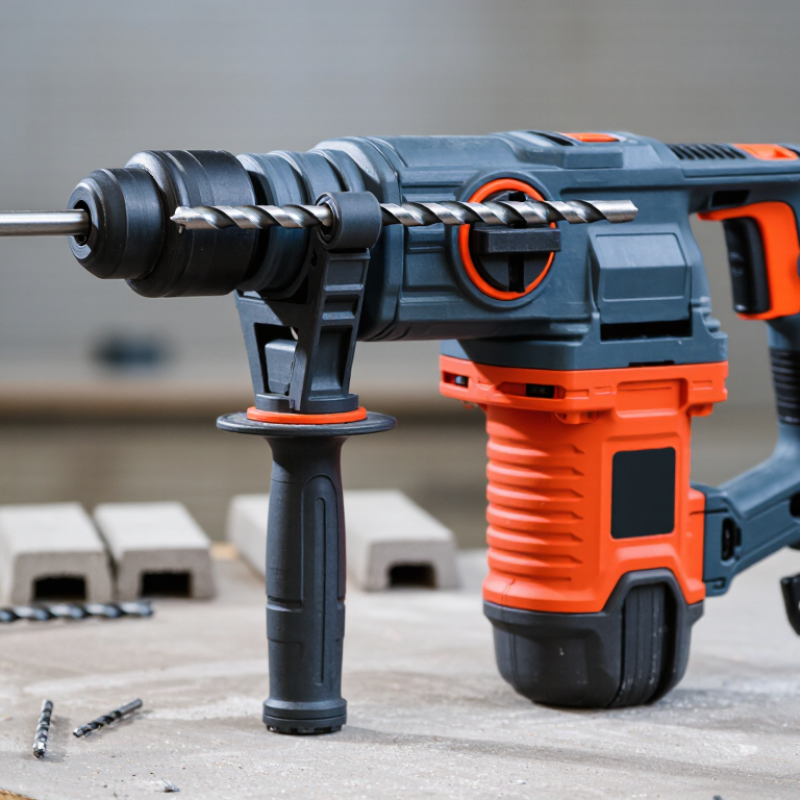
Definition and Core Features of an SDS Plus Hammer Drill
An SDS Plus hammer drill is a rotary hammer designed to drill into concrete, brick, and other masonry. Its name refers to the bit connection: a slotted shank slides into the chuck and locks in place. The bit can move slightly back and forth while remaining secured. That movement helps the tool deliver repeated impacts without relying only on pressure from the user.
Inside the tool, a hammer mechanism drives the bit forward as it rotates. This makes drilling into dense material more efficient than using a standard drill with a conventional chuck. The connection also allows quick bit changes, often without a separate chuck key. You can feel the difference when the bit strikes concrete: the tool pulses, while the cutting edge clears dust from the hole. That matters.
Many SDS Plus models offer rotary hammer, rotation-only, and sometimes chiseling modes. Features vary, so check the tool’s controls and manual rather than assuming every model supports all three. SDS Plus bits are not interchangeable with ordinary round-shank bits unless the correct adapter is used. The system is practical, but it is not effortless; heavy use can still tire your arms, and a crooked start can leave an uneven hole. A firm grip and steady alignment help keep drilling controlled.
How the Hammering and Rotary Mechanisms Work
What Is an SDS Plus Hammer Drill?
How the Hammering and Rotary Mechanisms Work
An SDS Plus hammer drill combines rotation with rapid axial impacts. Its motor turns gears that rotate the spindle and bit. A separate drive mechanism moves a piston back and forth inside the tool. The piston compresses air, which propels a striker against the bit’s rear end. The impact travels into masonry, helping the cutting edge break material as it turns. It sounds straightforward. In practice, the feel depends on the material, bit, and pressure applied.
The bit’s slotted shank fits into the chuck and can slide slightly forward and backward. That movement allows impacts to reach the bit while the chuck still transfers rotation. The slots also help retain the bit. Many tools offer rotary-only, hammer-and-rotation, and sometimes hammer-only settings, though controls vary by model. It is easy to assume more pressure means faster drilling. Often, the mechanism works best when the bit can strike freely; forcing it may slow progress or add wear.
Tips: Use a bit designed for SDS Plus, and check that it locks securely. Let the tool’s weight do much of the work. If drilling feels unusually rough, pause and check the bit and setting.
The SDS Plus Chuck and Its Bit-Locking System
An SDS Plus hammer drill uses a chuck designed for a slotted bit shank, not smooth-sided bits held by tightening jaws. The shank has grooves and recesses that work with parts inside the chuck. Spring-loaded locking balls engage the recesses and help keep the bit from pulling out. Drive keys fit the grooves and transfer rotation from the tool to the bit.
To install a bit, slide it into the chuck and turn it until it seats. A click can indicate engagement, but give the bit a gentle pull to check. No wrench is needed. The bit may move slightly in and out; that movement allows the hammer mechanism to strike through the bit. A little play is normal. Excessive wobble is not.
The locking system is convenient, but it still needs care. Dust packed into the chuck can interfere with smooth insertion or removal, so wipe the shank and keep the chuck clean. If a bit sticks, stop the tool and follow its instructions rather than forcing it. This detail is easy to overlook: SDS Plus bits must match an SDS Plus chuck. The similar-looking shanks are not all interchangeable.
What Is an SDS Plus Hammer Drill?
The SDS Plus chuck uses a slotted shank to transfer rotation and retain the bit while allowing it to move back and forth during hammering.
A standard SDS Plus shank is nominally 10 mm in diameter. Its two open grooves transmit rotation, while two closed grooves engage the chuck’s locking balls to help keep the bit in place.
Common Materials and Tasks for SDS Plus Drills
An SDS Plus hammer drill combines rotation with a rapid hammering action, helping a masonry bit bite into hard material. Its common targets are concrete, brick, and concrete block. Think of fixing a small anchor in a basement wall or drilling a neat hole through brick for a cable route. It can also make shallow channels or remove loose tile, provided the tool supports a chisel-only mode.
The material and task should match the bit and the drill’s capacity. Use carbide-tipped masonry bits for ordinary holes; larger or deeper openings need suitable bits and a steadier pace. SDS Plus drills are less suited to fine woodworking or metalwork, where controlled rotation matters more than impact. They are useful, not universal. I have seen people push too hard, though pressure rarely makes a hole cleaner.
Dust deserves equal attention. Drilling concrete, brick, or block can release respirable crystalline silica. OSHA’s construction silica standard sets an eight-hour permissible exposure limit of 50 micrograms per cubic meter and an action level of 25 micrograms per cubic meter (29 CFR 1926.1153). Use appropriate dust collection or water controls, and follow the tool’s instructions. A small hole still makes dust. The work may look simple, but cleanup and exposure control are easy to overlook.
Key Factors in Selecting and Using One
Choosing an SDS Plus hammer drill starts with the material and hole size. For occasional anchor holes in brick, a compact model may be easier to control. Larger holes in concrete call for suitable impact energy and a bit rated for the task. Check the tool’s stated drilling capacity, weight, and vibration information, not just its power rating. Fit matters. The SDS Plus shank must match the drill, and worn bits can slip or cut slowly.
Think about how the drill will be used over a full work session. A side handle gives steadier control, while a depth stop helps keep holes consistent. For overhead work, lower weight can reduce arm fatigue. A safety clutch can limit sudden twisting if a bit binds. Useful features, but not substitutes for a secure grip. Even careful buyers can focus too much on power and overlook comfort.
Use the correct mode: rotary hammer action for masonry, and rotation-only mode for materials that require it, if the drill offers that setting. Keep both hands on the tool and let the bit advance without forcing it. Not more force. Wear eye and hearing protection, and manage dust with suitable extraction or a method recommended for the material. Pause if the drill, bit, or workpiece becomes unusually hot. A little hesitation is sensible; rushing a stuck bit can make control worse.
