Understanding Photoelectric Sensors and Their Applications?
Photoelectric Sensors are essential devices in modern automation. They operate by detecting changes in light and converting them into electrical signals. This technology is widely used in various industries, from manufacturing to packaging.
These sensors can identify objects, measure distances, and even ensure safety. Their applications range from simple presence detection to complex robotic systems. However, like any technology, they come with limitations. For instance, their effectiveness can diminish in harsh environments. Dust and other elements can obscure their sensors, impacting performance.
Moreover, the choice of the right sensor for a specific task can be complex. Not all Photoelectric Sensors are suitable for every job. Users must consider factors like range, environment, and response time. This highlights the need for careful selection and continuous evaluation of sensor performance. Understanding these nuances helps in maximizing the potential of Photoelectric Sensors in various applications.
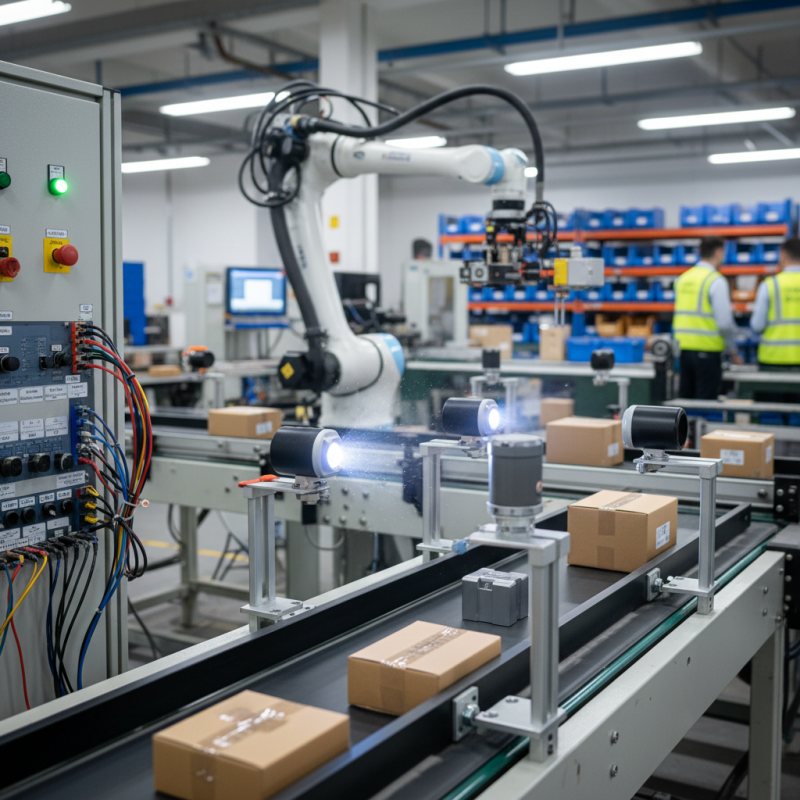
Understanding the Basics of Photoelectric Sensors
Photoelectric sensors are key devices widely used in various industries. They detect changes in light intensity and can sense the presence of objects without physical contact. This contactless operation reduces wear and tear, making them ideal for repetitive tasks. They work by emitting a beam of light, usually infrared, and determining if the beam is interrupted.
Understanding the basics helps clarify how these sensors operate. They are often categorized into different types, such as reflective, through-beam, and diffuse sensors. Each type has its unique application and advantages. For instance, reflective sensors are great for detecting nearby objects. Yet, their performance can be affected by dust or light interference. This requires regular maintenance to ensure optimal function.
Many industries rely on photoelectric sensors for automation, packaging, and safety applications. Their ability to operate in harsh environments is beneficial. However, users must consider factors like distance, angle, and object color. Misalignment can lead to errors in detection, causing significant issues. Balancing the pros and cons is essential for choosing the right sensor.
Types of Photoelectric Sensors and Their Functionality
Photoelectric sensors are fascinating devices widely used in various industries. They detect objects or changes in light, converting these signals into electrical responses. There are three main types of photoelectric sensors: photoelectric switch, retro-reflective, and through-beam sensors. Each type has its specific functionality and application areas.
Photoelectric switches are typically employed for detecting presence or absence. They can sense when an item crosses their path. Retro-reflective sensors, on the other hand, bounce light off a reflector to detect nearby objects. These are often seen in packaging lines, where accuracy is crucial.
Through-beam sensors consist of a transmitter and a receiver, requiring a clear path between them. Any interruption indicates the presence of an object, making them ideal for safety applications.
Understanding these types helps businesses choose the right sensor for their needs. Yet, challenges remain. Incorrect positioning can lead to false readings. Environmental factors, like dust or moisture, might obstruct sensor performance. Reflecting on these limitations is vital for improving system effectiveness.
Key Applications of Photoelectric Sensors in Industry
Photoelectric sensors are vital in various industrial applications. These sensors use light to detect the presence or absence of objects, making them essential in modern manufacturing. According to a recent market research report, the global photoelectric sensor market is projected to reach $3.1 billion by 2025, driven by rising automation and demand for increased efficiency.
In packaging, photoelectric sensors play a crucial role. They help in the precise positioning of items on production lines. Many factories use these sensors to ensure smooth operations. For instance, they can detect the spacing of boxes on a conveyor. This improves speed and reduces waste. However, relying solely on these sensors can lead to challenges. Environmental conditions like dust or moisture can interfere with their performance.
In automotive assembly, photoelectric sensors are essential for quality control. They detect flaws in components during production. Data suggests that these sensors have reduced error rates by up to 20% in some plants. While they enhance accuracy, human oversight remains necessary. Sensors can occasionally miscalibrate, leading to production delays. These nuances indicate that while technology is beneficial, human intervention is still critical for optimal outcomes.
Advantages and Limitations of Using Photoelectric Sensors
Photoelectric sensors are widely used in automation and robotics. They offer significant advantages, such as distance sensing capabilities and non-contact operation. These features allow for precise object detection without physical interference. According to a report by MarketsandMarkets, the global photoelectric sensor market is projected to reach $2.1 billion by 2026, showcasing their growing importance in various industries.
However, photoelectric sensors also have limitations. For example, they can be susceptible to ambient light interference. Dust, dirt, and moisture can compromise their performance. A study showed that nearly 25% of sensor malfunctions are due to environmental factors. Users must recognize these potential issues. Regular maintenance is key to ensuring optimal functionality.
Tip: Always consider the installation environment when choosing a photoelectric sensor. Selecting the appropriate sensor type can prevent future problems. Additionally, frequent checks can help detect issues early. Keeping sensors clean will improve their lifespan and performance.
Future Trends in Photoelectric Sensor Technology
The market for photoelectric sensors is experiencing rapid growth. According to a recent report by MarketsandMarkets, the global market size is expected to reach $2.6 billion by 2026. This trend shows how vital these sensors are in various sectors. Industries are increasingly adopting them due to their precision and versatility.
Future trends indicate a shift towards smart sensors. These devices will integrate advanced features like IoT connectivity. This allows for real-time data collection and analysis. A study by Allied Market Research suggests that the adoption of IoT-enabled sensors could enhance operational efficiency by up to 30%. However, this integration also poses challenges. Many companies struggle with data management and cybersecurity threats. As the technology evolves, addressing these vulnerabilities is crucial.
Another noteworthy trend is the use of artificial intelligence. AI can optimize sensor functionality, leading to better accuracy in detection. Yet, there's a growing concern over the ethical implications of employing AI in automation. Balancing innovation with ethical practices will be a focus for developers. As the industry evolves, continuous reflection on these issues will guide future advancements.
