
Call Us

(905) 670-0113

What Is a Memory Foam Core Pillow Filling Machine?

A Memory Foam Core Pillow Filling Machine prepares and delivers foam material into pillow covers or inner casings. Depending on the production line, it may loosen shredded foam, move it through a blower or conveyor, measure a target quantity, and fill each case through a nozzle. The exact setup varies. Some suppliers use “core” to mean a shaped foam insert, while others mean loose foam filling. That distinction matters.

Industry reports offer context, but not every report measures this equipment category directly. Grand View Research’s analysis of the memory foam mattress market tracks demand for memory foam products, while the International Sleep Products Association’s bedding-industry reporting provides broader context on bedding production and sales. Neither source should be treated as a direct count of pillow-filling machines or their output. That gap is worth noting. A careful buyer should compare machine specifications with the actual material, pillow design, and required production rate—not simply rely on general market growth claims.

In this guide, “Memory Foam Core Pillow Filling Machine” refers to equipment used to prepare and fill pillow casings with memory foam, especially shredded or granulated foam. We’ll look at its main components, operating steps, suitable materials, and practical selection points. A clear understanding can prevent uneven filling, excess dust, and avoidable downtime. Real factory conditions still vary, so specifications should be confirmed with the manufacturer and tested against the intended foam and product.
What Is a Memory Foam Core Pillow Filling Machine?

What Is a Memory Foam Core Pillow Filling Machine?

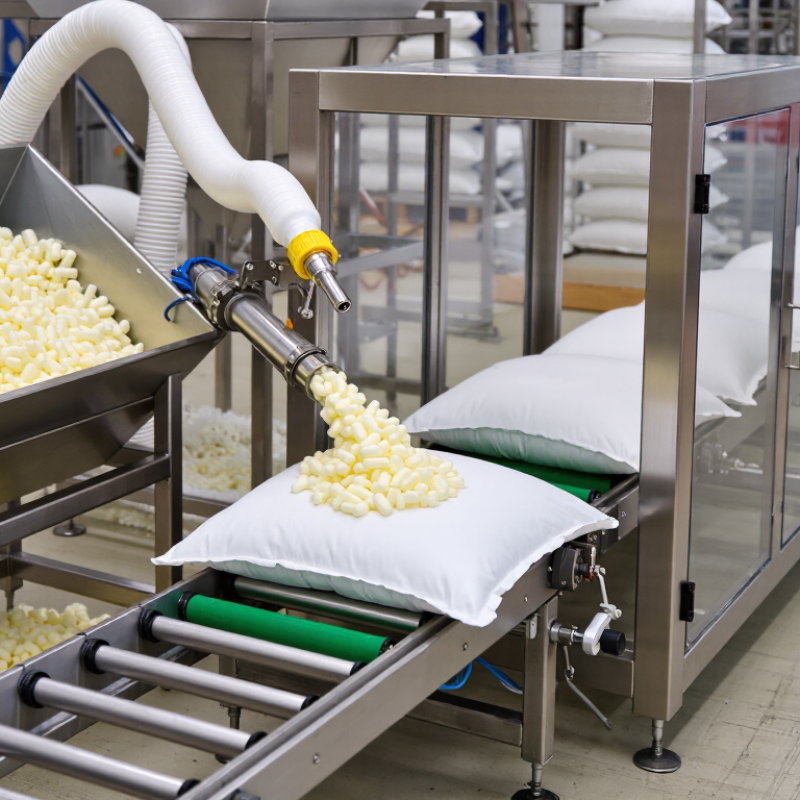
A memory foam core pillow filling machine places foam material into a pillow shell with controlled volume and reduced manual handling. Depending on its design, it may process shredded memory foam or guide a pre-shaped foam core into the cover. Common components include a feed hopper, metering system, and filling nozzle. Some models use air to move lightweight foam; others rely on mechanical feeding. The right setup depends on foam size, shell opening, and desired pillow firmness.

Consistent filling matters. Uneven foam distribution can leave thin corners or create lumps near the seam. Operators should check material flow, weigh sample pillows, and inspect finished covers during each run. Foam dust and static can affect feeding, so routine cleaning and suitable ventilation are practical considerations. Details vary by machine. A sample test is wise.

Tips: Match the nozzle to the shell opening, and confirm the machine handles your foam’s shape and density. Keep a simple record of fill weights and settings. If the pillow feels uneven, pause and inspect the feed path before changing the target weight. The machine helps with repetition, but it does not judge comfort.

What Materials and Components Does the Machine Use?

A memory foam core pillow filling machine handles liquid foam ingredients and delivers them into a pillow mold. Depending on the formulation, these ingredients may include polyol, isocyanate, water, catalysts, and other additives. The exact recipe and mixing conditions vary, so the machine must be matched to the foam process rather than chosen by appearance alone.

Small details matter. Product-contact parts commonly use stainless steel, while compatible seals and hoses help prevent leaks or material damage. The main components include storage tanks, metering pumps, a mixing head, delivery lines, and a mold or filling station. Some systems also use a conveyor and a control cabinet with sensors for flow, temperature, or timing. These controls help operators keep each batch consistent, though they cannot correct a poorly prepared mixture.

Cleaning access deserves attention. Residue can build up inside a mixing head or narrow hose, and even a small blockage may affect flow. A machine may look simple from the outside. The internals matter more. Operators should check material compatibility, pump accuracy, and the mold’s fit before production. In practice, setup is rarely perfect on the first try; recording adjustments can make later runs more reliable.

How Does the Pillow Core Filling Process Work?

A memory foam core pillow filling machine moves foam material into a pillow cover in measured amounts. The process depends on the foam’s form. Some systems handle small, shredded pieces; others are designed for larger foam inserts. Operators should match the machine setup to the material, rather than assume every filling line works the same way.

The foam is placed in a hopper, where an agitator may help prevent pieces from bridging or clumping. A controlled feed then carries the material toward a filling tube. The operator positions the open pillow cover over the nozzle and starts the fill. Air pressure or a mechanical feeder pushes foam through the tube, while a scale or preset quantity helps control the fill amount.

Watch the cover closely. Foam can catch at the opening, and excessive pressure may strain seams or create uneven corners. After filling, the operator checks the pillow’s weight, shape, and feel, then closes the opening by sewing or another suitable method.

Small adjustments matter.

A slightly uneven fill may be noticeable under a sleeper’s head, even when the pillow looks fine on a worktable. In practice, foam density, piece size, and cover dimensions can all change the settings, so test fills are useful before regular production.

What Machine Types and Configurations Are Available?

Memory foam pillow filling equipment varies with the form of the foam and the required production rate. For shredded foam, a basic setup may combine a hopper, an opening mechanism, and a controlled feed into the pillow shell. Some machines use a screw feeder; others rely on air conveyance. The choice affects how evenly pieces move and how much dust or static buildup operators must manage.

Small batches differ. Semi-automatic systems often let an operator position each cover and start a timed or weighed fill. This can suit varied pillow sizes, though the operator’s handling may affect consistency. Automatic lines can add shell opening, weighing, filling, and transfer stations. They need enough floor space and careful coordination between steps. A formed foam core is different: it is usually inserted into a cover, rather than blown in like loose fill, so a stuffing machine may not be the right tool.

Configurations can include one or several filling nozzles, adjustable dosing, and controls for different fill weights. Ask suppliers to test the actual foam pieces and pillow covers, not just similar materials. Pieces can bridge in a hopper, and a narrow nozzle may slow production. In practice, a tidy specification sheet can miss these small annoyances. Operators should also check cleaning access, guarding, and whether settings can be repeated between batches.

Memory Foam Core Pillow Filling Machines: Common Configurations

A pillow filling machine handles shredded or loose foam and feeds it through a filling nozzle. Configurations range from simple hopper-fed setups to systems with powered transfer, metering, or weight feedback.

Illustrative configuration map: 1 means the component is commonly included in that base setup; 0 means it is not inherent to the setup. Actual equipment combinations vary with foam form, pillow design, and production requirements.

Where Are Memory Foam Core Filling Machines Used?

A memory foam core filling machine is used in pillow and bedding production to place foam material into a fabric shell. Depending on the product, it may handle shredded memory foam, small foam pieces, or a pre-shaped core. Operators use these machines in pillow factories, bedding plants, and contract manufacturing facilities. A hopper feeds the material; a metering system controls the amount entering each cover. Some setups also compress the fill to make insertion easier. The exact process varies.

Grand View Research estimated the global memory foam market at USD 6.79 billion in 2023 and projected 6.7% annual growth from 2024 to 2030. Its report tracks pillows as a product category, alongside mattresses. That growth helps explain why manufacturers invest in consistent filling equipment, though market growth does not guarantee demand for every machine. In practice, the equipment is most useful for repeatable pillow sizes and steady production runs. A small workshop may still prefer manual filling for short, varied orders.

The machine’s role is practical. It can reduce handling and help keep fill weights consistent across a batch. Still, foam pieces can bridge inside the hopper, and overly compressed fill may feel dense. Operators need to check settings against the cover shape and desired loft. Details matter. A few test pillows can reveal problems before a full production run.

What Is a Memory Foam Core Pillow Filling Machine? - Where Are Memory Foam Core Filling Machines Used?

Data Dimension Description Typical Uses or Considerations
What the machine does A production machine that measures and transfers memory foam pieces into a pillow cover or casing. Used to make pillows with loose or shredded memory foam fill; machine configuration depends on the foam and product design.
Typical filling material Shredded, chopped, or otherwise prepared flexible polyurethane memory foam. Foam particle size, density, and consistency affect feeding, fill distribution, and the finished pillow’s feel.
Basic filling process Prepared foam is conveyed or metered through a filling outlet into an opened pillow casing, which is then closed. Operators may check fill weight, casing position, and fill distribution during production.
Residential bedding Production of bed pillows for household use. Fill quantity and foam blend can be adjusted to meet different product designs and comfort preferences.
Hospitality bedding Manufacturing pillows for hotels, guest accommodation, and other lodging settings. Production planning may emphasize consistent fill, repeatable sizing, and compatibility with the selected pillow casing.
Specialty and travel pillows Manufacturing smaller or specially shaped pillows, including some travel and support pillow designs. The opening, casing shape, and filling outlet must suit the product; not every machine handles every shape.
Pillows with a solid foam core A solid, molded or cut foam core is a pre-shaped piece, rather than loose filling. Solid-core products commonly require core placement or cover-insertion equipment; a loose-fill machine is not automatically suitable.
Key selection factors Foam form and particle size, pillow dimensions, target fill weight, casing opening, and expected production workflow. Confirm that the machine can handle the specific foam and casing, and assess cleaning, guarding, and operator-safety requirements.