
Call Us

(905) 670-0113

Top 10 Lifting Cylinder Manufacturers for Global Buyers

Global buyers choosing a Lifting Cylinder need more than a familiar brand name. Bore diameter, stroke, working pressure, mounting style, seal materials, and corrosion protection must match the machine and its duty cycle. A mismatch can mean uneven movement, premature seal wear, or costly downtime. Small details matter.

Grand View Research’s Hydraulic Cylinder Market analysis tracks demand across applications and regions, while industry outlooks from MarketsandMarkets examine related growth drivers. These reports provide market context, not a substitute for checking a supplier’s technical documentation. Ask for rated-pressure data, material specifications, test records, and clear guidance on service intervals. For a real comparison, also examine delivery lead times and access to replacement seals.

Hydraulic systems engineer Herbert E. Merritt’s Hydraulic Control Systems is a foundational technical reference. A buyer-focused paraphrase of its systems perspective is: “A cylinder’s performance depends on the hydraulic circuit around it, not the actuator alone.” That is not a verbatim quotation. It is a useful reminder to assess valves, fluid, load behavior, and operating conditions alongside the cylinder.

This “Top 10” guide compares manufacturers by product range, engineering support, quality evidence, customization, and global service reach. Not every ranking fits every machine. A compact agricultural lift and a high-duty industrial press ask different questions. Use the list as a starting point, then verify specifications against your application and supplier documentation.
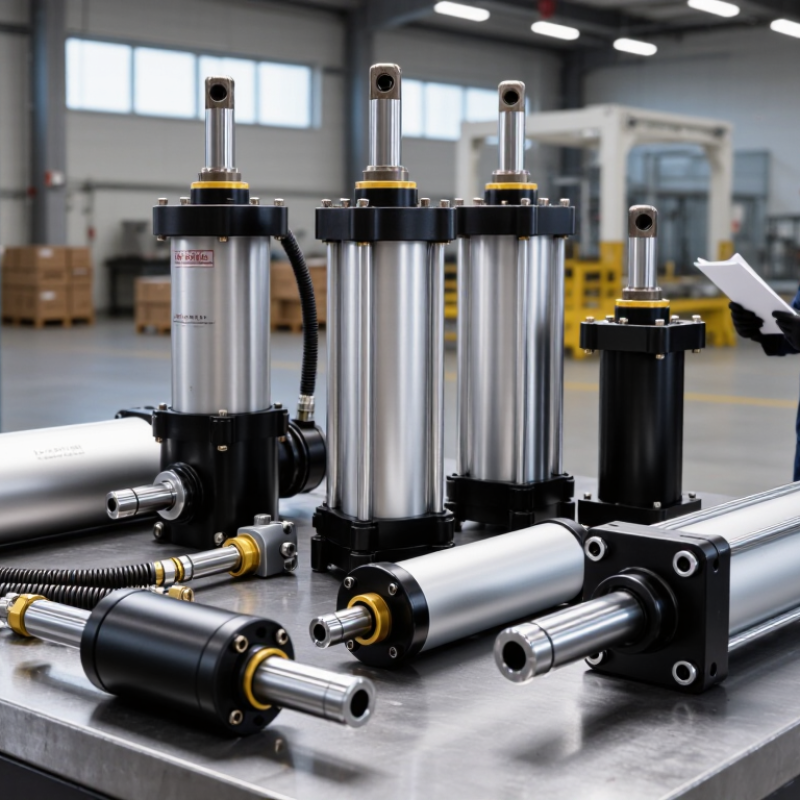
Top 10 Lifting Cylinder Manufacturers for Global Buyers

Lifting Cylinders Explained: Types, Components, and Operating Principles

Top 10 Lifting Cylinder Manufacturers for Global Buyers

Lifting Cylinders Explained: Types, Components, and Operating Principles

A lifting cylinder converts fluid pressure into straight-line force. Single-acting cylinders extend under pressure and retract by gravity or an external load. Double-acting cylinders use pressure for both extension and retraction, offering more controlled movement. Telescopic designs use nested stages to create long strokes within a compact closed length.

That matters. A raised platform needs more than lifting force; it also needs predictable lowering.

Inside the cylinder, a barrel guides the piston, while the piston rod transfers force to the load. Seals limit fluid leakage, and ports direct oil into the correct chamber. For extension, force roughly equals pressure multiplied by the piston’s full area. Retraction produces less force because the rod reduces the effective area. Real performance also depends on friction, fluid condition, alignment, and side loading.

The neat drawings rarely show those problems.

Market reports help explain why buyers compare designs carefully. MarketsandMarkets estimates the hydraulic cylinder market at US$14.5 billion in 2023, projecting US$18.2 billion by 2028. Grand View Research estimates US$14.42 billion in 2023 and forecasts 4.6% annual growth through 2030.

Their estimates use different methods, so treat them as context, not engineering specifications. Check rated pressure, stroke, mounting, and duty cycle against actual operating conditions.

Small details matter. A cylinder that fits on paper may still lift unevenly in service.

Hydraulic Standards: ISO 6020-2 at 16 MPa and ISO 6022 at 25 MPa

For global buyers comparing lifting cylinder manufacturers, ISO references provide a useful starting point. ISO 6020-2 is associated with 16 MPa compact-series cylinders, while ISO 6022 applies to 25 MPa heavy-duty cylinders. These ratings equal 160 bar and 250 bar. The distinction affects more than the pressure number.

Check the standard’s scope and the cylinder’s documented configuration. ISO dimensional conformity helps buyers compare mounting interfaces, such as flange dimensions, pivot points, and rod-end connections. It does not, by itself, confirm suitability for every load or duty cycle. Ask for the rated pressure, test pressure, operating limits, and material details in the technical data sheet. Small details matter.

In a lifting application, a 25 MPa cylinder may suit higher-pressure systems, but system pressure alone should not decide selection. Consider load, stroke length, side loading, speed, fluid, and mounting alignment. A long-stroke cylinder can be vulnerable to buckling if its support is poorly chosen. Request inspection and pressure-test records, and confirm that dimensions match the installation drawing. One practical caution: suppliers may describe products as “ISO compliant” without clarifying which dimensions or edition they follow. Get that in writing before comparing quotations.

How to Compare Global Manufacturers by Products, Capacity, and Markets

Comparing the Top 10 Lifting Cylinder Manufacturers for Global Buyers means looking beyond catalog photos. Start with product fit: check cylinder type, bore and stroke options, mounting styles, operating pressure, and seals suited to the working environment. A unit lifting a dump body faces different duty cycles from one used in material-handling equipment. Ask for drawings, load data, and inspection records, not just a headline rating.

Tips: Send each supplier the same duty profile, including load, stroke, cycle frequency, and ambient conditions. Compare quoted lead times against stated monthly capacity. Request details on pressure testing, traceability, spare parts, and technical support. Small gaps matter.

Market coverage shapes the practical choice. A manufacturer serving your destination regularly may understand packaging, shipping constraints, and local service expectations better. Check whether its production capacity can handle both a prototype and repeat orders without changing specifications. Clarify how design changes are approved, and who resolves fit issues after delivery. A polished brochure is useful, but it cannot prove consistent quality. No scorecard catches everything; factory communication can be uneven, and that deserves a closer look before committing.

Top 10 Lifting Cylinder Manufacturers: Specialties and Global Reach

Global buyers comparing a top-ten shortlist should look beyond rated force. A mobile excavator may need a welded cylinder that tolerates vibration and dirt, while a factory press often favors a tie-rod design with predictable mounting dimensions. Grand View Research valued the global hydraulic-cylinder market at USD 14.81 billion in 2022. It projected 4.3% annual growth from 2023 to 2030. That growth reflects broad demand, not proof that every supplier can serve every region.

Manufacturer specialties vary. Some focus on telescopic cylinders for lifting and tipping; others produce custom units for agricultural, construction, or industrial equipment. Global reach is more than a shipping map. Check whether a supplier can provide local technical support, replacement seals, clear documentation, and realistic delivery estimates. ISO 6020-2 dimensions may help with interchangeability for certain compact cylinders. Details matter.

A useful comparison tests operating pressure, stroke, mounting style, corrosion protection, and duty cycle against the actual machine. Ask for drawings and test records, not just catalog claims. A polished specification can still hide a long repair wait. Pilot testing is less exciting, but it can expose seal wear, side-load sensitivity, or installation problems before a fleet depends on the cylinder.

Buyer Criteria: Rated Pressure, Bore, Stroke, Duty Cycle, and Compliance

Top 10 Lifting Cylinder Manufacturers for Global Buyers

Buyer Criteria: Rated Pressure, Bore, Stroke, Duty Cycle, and Compliance

A lifting cylinder must match the machine, not just the load estimate. Check rated pressure against the hydraulic system’s maximum operating pressure, including pressure spikes. Confirm whether the figure refers to working pressure or a test limit. Bore affects lifting force and oil demand. For example, a larger bore can lift more, but may slow movement if pump flow stays unchanged. Specify stroke with the full linkage geometry in mind; a few extra millimeters can cause interference at the end of travel.

Duty cycle matters. Repeated lifting can heat oil and accelerate seal wear, even when each lift remains within the rated load. A neat specification sheet can still leave a gap: real loads rarely stay perfectly centered. Ask suppliers for dimensional drawings, test documentation, material traceability, and clear compliance records for the intended market and application. Compare what is documented, not just what is promised.

Tips: Share load, pressure, speed, mounting dimensions, and daily cycle count when requesting a quote. Ask how the cylinder performs under side load. Then review the answer with your equipment engineer; one detail is easy to miss.

Article Source: