
Call Us

(905) 670-0113

Top China Ultrapure Water Equipment Manufacturers?

Choosing among China’s top Ultrapure Water Equipment manufacturers requires more than comparing brochures or factory photographs. The real test appears in operation: stable resistivity, low total organic carbon, controlled particles, and dependable uptime. A semiconductor laboratory may need water approaching 18.2 MΩ·cm, while pharmaceutical production demands documented sanitation and validation. These requirements are not interchangeable.

Water scientist Peter H. Gleick has written, “Water is the most basic and fundamental resource of all.” His observation gives this industry a useful warning. Ultrapure water is not simply ordinary water passed through more filters. It is a carefully managed process involving pretreatment, reverse osmosis, electrodeionization, ultraviolet oxidation, ultrafiltration, storage, and distribution. Every stage can influence the final result.

The strongest manufacturers combine engineering experience with measurable quality control. They should explain membrane performance, cleaning procedures, monitoring points, material compatibility, and after-sales support. Factory scale matters, but it does not prove technical reliability. A polished website proves very little.

This article examines leading Chinese manufacturers through practical criteria: process design, customization, certification, production capability, service response, and lifecycle cost. It also considers less visible details, such as dead-leg control, sensor calibration, and replacement-part availability. These details can decide whether a system performs smoothly or creates repeated production interruptions.

No ranking is perfect. Supplier information can change, and published specifications may not reflect field performance. Buyers should request recent test records, customer references, and site-specific validation. That extra work feels slower. It is usually cheaper than correcting a poorly selected Ultrapure Water Equipment system later.
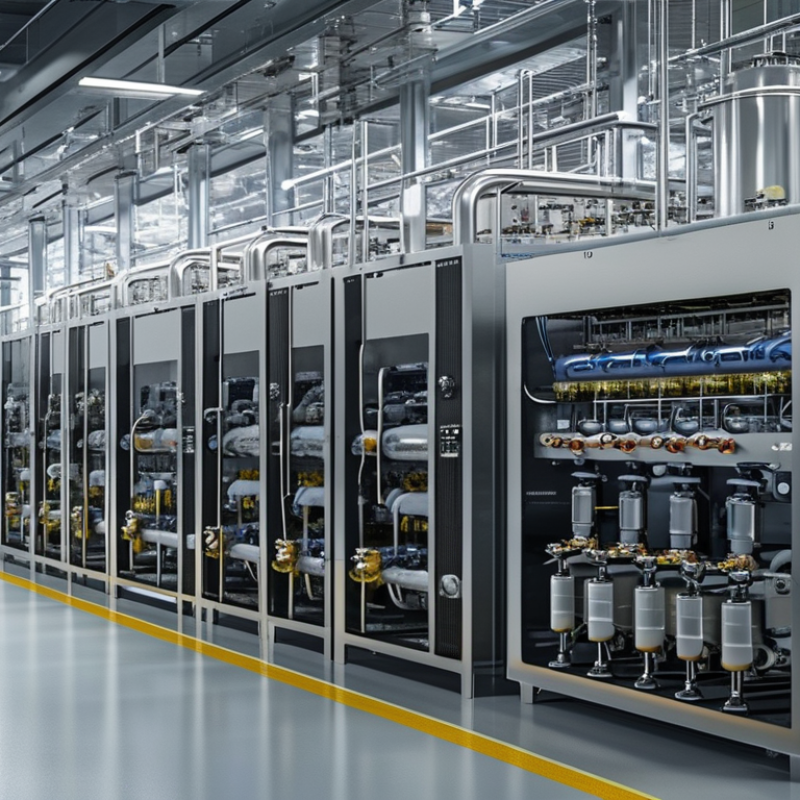
Top China Ultrapure Water Equipment Manufacturers?

Definition and Role of Ultrapure Water Equipment

Ultrapure water equipment is an integrated system that removes dissolved ions, organic compounds, particles, microorganisms, and other contaminants from feed water. It is not simply a larger filter. A typical process may include pretreatment, reverse osmosis, electrodeionization, ultraviolet treatment, ultrafiltration, and final polishing.

The equipment produces water with carefully controlled chemical and biological quality. In laboratory and semiconductor applications, resistivity can approach 18.2 megohm-centimeters at 25°C. Total organic carbon, particle counts, and microbial levels also require continuous attention. Small changes matter. A poorly sealed storage tank or stagnant pipe can quickly reduce water quality.

Reliable manufacturers usually design systems around the user’s process, water source, daily demand, and validation requirements. They provide sensors, alarms, sanitary distribution loops, maintenance plans, and clear testing records. Strong technical support is equally important because membranes, UV lamps, resin beds, and filters do not perform indefinitely.

A practical warning is often missed. High resistivity alone does not prove that water is suitable for every application. Some processes need low endotoxin levels, while others focus on organic contamination or trace metals. I have seen specifications become too general, creating expensive rework later. Equipment selection should therefore connect each water-quality limit with a measured process need, not with impressive numbers alone. No system is perfect. Operators still need routine calibration, sanitization, and documented review.

Key Technologies Used by Chinese Manufacturers

Chinese ultrapure water equipment manufacturers increasingly combine several treatment technologies in one controlled production line. Technology starts before the polishing loop. Pretreatment commonly uses sand filtration, activated carbon, and precision cartridge filters. These stages reduce particles, chlorine, and organic loads. Reverse osmosis then removes most dissolved salts and microorganisms. Its performance depends heavily on feedwater quality and membrane pressure. Poor pretreatment can shorten membrane life quickly.

Electrodeionization, often called EDI, follows reverse osmosis in many advanced systems. It uses electricity and ion-selective membranes to produce stable resistivity without frequent chemical regeneration. Ultraviolet units help break down organic compounds. Final filters, ultrafiltration, and hygienic storage tanks protect the water before delivery. Online sensors monitor resistivity, temperature, flow, pressure, and total organic carbon. Small details matter. A dead-leg pipe can become a contamination risk. Smooth internal surfaces and sanitary welding reduce that risk.

Reliable Chinese manufacturers also improve automation and verification. PLC control systems can record alarms, cleaning cycles, and water trends. Remote monitoring supports faster maintenance, but it cannot replace skilled operators. In real facilities, calibration errors still create misleading readings. Some projects overtrust conductivity meters. That shortcut deserves criticism. Manufacturers with stronger technical practice provide material certificates, factory testing, operating manuals, and validation records. They also adjust designs for local feedwater, climate, production volume, and required water grades. Energy consumption deserves closer attention too. A lower purchase price may hide higher membrane replacement and cleaning costs. Sampling ports and accessible components make daily inspection more practical. Oversight remains essential.

Top China Ultrapure Water Equipment Manufacturers? - Key Technologies Used by Chinese Manufacturers

Technology or Equipment Module Typical Technical Data Main Function Common Application in Chinese Systems Key Selection or Verification Point
Pretreatment and Multimedia Filtration Common media include quartz sand, activated carbon and ion-exchange resin. Designed suspended-solids removal is often approximately 10–25 μm before membrane treatment. Reduces turbidity, chlorine, organic matter and larger particles that can foul downstream membranes. Municipal water, softened water or industrial water entering laboratory, pharmaceutical and electronics-grade purification systems. Check feed-water analysis, backwash design, pressure loss, media certification and compatibility with the following reverse-osmosis unit.
Water Softening and Antiscalant Dosing Softening targets calcium and magnesium hardness; antiscalant dosing is selected according to feed-water chemistry and membrane design calculations. Limits carbonate and sulfate scale formation on reverse-osmosis membranes. Frequently used where the raw-water hardness or alkalinity would otherwise reduce membrane recovery and service life. Verify hardness leakage, chemical dosage accuracy, resin regeneration control and chemical compatibility with potable or pharmaceutical applications.
Reverse Osmosis (RO) Thin-film composite membranes typically remove more than 95% of dissolved salts in a properly designed first-pass system; overall recovery depends on feed quality and configuration. Removes dissolved ions, colloids, microorganisms and many organic contaminants before polishing. Primary purification stage for laboratory water, pharmaceutical process water and industrial ultrapure-water production. Review permeate conductivity, salt rejection, recovery rate, operating pressure, cleaning frequency and membrane integrity.
Electrodeionization (EDI) EDI normally operates after RO and produces continuously deionized water without routine chemical regeneration. Product resistivity can reach the megohm-centimeter range when feed-water quality is suitable. Removes residual ionic contaminants and provides a stable polishing step. Common in systems requiring continuous operation and lower chemical consumption than conventional mixed-bed deionization. Check RO permeate conductivity, carbon-dioxide loading, hardness, silica, product resistivity and concentrate flow.
Mixed-Bed Ion-Exchange Polishing A mixed cation-and-anion resin bed can produce water approaching 18.2 MΩ·cm at 25°C when properly regenerated and supplied with suitable pretreatment. Removes trace ionic impurities after RO or EDI. Used for high-purity laboratory water, analytical preparation and selected electronics processes. Evaluate resin capacity, regeneration or replacement procedure, resistivity monitoring and the risk of organic or microbial release.
Ultrafiltration (UF) UF membranes commonly have molecular-weight cutoffs from approximately 1,000 to 300,000 daltons, depending on membrane design. Reduces colloids, endotoxins, proteins, particles and microorganisms while allowing most dissolved salts to pass. Applied as a final barrier for laboratory, pharmaceutical and biotechnology water systems. Confirm endotoxin reduction, particle performance, operating flux, integrity testing and cleaning validation requirements.
Ultraviolet Oxidation Low-pressure UV systems commonly use 254 nm for microbial control; UV oxidation systems may combine approximately 185 nm and 254 nm to reduce trace organic compounds. Controls microorganisms and, in oxidation configurations, helps reduce total organic carbon. Installed in recirculating ultrapure-water loops and final polishing sections. Verify UV intensity, lamp-life monitoring, quartz-sleeve condition, flow rate and the effect of UV exposure on downstream materials.
Final Microfiltration Final membrane filters are commonly rated at 0.1 or 0.22 μm, depending on the required particle and microbial-control level. Captures particles and reduces microbial passage immediately before the point of use. Used at dispensing outlets, laboratory analyzers, filling points and sensitive process equipment. Assess membrane material, extractables, pressure rating, replacement interval and validated bacterial-retention performance.
Sanitary Recirculation Loop Common design features include continuous circulation, minimized dead legs, hygienic fittings and smooth internal surfaces. Loop velocity and temperature are selected according to the application. Limits stagnation, biofilm formation and recontamination after purification. Important for pharmaceutical water, biotechnology processes and high-purity laboratory distribution networks. Review piping material, slope and drainability, dead-leg ratio, sanitization method, sampling locations and loop qualification records.
Online Instrumentation and Automation Typical monitored parameters include conductivity or resistivity, temperature, flow, pressure, tank level, total organic carbon and, where required, microbial or endotoxin indicators. Provides process control, alarm management, trend analysis and preventive-maintenance data. Used in centralized systems, modular skid equipment and remotely monitored water-treatment rooms. Check sensor calibration, data logging, alarm limits, password control, communication protocols and audit-trail capability.
Typical Ultrapure-Water Quality Indicators The theoretical maximum resistivity of water is approximately 18.2 MΩ·cm at 25°C. High-grade systems may target low-ppb TOC, low particle counts and controlled microbial levels, depending on the end use. Defines whether the system is suitable for analytical, pharmaceutical, biotechnology or semiconductor-related applications. Applied as a performance specification rather than a universal guarantee for every installation. Specify water grade, sampling method, temperature compensation, test frequency and applicable standards before comparing equipment suppliers.

Note: Technical ranges are representative industry values. Actual performance depends on feed-water quality, system configuration, operating conditions, maintenance and validated application requirements.

Leading China Ultrapure Water Equipment Manufacturers

Leading China ultrapure water equipment manufacturers serve laboratories, electronics plants, pharmaceutical facilities, and precision research centers. Their systems commonly combine pretreatment, reverse osmosis, electrodeionization, ultraviolet treatment, and final filtration. The right configuration depends on feed-water quality, daily demand, and required resistivity. A system designed for a small laboratory may fail under continuous industrial use.

Experienced manufacturers provide more than stainless-steel frames and control panels. They test flow rates, monitor conductivity, and document water quality during commissioning. Strong suppliers also explain maintenance intervals, replacement costs, and operator training in clear language. Ask for factory test records, material specifications, and evidence of quality management before placing an order. Local support matters when a sensor drifts or a filter blocks unexpectedly.

No supplier is perfect. Some manufacturers offer impressive specifications but limited after-sales response. Others provide dependable service but less flexible customization. This difference is easy to miss during price comparisons. Buyers should inspect production facilities when possible and request a trial plan using actual feed water. A practical evaluation should include recovery rate, energy use, installation space, and stable performance over time. Honest communication about limitations often signals greater reliability than exaggerated purity claims.

Industry Standards, Certifications, and Quality Controls

Top China Ultrapure Water Equipment Manufacturers: Industry Standards, Certifications, and Quality Controls

Reliable ultrapure water manufacturers should demonstrate more than polished equipment and attractive specifications. Their systems must match recognized standards, application risks, and local compliance requirements. ISO 9001 certification can indicate controlled quality processes, but it does not guarantee every system performs well. Export projects may also require CE conformity or other regional approvals. Pharmaceutical applications demand stricter validation, documentation, and hygienic design.

Quality control should cover the entire manufacturing process. Inspectors should verify stainless-steel grades, membrane performance, sensor calibration, and weld quality. Electropolished surfaces and proper passivation reduce contamination risks inside storage tanks and distribution loops. Factory acceptance testing should record conductivity, resistivity, total organic carbon, flow rate, and alarm responses. Site acceptance testing then confirms performance under real operating conditions. Traceable records matter.

Tips: Request sample inspection reports, calibration certificates, material certificates, and water-analysis results. Ask how suppliers manage deviations and corrective actions. Visit the factory if possible. A clean workshop helps, but it is not enough. Review maintenance access, spare-part availability, and operator training. Some buyers focus too heavily on initial purity readings. Long-term stability, microbial control, and documented response procedures often reveal more. No inspection plan is perfect, and assumptions should be challenged before approval.

How to Select a Suitable Chinese Manufacturer

Top China Ultrapure Water Equipment Manufacturers? How to Select a Suitable Chinese Manufacturer

Selecting a suitable Chinese manufacturer requires more than comparing equipment prices. Grand View Research estimated the global ultrapure water market at over USD 8 billion in 2023. It also projected strong growth through 2030. This growth increases supplier choices, but quality differences remain significant.

Ask for recent operating data from installations with similar feedwater. Check resistivity, TOC, particle counts, microbial control, recovery rate, and power consumption. High-purity systems should typically approach 18.2 MΩ·cm at 25°C, when properly designed and maintained. Request test methods, calibration records, and acceptance limits. Confirm whether the supplier follows relevant standards, such as ASTM D5127 or applicable pharmaceutical water requirements. ISO 9001 certification helps, but it does not prove equipment performance. Factory audits and witnessed performance tests provide stronger evidence.

Tips: Review three customer references. Visit one site if possible. Examine pretreatment carefully, because poor feedwater can shorten membrane life. Ask who responds after commissioning, and request spare-parts availability for at least three years. A low quotation may conceal weak validation or expensive maintenance. I would not select a supplier from a brochure alone. My judgment can still be wrong, especially when data comes from controlled factory testing. Require a written guarantee based on real operating conditions, not only laboratory results.

Top China Ultrapure Water Equipment Manufacturers? How to Select a Suitable Chinese Manufacturer

Reference resistivity benchmarks for common water-purity stages at 25°C

Resistivity is a key indicator of ionic purity. A suitable manufacturer should be able to configure pretreatment, reverse osmosis, deionization, and polishing technologies to consistently achieve the required water grade. The 18.2 MΩ·cm benchmark is commonly associated with Type I ultrapure water at 25°C; actual system performance should be verified through documented testing, calibration records, and after-sales service capability.