How to Choose Heavy Duty Hose Clamps for Your Projects?
Choosing heavy duty hose clamps is essential for project success. According to industry expert John Anderson, “The right clamp can make or break your installation.” This highlights the importance of selecting the suitable product. Heavy duty hose clamps come in various sizes and materials, which can be overwhelming. Understanding these options is crucial for achieving a secure and lasting connection.
When it comes to heavy duty hose clamps, quality cannot be overlooked. The material used affects durability and resistance. Stainless steel clamps, for instance, offer excellent corrosion resistance. However, even high-quality clamps can fail if not installed correctly. It’s vital to inspect your work regularly, as even minor mistakes can lead to leaks.
In today’s market, options can be daunting. Many brands claim superiority, but not all deliver on that promise. Research, product reviews, and industry recommendations can guide your choice. Don't rush into buying the first clamp you see. Take your time to ensure you select the best heavy duty hose clamps for your needs.
Understanding the Purpose of Heavy Duty Hose Clamps in Projects
Heavy duty hose clamps serve a crucial purpose in various projects. They provide secure connections for hoses, ensuring that fluids or gases flow efficiently without leaks. This reliability is essential in both industrial and home settings. Choosing the right type can significantly impact the performance and safety of your project.
When selecting heavy duty hose clamps, consider the material. Stainless steel is a popular choice due to its durability and resistance to corrosion. However, not all projects require such high resistance. Sometimes, a coated steel clamp may suffice. Assess the environment where the clamp will be used. This includes temperature and exposure to chemicals, which can affect the clamp's longevity.
Tips for effective use include ensuring the clamp fits snugly around the hose without being overly tight. Over-tightening can damage the hose and reduce its functionality. Regularly inspect hose connections for signs of wear and tear. It might be easy to overlook this, but a small crack can lead to bigger problems later. Remember, sometimes the best choice isn’t the most expensive option, but one that meets your project’s specific needs.
Identifying the Key Materials Used in Heavy Duty Hose Clamps
When selecting heavy-duty hose clamps, understanding the key materials is essential. These clamps often use materials like stainless steel, carbon steel, and various plastics. Stainless steel is known for its corrosion resistance, making it suitable for wet environments. Carbon steel offers strength and durability but may require coating for protection. Plastic clamps are lighter and resistant to chemicals, ideal for specific applications.
The manufacturing process also influences the clamp's effectiveness. For instance, clamps made of stainless steel are often welded to enhance strength. However, poorly welded joints can lead to failure under extreme pressure. It is crucial to assess not only the material but also how it was manufactured.
Consider also the environmental conditions where the clamps will be used. For instance, exposure to high temperatures may degrade certain plastics. Workers should continuously evaluate their choices and stay informed on which materials perform best under specific conditions. In many cases, significant learning comes from trial and error.
Material Composition of Heavy Duty Hose Clamps
Assessing the Size and Dimensions for Your Specific Hose Applications
Choosing the right heavy-duty hose clamps starts with assessing the size and dimensions of your specific hose applications. Each hose will have its diameter and thickness specifications. Measure these accurately before purchasing clamps. A clamp that’s too loose can lead to leaks. Conversely, a clamp that’s too tight can damage the hose.
Consider the environment where the hoses will be used. High-pressure applications may require sturdier clamps. Temperature variations can also impact your choice. Metal clamps may rust or corrode; plastic options might not hold under stress. Knowing the application details is vital.
Trial and error may be part of this process. You might find that what works well in one project fails in another. Adapting to different hoses can be challenging. Document your findings to refine your future choices. This iterative approach helps build a reliable collection of tools for your projects.
Evaluating the Different Types of Heavy Duty Hose Clamps Available
When choosing heavy-duty hose clamps, understanding the different types available is crucial. One popular style is the worm gear clamp. It's adjustable and offers a strong grip on hoses. However, it can slip under extreme pressure if not fitted correctly.
Another type is the T-bolt clamp. These are robust and provide even pressure distribution. They are ideal for larger hose diameters or high-pressure applications. However, they can be cumbersome to install in tight spaces.
Lastly, there's the spring clamp. This type is simple and effective for quick applications. They are easy to install and offer a reliable seal. On the downside, they may not withstand high pressure as well as other types.
Evaluating these factors allows you to select the right hose clamp for your needs.
Important Installation Tips for Long-Lasting Hose Clamp Performance
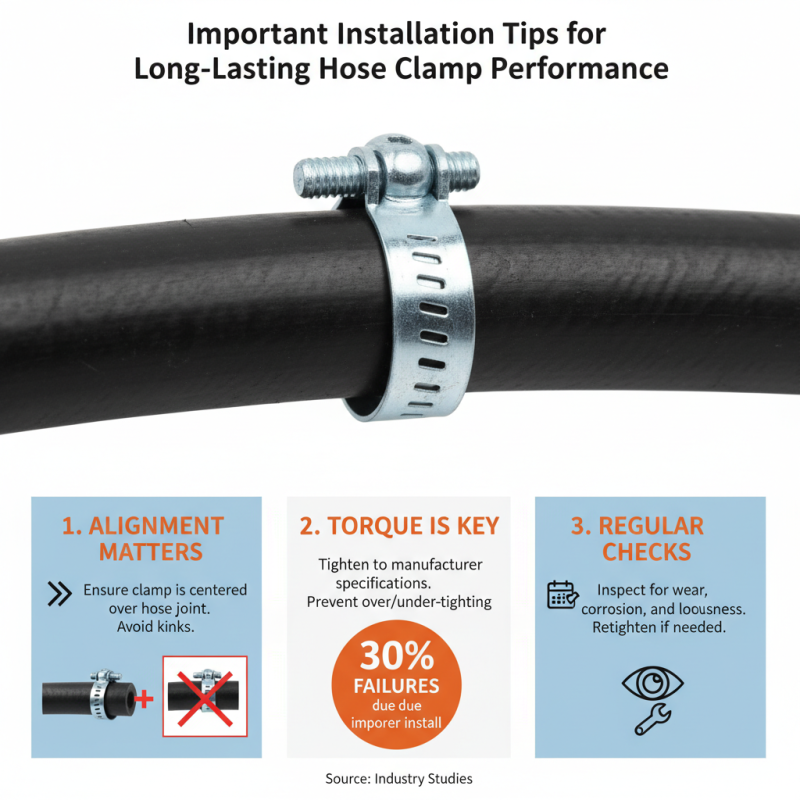
Proper installation of heavy-duty hose clamps is crucial for ensuring their longevity and effectiveness. The way you install these clamps can significantly affect their performance. Misalignment or inadequate tightening can lead to leaks or failures. According to industry studies, nearly 30% of hose clamp failures result from improper installation. This emphasizes the need for attention to detail during the process.
When tightening hose clamps, it’s essential to use the right tools, such as torque wrenches. Over-tightening can cause material fatigue, while under-tightening may not provide a secure fit. A study found that an optimal torque range of 40-50 inch-pounds is often recommended. It’s also important to consider the type of hose material and its specifications. Some materials expand or contract with temperature changes, affecting clamp performance.
Another key factor in hose clamp installation is surface preparation. Ensure that the hose and fitting surfaces are clean and free of debris. This step is often overlooked but is critical for achieving a good seal. Neglecting to clean the surfaces can undermine the clamp’s effectiveness. Additionally, regular inspections for signs of wear or corrosion can prevent unexpected failures and extend the lifespan of your setup.