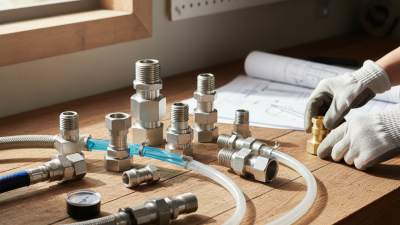
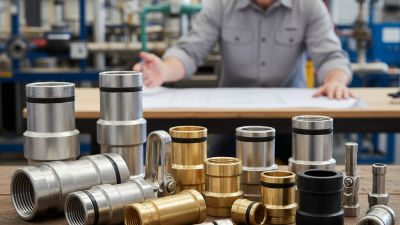
Choosing China’s top camlock fittings supplier requires more than comparing catalog prices. A reliable decision begins with the application. Consider fluid type, working pressure, temperature, connection size, and installation frequency. Aluminum, stainless steel, polypropylene, and brass each suit different operating conditions. A fitting that performs well with water may fail prematurely with chemicals or abrasive media.
Quality-management authority W. Edwards Deming said, “Quality comes not from inspection, but from the improvement of the production process.” This principle applies directly to camlock fittings. Ask suppliers about material certificates, dimensional controls, pressure testing, batch records, and traceability. Request samples before placing a large order. Check the coupling arms, gasket seat, threads, and sealing surface carefully. Small defects can become expensive leaks.
Supplier experience also matters. Review factory equipment, export history, technical support, and response speed. Confirm whether the manufacturer understands international standards and your specific hose system. Clear drawings and written tolerances reduce misunderstandings. So does a documented inspection plan.
Price is only one piece.
A low quotation may exclude testing, packaging, or replacement support. That omission can hurt later. I have seen buyers focus heavily on unit cost and overlook inconsistent gaskets or weak surface finishing. Still, no supplier is perfect. Even a respected factory may need closer supervision for custom dimensions, urgent production, or mixed-material assemblies.
This guide explains how to compare China-based camlock fittings suppliers with greater confidence. It focuses on evidence, application fit, manufacturing consistency, and long-term reliability. The final choice should feel practical, not merely impressive on paper.
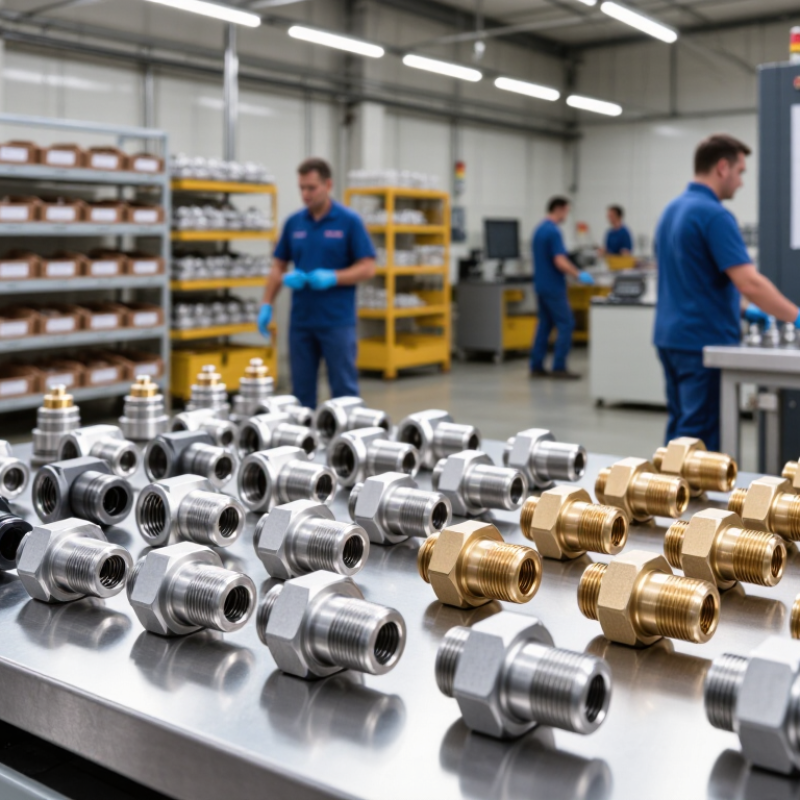
Choosing a China camlock fittings supplier starts with understanding the connection, not the catalog photo. Type A uses a male adapter with a female thread. Type B has a female coupler and male thread. Type C combines a female coupler with a hose shank.
Type D has female threads on both sides. Type E connects a male adapter to a hose shank. Type F uses male threads on the adapter. Sizes commonly range from ½ to 6 inches. A 2-inch hose needs a matching fitting bore, coupling profile, and sealing gasket. Small differences can cause leakage.
Check whether the supplier identifies materials, pressure ratings, temperature limits, and thread standards. Common choices include aluminum, stainless steel, polypropylene, and brass. Confirm NPT or BSP threads before ordering. ISO 7241 is widely referenced for camlock coupling dimensions, while EN 14420-7 may apply to certain hose coupling designs. Ask for material certificates, dimensional reports, and pressure-test records. Reliable factories should also provide samples and batch traceability.
In practical purchasing, inspect the locking arms, gasket seat, pin, and hose tail. The lever should move firmly without scraping. I once trusted a polished surface too quickly. The gasket was the weaker part. No checklist is perfect. Compare drawings, test one working assembly, and review how the supplier handles rejected samples. A clear answer matters more than a low quotation.
| Category | Specification / Dimension | Practical Selection Guidance |
|---|---|---|
| Product function | Quick-connect hose and pipe coupling using two cam arms; normally connected without tools. | Choose a camlock when frequent connection and disconnection is more important than a permanently threaded or flanged joint. |
| Type A | Male cam adapter × male pipe thread. | Used to connect a female camlock coupler to equipment or piping with a female threaded port. |
| Type B | Female cam coupler × male pipe thread. | Used where a quick-connect female coupler must attach to a male threaded outlet or adapter. |
| Type C | Female cam coupler × hose shank. | Suitable for flexible hose assemblies; select the shank outside diameter and hose-construction compatibility carefully. |
| Type D | Female cam coupler × female pipe thread. | Used to connect a male cam adapter to a male-threaded pipe, valve, pump, or manifold. |
| Type E | Male cam adapter × hose shank. | Commonly installed on the end of a flexible hose and connected to a female cam coupler. |
| Type F | Male cam adapter × male pipe thread. | Used to connect a female cam coupler to a female-threaded port or threaded component. |
| Size range | Common nominal sizes: ½, ¾, 1, 1¼, 1½, 2, 2½, 3, 4, 5, and 6 inches. | Confirm the nominal size, actual hose inside diameter, port size, and flow requirement before ordering. |
| Nominal size conversion | ½ in = DN15; ¾ in = DN20; 1 in = DN25; 1¼ in = DN32; 1½ in = DN40; 2 in = DN50. | The inch designation and DN designation are nominal references, not guaranteed outside or inside diameters. |
| Larger size conversion | 2½ in = DN65; 3 in = DN80; 4 in = DN100; 5 in = DN125; 6 in = DN150. | For large couplings, check arm clearance, hose bend radius, lifting weight, and connection space. |
| Aluminum body | Lightweight metal option with good general-purpose corrosion resistance. | Often selected for water, irrigation, fuel-transfer, and general industrial service when compatibility and pressure ratings are confirmed. |
| Stainless steel body | Common grades include 304 and 316 stainless steel. | 316 stainless steel is generally preferred for more demanding chloride, marine, chemical, or hygienic environments; verify the specific medium. |
| Brass body | Copper-alloy construction with good machinability and general corrosion resistance. | Suitable for many water, air, and general-service applications; check dezincification and fluid compatibility where relevant. |
| Polypropylene body | Lightweight thermoplastic option with broad chemical resistance. | Consider for selected agricultural, water, and chemical applications, while checking temperature, pressure, UV exposure, and chemical resistance. |
| Seal material: NBR | Nitrile rubber, also called Buna-N. | Common for petroleum oils, hydraulic oils, and general industrial service; confirm temperature and chemical limits. |
| Seal material: EPDM | Ethylene propylene diene rubber. | Often used with water, hot water, steam, and selected chemicals; generally unsuitable for many petroleum oils. |
| Seal material: FKM | Fluoroelastomer seal. | Selected for higher-temperature service and improved resistance to many oils and chemicals; verify compatibility with alkaline or steam service. |
| Thread options | NPT, BSPP, and BSPT are common thread choices. | NPT is tapered and measured to an inch-based pipe-thread standard; BSPP is parallel; BSPT is tapered. They should not be treated as interchangeable without verification. |
| Primary coupling standards | MIL-C-27487 and its successor designation A-A-27487 are widely referenced for camlock dimensions and interchange concepts. | Request dimensional drawings and mating verification because material, casting design, seals, and manufacturer tolerances can differ. |
| European standard | EN 14420-7, formerly associated with DIN 2828, covers camlock-type hose couplings. | Check whether the selected coupling follows the required European design, pressure, sealing, and hose-assembly requirements. |
| Pressure rating | The allowable working pressure varies with size, material, temperature, seal, connection type, and manufacturer design. | Do not select by size alone. Obtain the rated working pressure, test pressure, temperature derating, and applicable safety factor for the complete assembly. |
| Temperature range | The lowest-rated component, often the gasket or hose, determines the usable temperature range. | Check continuous and intermittent temperatures, thermal cycling, and pressure derating before approving the fitting. |
| Application medium | Typical applications include water, air, agricultural chemicals, petroleum products, powders, and selected corrosive fluids. | Match the body, cam arms, gasket, hose, thread sealant, and any lining to the actual fluid and concentration. |
| Safety requirements | Cam arms should be fully closed and secured; accidental opening can cause hose separation and fluid release. | Use locking clips, safety pins, or suitable restraint systems where vibration, pressure surges, movement, or hazardous fluids are present. |
| Supplier evaluation criteria | Technical drawings, material certificates, dimensional inspection, pressure-test records, traceability, and consistent batch quality. | Compare samples against the required standard, verify interchangeability, request inspection documentation, and confirm packaging and replacement-seal availability. |