Call Us

(905) 670-0113

Why Choose Carbon Steel Pipe for Global Projects?

Why Choose Carbon Steel Pipe for Global Projects?

Global infrastructure still depends on steel for strength, availability, and predictable fabrication. The World Steel Association reported approximately 1.89 billion tonnes of crude steel production in 2023. That scale supports broad manufacturing capacity, established supply chains, and competitive sourcing for international projects. Carbon steel pipe remains common in water systems, structural works, oil and gas facilities, and industrial plants.

It handles high mechanical loads and can be welded, coated, or lined for different service conditions. Project engineers often select grades through pressure, temperature, corrosion, and transport assessments. Standards such as ISO 3183, ASME B31.3, and ASME B31.8 help define material, inspection, and pipeline requirements. These references do not replace project-specific engineering. They create a reliable starting point.

The Energy Institute’s Statistical Review of World Energy 2024 recorded global oil consumption above 100 million barrels per day in 2023. Such demand continues to support investment in pipelines and processing infrastructure, although regional energy strategies are changing. Carbon steel pipe is not perfect. It is heavy, and corrosion protection requires disciplined design and maintenance. Logistics can also become difficult across remote borders. Still, its strength, weldability, and global availability often outweigh these limitations. The real decision depends on soil chemistry, operating pressure, fluid composition, local standards, and lifecycle cost. A cheaper purchase may create higher maintenance expenses later. That point deserves closer review. Reliable projects treat material selection as an engineering decision, not merely a procurement choice.
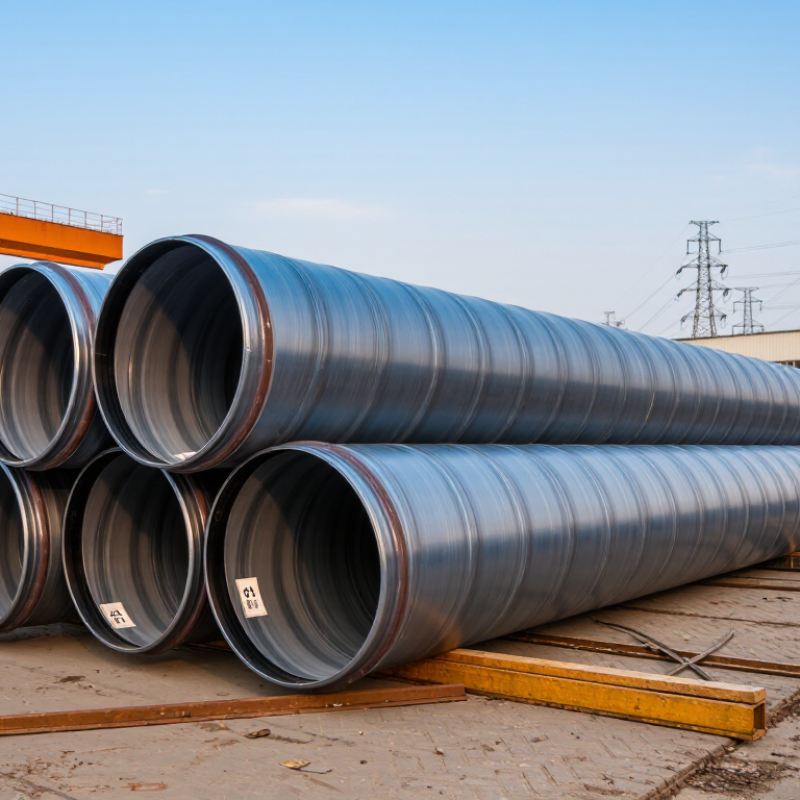
Why Choose Carbon Steel Pipe for Global Projects?

What Is Carbon Steel Pipe and How Is It Classified?

Carbon steel pipe is made mainly from iron and carbon, with small amounts of manganese, silicon, and other controlled elements. Its carbon content usually remains below about 2.1% by mass. This composition gives the pipe useful strength, weldability, and cost efficiency. World Steel Association data reported approximately 1.89 billion tonnes of crude steel production in 2023. That scale reflects steel’s continuing importance in energy, construction, and industrial infrastructure.

Carbon steel pipe is classified in several practical ways. Manufacturing method is one distinction: seamless pipe is formed without a welded joint, while welded pipe is produced from steel plate or strip. Service requirements may determine the choice. A pipeline specification can classify pipe by grade, strength, wall thickness, and chemical limits. Standards such as API 5L, ASTM A106, and EN 10216 are commonly referenced for pressure, transmission, and high-temperature applications. Product diameter is also described as nominal pipe size, not simply by its measured outside diameter.

Field experience shows that classification errors often begin with incomplete project data. Designers should check pressure, temperature, corrosion exposure, joining method, and inspection requirements together. The International Energy Agency has reported that global energy infrastructure investment remains measured in trillions of dollars annually, increasing the need for traceable material selection. Yet no single grade fits every project. That assumption is convenient, but wrong. Carbon steel may need coatings, cathodic protection, or corrosion allowance, especially in wet or saline environments. Product certificates and independent testing still matter.

Which Properties Make Carbon Steel Pipe Suitable for Global Projects?

Carbon steel pipe remains practical for global projects because its properties balance strength, cost, and availability. World Steel Association data recorded nearly 1.9 billion tonnes of crude steel production in 2023. This large supply base supports sourcing across many regions. Carbon steel also offers predictable machining and welding performance when engineers select the correct grade. Its yield strength, impact toughness, and temperature limits still vary significantly. Generic material descriptions are not enough.

The key advantage is adaptability. ISO 3183 defines requirements for steel pipe used in pipeline transportation systems. Project teams can align pipe grades, dimensions, testing, and documentation with recognized requirements. Carbon steel usually tolerates heavy handling on construction sites. It also performs well in buried, structural, and industrial applications when protection is designed properly. Corrosion is the weak point. Coatings, linings, drainage, or cathodic protection may be necessary, especially in wet or saline environments. It is not the perfect answer.

Tips: Confirm the design pressure, temperature, fluid, and soil conditions before ordering. Request traceable mill certificates and independent inspection records. Check weld procedures before fabrication begins. Do not assume a familiar grade suits every climate. A lower purchase price can become expensive after coating repairs, delays, or premature replacement. World Steel Association, World Steel in Figures 2024; ISO 3183.

Why Choose Carbon Steel Pipe for Global Projects?

Which properties make carbon steel pipe suitable for global projects?

The chart compares minimum specified yield and tensile strength values for widely used carbon steel pipe grades. These grades are covered by internationally recognized standards, offering dependable mechanical performance, weldability, broad availability, and suitability for water, oil, gas, structural, and process applications.

Values shown are minimum specified values in MPa based on ASTM A53 Grade B, ASTM A106 Grade B, API 5L Grade B, and EN 10216-2 P265GH requirements. Actual values depend on product size, wall thickness, and specification.

How Does Carbon Steel Pipe Perform Across Different Applications?

Carbon steel pipe performs reliably across many global applications because it combines high strength, practical weldability, and manageable cost. On construction sites, it supports water networks, compressed-air systems, heating lines, and structural frameworks. Field experience shows that properly selected pipe can tolerate vibration, pressure changes, and demanding installation conditions. That practical toughness matters.

In process plants, carbon steel carries oil, gas, steam, and non-corrosive chemicals when the grade matches the service. Engineers must check pressure, temperature, wall thickness, and joining methods before approval. For fire-protection systems, its strength supports large-diameter lines and stable connections. In buried water lines, protective coatings and suitable backfilling help reduce external corrosion. Without that protection, performance can decline faster than expected.

It is not a perfect material. Moisture, salt, acidic fluids, and poor drainage can cause internal or external corrosion. I have seen small coating defects become expensive maintenance problems. Regular thickness testing, weld inspection, and pressure checks provide useful evidence over time. In cold regions, designers should also consider thermal movement and brittle behavior. A lower purchase price may look attractive, but unsuitable material selection can increase repairs, downtime, and safety concerns. Conditions vary by project, so relying on a familiar specification alone can be a mistake.

What Standards and Quality Controls Govern International Supply?

Why Choose Carbon Steel Pipe for Global Projects?

International carbon steel pipe supply depends on controlled specifications, not attractive pricing alone. Project documents should define the required standard, grade, dimensions, wall thickness, end finish, and service conditions. Common references include ASTM, ASME, API, EN, and DIN standards, but they are not interchangeable. Engineers must confirm the correct edition and acceptance criteria before production begins.

Reliable manufacturers verify chemical composition through heat analysis and test mechanical strength, elongation, and impact performance when required. Hydrostatic testing checks pressure resistance, while ultrasonic or radiographic inspection can identify hidden flaws. Each pipe should remain traceable through heat numbers, inspection records, and a material test certificate. In practice, mismatched markings or incomplete certificates can delay customs clearance and installation. Small documentation errors matter.

Tips: Request sample certificates before placing an order. Confirm whether testing is witnessed by an independent inspector. Check markings against the certificate and packing list. Keep communication written, especially when standards or tolerances change.

Quality control is still imperfect. Inspection may reduce risk, but it cannot replace careful engineering review. I have seen projects focus heavily on steel grade while overlooking coating damage, ovality, or poor end protection during transport. Packaging, moisture control, and loading records deserve equal attention. A dependable supply chain connects factory testing with receiving inspection at the final site.

How Should Buyers Select, Transport, and Maintain Carbon Steel Pipe?

Why Choose Carbon Steel Pipe for Global Projects?

How Should Buyers Select, Transport, and Maintain Carbon Steel Pipe?

Choosing carbon steel pipe starts with the service conditions, not the lowest quotation. Buyers should confirm pressure, temperature, fluid type, diameter, wall thickness, and connection method. For structural work, load calculations and local engineering rules remain essential. For water or process lines, corrosion exposure needs closer attention. Ask for material certificates, dimensional records, test results, and traceable heat numbers. A supplier’s documentation should match the pipe markings. Do not rely on photographs alone. Small errors matter.

Transport planning protects that investment. Pipes should rest on padded supports, with spacers preventing metal-to-metal impact. Slings are safer than chains for finished surfaces. End caps should remain fitted during loading and unloading. Long sea routes require ventilation and moisture control, especially when temperature changes create condensation. Saltwater exposure can damage uncoated surfaces quickly. I have seen pipes arrive with sound walls but badly rusted ends. That step is easy to overlook.

Storage should use raised supports, clear drainage, and regular visual inspections. Keep carbon steel away from standing water, chemicals, and incompatible metals. Before installation, remove loose rust and check bevels, threads, ovality, and dents. Coating or internal lining must suit the operating environment and application procedure. Maintenance teams should record wall-thickness readings at fixed points. If corrosion rates exceed the design allowance, review the cause before replacing sections. No selection is perfect; site conditions often challenge the original assumptions.