How to Choose the Right Stainless Steel Tube for Your Project?
Choosing the right stainless steel tube for your project can be challenging. Many factors come into play. The right tube can enhance your product's performance. It can also impact durability and cost.
Consider the tube's size and thickness. These dimensions will affect strength and weight. Not every application requires the same specifications. A thicker tube might suit heavy-duty applications, while a thinner tube works for lighter tasks. Pay attention to the grade of stainless steel as well. Different grades offer varying levels of corrosion resistance, strength, and weldability.
Understanding your project’s needs is crucial. This helps you avoid costly mistakes. A poor choice could lead to structural failures or increased maintenance. Reflecting on these factors will guide you to make an informed decision. This is essential for the success of your project.
Understanding Types of Stainless Steel Tubes and Their Applications
When selecting stainless steel tubes, understanding their types and applications is crucial. Stainless steel tubes come in various grades. The 304 and 316 grades are the most common. The 304 grade is versatile and widely used in industries like food processing and pharmaceuticals. However, for marine environments, 316 grade is preferred due to its superior corrosion resistance.
According to industry reports, over 60% of stainless steel tube applications are in construction and manufacturing. They endure harsh conditions. The choice of tube size and wall thickness also affects performance. Thin-walled tubes may not provide adequate strength for specific applications. For example, a tube with a wall thickness of 0.5 mm may buckle under high pressure, posing a risk.
Each project may demand different qualities from stainless steel tubes. Some require high-temperature resistance, while others may prioritize aesthetic finish. Conducting a thorough needs assessment is vital. Overlooking any project specifications can lead to costly errors. Make sure to analyze all options before finalizing your choice.
Key Factors to Consider When Selecting Stainless Steel Tubes
When selecting stainless steel tubes for a project, several key factors come into play. First, consider the specific application. Different projects may require unique properties. For instance, if the tube will be exposed to high temperatures, a higher grade of stainless steel might be necessary. Think about the environment too. Will it face corrosion? Choosing the right finish can significantly enhance the tube's durability.
Another important factor is the diameter and thickness of the tube. These measurements not only affect strength but also the flow rate, especially in hydraulic systems. A poor choice can lead to inefficiencies or even failures. It’s essential to consult engineering charts, but remember that these specifications should be tailored to your design.
Lastly, reflect on the manufacturing processes. Tubes can be constructed through welding or seamless methods. Each has its advantages and drawbacks, impacting cost and strength. It's vital to weigh these options carefully. Given the variety of choices and possibilities, it may take time to find the perfect fit. Don't rush this decision; the right tube is crucial for success.
Comparing Different Grades of Stainless Steel for Tube Selection
When selecting the right stainless steel tube for your project, understanding the differences between grades is crucial. The most common grades are 304 and 316. According to the Stainless Steel Development Association, Grade 304 contains 18% chromium and 8% nickel. It offers good corrosion resistance and is widely used in various industries. It is ideal for kitchen equipment and food processing.
On the other hand, Grade 316 contains molybdenum, which enhances its resistance to sodium chloride and acidic environments. This makes it preferable for marine applications and chemical processing. A report by the International Stainless Steel Forum indicates that Grade 316 is about 20% more expensive but offers substantial benefits for specific uses.
Choosing the right grade isn't always straightforward. Factors like environment, temperature, and exposure to chemicals must be considered. Sometimes, the less expensive option might turn out to be more costly in the long run due to corrosion. This illustrates the complexity involved in material selection. Understanding these differences can prevent costly mistakes and ensure your project’s success.
Evaluating Tube Dimensions and Specifications for Your Needs
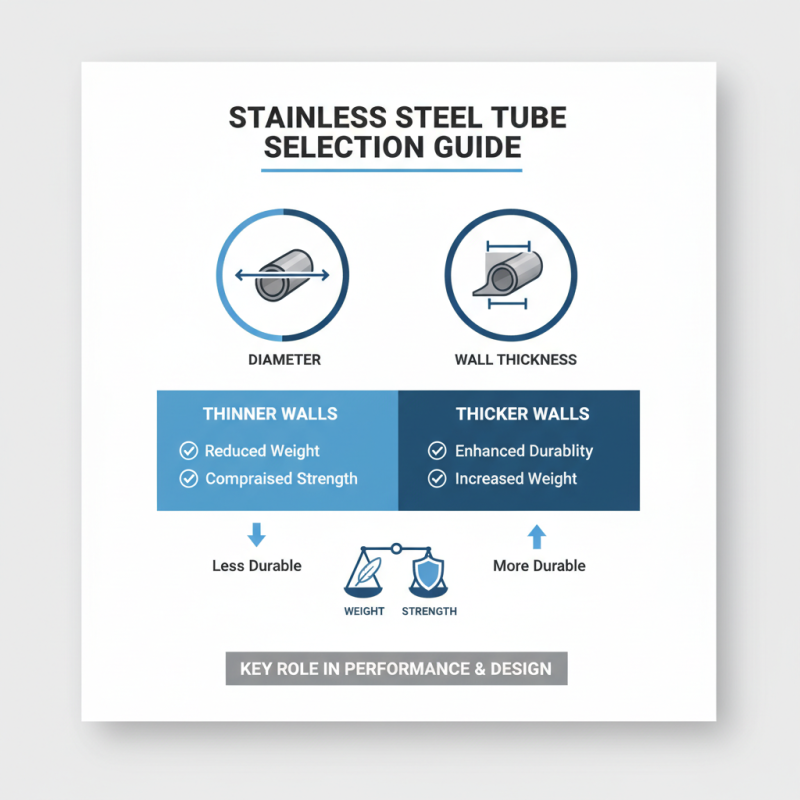
When choosing the right stainless steel tube, understanding dimensions and specifications is crucial. The diameter and wall thickness play key roles in performance. For example, thinner walls may reduce weight but can compromise strength. Conversely, thicker walls provide durability but add weight, affecting your overall design.
Tips: Measure the space where the tube will fit. Ensure it aligns with your project’s structural needs. Also consider the tube's length. It should be suitable for your intended application.
The finish of the tube impacts aesthetics and functionality. Some applications require a smooth finish to prevent contamination. Others may prioritize a rougher texture for better adhesion. Remember, it’s okay to re-evaluate your choices. Perhaps the initial pick isn't the best for your goals. Iteration can lead to improved outcomes.
Tips: Consult with professionals if unsure. They can provide insights on specifications you might overlook. This may save time and effort in the long run. Choose wisely and embrace flexibility in your decision-making process.
Cost Considerations and Supplier Options for Stainless Steel Tubes
When considering stainless steel tubes for your project, cost is a pivotal factor. Prices can oscillate based on the type of stainless steel, dimensions, and thickness. For instance, 304 stainless steel is often more affordable than 316. But does a lower price mean better value? Not necessarily. A cheaper tube may not withstand harsh environments, leading to higher replacement costs over time.
Supplier options are equally important. Some suppliers offer bulk discounts, while others focus on custom fabrication. It’s essential to evaluate these options carefully. Have you compared suppliers for quality and price? Requesting samples may help in making an informed decision. You might find that a supplier with a higher upfront cost provides greater durability and lower long-term expenses.
Additionally, don't overlook shipping costs. These can significantly impact your project's budget. Some suppliers may offer free shipping over a certain amount, while others charge high fees. Carefully calculate the total cost of acquisition, including any hidden fees. Always prepare to revise your budget to accommodate for unforeseen expenses. Making a well-informed choice can lead to better project outcomes.
Cost Comparison of Different Stainless Steel Tubes