China Best Phase Regulator Manufacturers and Suppliers
Reliable voltage control is becoming more important as factories, data centers, and commercial buildings add sensitive electronic equipment. The IEA’s Electricity 2024 report expects global electricity demand to keep growing through 2026. It also highlights stronger consumption from industry, cooling, and data centers. These loads can expose weak grids, voltage fluctuations, and uneven three-phase conditions.
This guide examines China Best Phase Regulator Manufacturers and Suppliers through practical purchasing criteria. A dependable Phase Regulator should maintain stable output under changing loads. It should also provide clear efficiency data, response performance, protection functions, and service documentation. IEC 60038 offers reference values for standard supply voltages. IEC 61000-4-30 defines methods for measuring power quality characteristics. Responsible manufacturers should understand these references, even when products serve different regional markets.
Factory experience matters.
Buyers should inspect test reports, wiring diagrams, component brands, and factory quality procedures. ISO 9001 certification can support process consistency, but it cannot replace product-level testing. Ask for installation examples involving motors, CNC equipment, medical systems, or server rooms. Check ambient temperature, load type, phase imbalance, and bypass requirements before comparing prices. A low quotation may hide limited monitoring or weak after-sales support. That is an uncomfortable point, but it deserves attention. No catalog can replace a proper site survey. Performance claims also require independent verification, because published figures may use different test conditions. This overview helps purchasers compare technical capability, manufacturing reliability, and long-term service value with greater confidence.
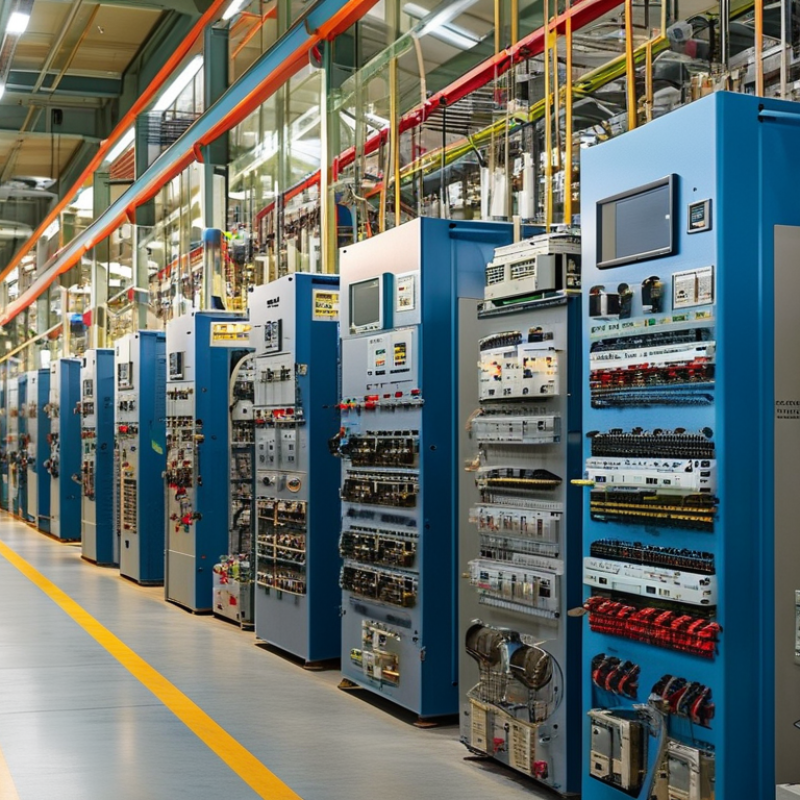
What Is a Phase Regulator and How Does It Work?
A phase regulator is a power-system device that controls the phase angle of alternating-current voltage. It helps direct active power through selected transmission paths. This matters when parallel lines carry uneven loads. Without control, one line may become crowded while another remains underused.
Inside the regulator, a transformer creates a controlled voltage component. The device injects this component into the line with a phase shift. The resulting voltage changes the angle between sending and receiving ends. Power flow then moves toward the desired circuit. A tap changer adjusts the setting, while sensors monitor voltage, current, temperature, and load direction. The control cabinet compares live measurements with preset limits and sends commands to the tap mechanism. It works quietly.
In field inspections, engineers check contact wear, oil condition, insulation resistance, and control response. These details often reveal problems before an outage occurs. A reliable supplier should provide verified test records, clear drawings, thermal data, and maintenance guidance. Factory testing should include tap operation and protection functions under realistic conditions. However, a phase regulator is not a magic valve. Grid impedance, changing generation, and communication delays can affect its response. Some settings may also create unwanted voltage changes. Engineers must review system studies rather than trust a single rating. That caution is easy to overlook.
Key Types of Phase Regulators Used in China
China’s phase regulator market serves factories, laboratories, building systems, and renewable-energy equipment. The most common type is the thyristor phase-angle regulator. It adjusts AC output by changing the firing angle of SCRs. This design responds quickly and suits resistance heaters, infrared equipment, and industrial furnaces. However, it can introduce harmonics and electrical noise.
Triac regulators are another practical choice for single-phase, lower-power loads. They are compact and economical. Technicians often use them for lighting, small heating units, and ventilation equipment. For sensitive machinery, transformer-based regulators may be safer. Servo-controlled regulators adjust transformer taps through a motor, delivering steadier voltage with lower waveform distortion. They react more slowly, though. That trade-off matters in production lines with sudden load changes.
Three-phase regulators support pumps, compressors, CNC equipment, and large heating systems. A balanced design monitors each phase and reduces uneven motor stress. Digital closed-loop regulators add voltage, current, temperature, and fault monitoring. In field testing, installers should check cooling airflow, terminal tightening, and output stability under real load. Laboratory figures can look excellent, yet dusty workshops may expose weak heat dissipation. Selection should consider load type, starting current, allowable harmonics, enclosure protection, and local electrical requirements. Mistakes still happen. A regulator rated only by kilowatts may fail when the load is inductive or frequently switched.
How to Evaluate Chinese Phase Regulator Manufacturers
Evaluating Chinese phase regulator manufacturers requires more than comparing prices and product photos. A capable supplier should explain voltage range, phase accuracy, response time, load capacity, and cooling design in clear technical language. Ask for datasheets, wiring diagrams, inspection records, and test results from recent production batches. A polished catalog is not proof.
Review the factory’s quality process. Check whether incoming components are inspected, units receive full-load testing, and calibration records are retained. Request a video audit or arrange an independent inspection when order value is significant. Pay attention to test conditions. A regulator tested at room temperature may behave differently beside a hot industrial cabinet. Samples should be tested with your actual load, including motors, heaters, or sensitive control equipment. Small details matter.
Reliable communication is equally important. The manufacturer should answer technical questions directly and identify limits instead of promising universal compatibility. Confirm production capacity, lead time, packaging protection, spare parts, warranty terms, and support after delivery. Certifications can support credibility, but verify their scope and issuing details. I would not rely on one sample alone; component substitutions and rushed production remain possible. A second inspection may feel excessive, yet one hidden defect can cost more than the inspection itself. Evaluate documentation, people, testing, and factory behavior together.
Leading Manufacturing Capabilities and Supplier Services
China’s phase regulator manufacturers are strengthening production as electrical loads become more variable. The IEA Electricity 2024 report projects global electricity demand to grow by about 3.4% annually from 2024 to 2026. That pressure increases demand for stable voltage control, accurate phase balancing, and responsive protection.
Leading factories combine engineering depth with disciplined production. Their teams should verify winding design, thermal performance, response time, and insulation strength before shipment. A reliable supplier can provide wiring diagrams, test records, calibration details, and traceable quality documents. Look for ISO 9001-based processes, controlled component storage, and final inspection under realistic loads. Small details matter. A loose terminal can damage confidence quickly.
Supplier service also separates capable manufacturers from ordinary traders. Experienced teams can adjust rated voltage, current range, enclosure structure, communication ports, and installation methods for different projects. They should support sample testing, technical consultation, remote troubleshooting, and replacement-part planning. According to the U.S. Department of Energy, motor systems account for a significant share of industrial electricity use, making efficient voltage management commercially important. Yet customization is not always an advantage. Excessive changes may complicate maintenance and spare-part control. I have seen technically impressive units delayed by incomplete drawings and unclear responsibility. That weakness deserves attention. A dependable manufacturing partner communicates limits, delivery risks, and testing conditions before accepting an order.
China Best Phase Regulator Manufacturers and Suppliers - Leading Manufacturing Capabilities and Supplier Services
Representative engineering benchmarks commonly specified for three-phase voltage regulation equipment. Values are technology-level references rather than company or brand data.
Electronic regulators generally provide the fastest response and highest regulation accuracy, while servo and buck-boost designs are commonly selected for broader correction ranges and cost-effective industrial applications. Final specifications depend on load profile, voltage class, harmonics, and local standards.
Applications, Standards, and Purchasing Considerations
China Best Phase Regulator Manufacturers and Suppliers: Applications, Standards, and Purchasing Considerations
Phase regulators, especially phase-shifting transformers, help control power flow between transmission corridors. They also reduce overload risks during renewable generation changes. IRENA’s Renewable Capacity Statistics 2024 recorded 473 GW of renewable capacity added worldwide in 2023. This growth increases the need for flexible grid control.
Industrial furnaces, data centers, and large motor systems can also require stable voltage and controlled phase angles. Field conditions matter. A laboratory rating may not reflect dusty substations, frequent switching, or uneven cooling.
Purchasers should check compliance with IEC 60076-1 for transformer requirements and IEC 60214-1 for tap changers. IEEE C57.131 can support short-circuit testing and mechanical verification.
Ask suppliers for temperature-rise results, insulation levels, no-load losses, impedance tolerance, and factory acceptance records. The IEA’s Electricity 2024 report expects global electricity demand growth of about 4% in 2024 and 2025. That pressure makes efficiency and serviceability important, not optional.
Request a clear phase-shift range, control accuracy, response time, protection logic, and spare-parts plan. Review the warranty language carefully. Some quotations look complete, but commissioning support is missing.
A lower initial price can create higher outage costs. Supplier audits, witnessed tests, traceable materials, and documented quality procedures provide stronger purchasing confidence.
Sometimes, buyers focus too heavily on capacity. Reliability deserves equal attention.
