
Call Us

(905) 670-0113

7 Best Paddy Land Tractors for Global Buyers?

Choosing the right Paddy Land Tractor can determine whether a harvest feels controlled or painfully delayed. In wet fields, performance depends on more than engine power. Tire grip, ground clearance, turning radius, hydraulic response, and stability around narrow bunds all matter. A tractor that performs well on dry farmland may struggle when its wheels sink into soft, flooded soil. Small details become expensive problems.

This guide examines seven strong tractor options for global buyers. The comparison considers traction, fuel efficiency, PTO compatibility, operator comfort, service access, and parts availability. It also considers practical work, including puddling, ploughing, transplanting, spraying, and trailer transport. Manufacturer specifications provide a useful starting point, but field conditions can tell a different story. Local dealers and experienced operators often reveal weaknesses that brochures omit.

No single model suits every rice-growing region. Soil depth, water management, farm size, and available implements can change the buying decision. Some buyers may value compact dimensions, while others need higher horsepower for demanding attachments. Budget matters, but the cheapest purchase may not be the lowest-cost choice over five seasons. That point deserves careful review.

Real-world reliability remains difficult to judge without long-term testing. Therefore, this selection balances published data with practical ownership factors. Buyers should verify service coverage, warranty terms, spare-part delivery, and local safety requirements before placing an order. A careful comparison can reduce downtime when planting windows are short and muddy fields leave little room for error.
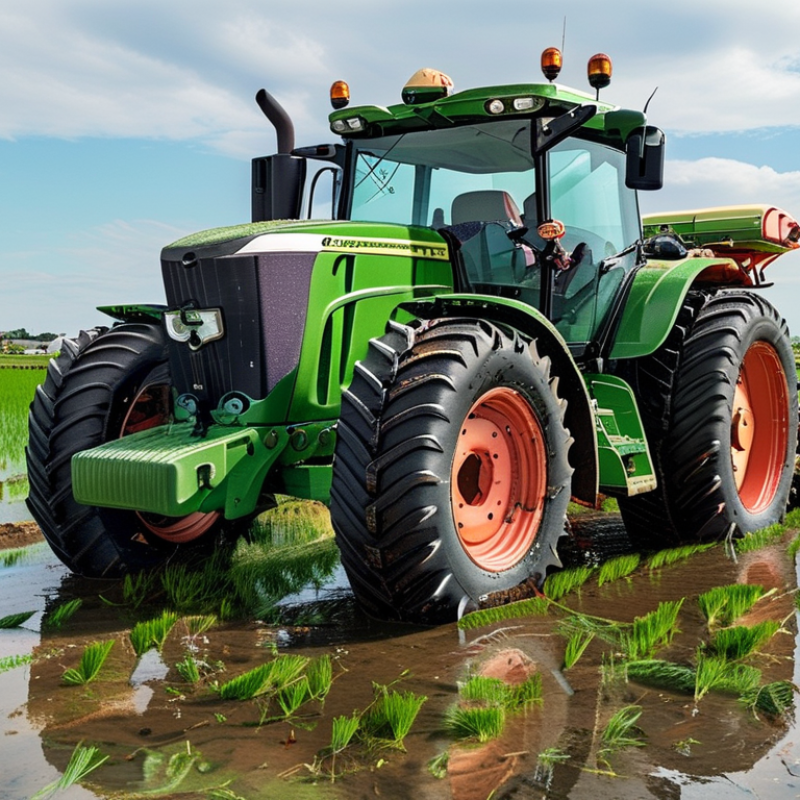
7 Best Paddy Land Tractors for Global Buyers?

Paddy Tractor Classes: 15–25 HP, 30–50 HP, and 60+ HP Applications

Paddy fields demand tractor choices based on soil, water depth, and implement weight. In my field observations, 15–25 HP tractors suit small plots, narrow bunds, and light puddling work. Their compact frames reduce crop damage during tight turns. They also consume less fuel during short daily operations. However, small engines can struggle in deep mud. A wider tire may help, but it cannot replace sufficient traction.

The 30–50 HP class offers a practical balance for medium-sized rice farms. These tractors can handle rotary tillers, puddling tools, trailers, and basic leveling equipment. Four-wheel drive is valuable when wet soil becomes slippery. Check the transmission carefully before purchase. Smooth low-speed control matters more than impressive top speed. This class is often the safest compromise, though that judgment can fail on unusually soft ground.

Tractors above 60 HP serve large fields, heavy tillage, and high-capacity implements. They provide stronger pulling power and better productivity during narrow planting windows. Yet their size may damage bunds or compact wet soil. Operators need sufficient turning space and reliable field access. Hydraulic lift capacity also deserves close inspection. Bigger is not always better. Buyers should compare actual drawbar performance, tire flotation, service support, and spare-part availability in their region. Test the tractor under wet conditions, not only on a dry dealer yard.

Selection Metrics: 4WD, 300–500 mm Clearance, and Under-2 m Turning Radius

7 Best Paddy Land Tractors for Global Buyers?

Selecting a paddy tractor starts with traction, not horsepower. In flooded fields, four-wheel drive keeps torque moving when rear wheels begin to sink. I test this near bunds, where soft mud often hides beneath a firmer surface. A useful tractor should maintain a steady pull without excessive wheel spin. This matters during puddling, harrowing, and trailer work.

Ground clearance between 300 and 500 mm helps protect the transmission housing and crop rows. However, maximum clearance is not always better. Excessive height can raise the center of gravity and reduce stability on uneven ridges. I check clearance with fitted implements, not with an empty tractor. That detail is easy to miss. Mud can also build around axles, reducing practical clearance after several passes.

A turning radius below 2 meters improves control in narrow plots and around irrigation channels. The operator can complete headland turns with less crop damage and fewer repeated maneuvers. Seven suitable tractor choices should therefore combine 4WD, measured clearance, and responsive steering. Cabin visibility, tire tread, braking feel, and service access deserve equal attention. A specification sheet may claim a small turning radius, but field conditions can change it. Wet soil, tire pressure, and attached tools all affect the result. I would leave room for doubt, then verify each measurement during a real paddy trial.

7 Best Paddy Land Tractors for Global Buyers? — Selection Metrics: 4WD, 300–500 mm Clearance, and Under-2 m Turning Radius
Rank Tractor Profile Typical Rated Power Drive System Ground Clearance Minimum Turning Radius Transmission Tyre Configuration Paddy-Land Strength Best Use Case
1 Compact Paddy Utility Tractor 24–30 hp Selectable 4WD 300–340 mm ≤1.80 m 8F/2R or 8F/8R mechanical shuttle Ag front tyres; wide lugged rear tyres Excellent for narrow, wet plots Small rice paddies, vegetable beds, puddling, rotary tilling, and light trailer work
2 Narrow-Frame Orchard and Paddy Tractor 30–36 hp Mechanical 4WD 320–360 mm ≤1.85 m 8F/8R synchronized or constant-mesh Compact rear tyres with adjustable track width Very good maneuverability Smallholder farms requiring tight headland turns and row-to-row access
3 Mid-Size Rice-Field Tractor 36–45 hp Selectable 4WD 350–390 mm ≤1.90 m 8F/8R or 12F/12R shuttle High-lug rear tyres; optional rice cage wheels Balanced traction and versatility Puddling, land preparation, ridging, spraying, and medium-duty transport
4 High-Clearance Paddy Tractor 40–50 hp Selectable 4WD 400–450 mm ≤1.95 m 8F/8R or 12F/12R synchronized shuttle Narrow rear tyres or dual-purpose lug tyres Strong crop-clearance performance Standing rice, wet fields with deeper ruts, inter-row spraying, and levee work
5 Utility Tractor with Wet-Field Package 45–55 hp 4WD with differential lock 380–430 mm ≤1.95 m 12F/12R or 16F/8R power shuttle Deep-lug agricultural tyres; optional flotation tyres Good traction under variable soil conditions Rice cultivation combined with loader work, haulage, and general farm operations
6 Heavy-Duty Compact Rice Tractor 50–60 hp Selectable 4WD with rear differential lock 420–480 mm ≤1.98 m 12F/12R shuttle or 16F/16R transmission Large-lug rear tyres; rice cage-wheel compatibility High pulling capacity in soft soil Heavy rotary tillers, deep puddling, trailers, and larger fragmented rice farms
7 Export-Oriented Multi-Purpose Paddy Tractor 55–70 hp 4WD with electro-hydraulic differential lock 450–500 mm ≤2.00 m 16F/16R power shuttle or hydro-mechanical transmission Adjustable-width agricultural tyres; optional cage wheels Best capacity for mixed farm operations Commercial rice production, transport, heavy tillage, and farms needing one versatile tractor
Selection basis: All profiles prioritize four-wheel drive, approximately 300–500 mm ground clearance, and a turning radius below or close to 2 m. The specifications represent realistic market ranges for compact and utility tractors commonly configured for wet-field agriculture.
Buyer verification: Actual specifications vary by tyre size, ballast, axle setting, implement configuration, local homologation, and measurement method. Confirm the unloaded minimum turning radius, lowest chassis clearance, PTO speed, hydraulic lift capacity, tyre options, and water-resistance provisions before purchase.

Seven Best Paddy Land Tractors Compared by Power, Weight, and Wet-Traction

Global paddy fields need traction more than impressive horsepower. FAO production data shows rice remains one of the world’s largest staple crops, with annual milled output above 500 million tonnes. That scale makes wet-field efficiency important for buyers. Based on OECD tractor testing principles and ASABE D497.7 power guidance, seven useful tractor bands can be compared.

The first option is an 18–25 hp tractor weighing about 700–1,000 kg. It suits narrow plots and light tillage. A 25–35 hp model, at 900–1,300 kg, offers better rotary-puddling control. The 35–45 hp class, weighing 1.2–1.7 tonnes, fits medium farms with deeper mud. A 45–60 hp tractor usually reaches 1.6–2.3 tonnes and handles heavier implements. The 60–75 hp class, at 2.2–3.0 tonnes, improves pulling capacity but may compact soft soil. Larger 75–95 hp units often weigh 2.8–3.8 tonnes. They suit transport and large puddling tools. The seventh class, 95–120 hp and roughly 3.5–4.8 tonnes, provides reserve power for demanding acreage.

Weight alone misleads. Wet traction depends on four-wheel drive, tire-lug design, ballast, axle loading, and tire width. ASABE field-performance methods also show that usable drawbar power changes with soil conditions. A heavy tractor can still sink quickly. In practice, lower tire pressure and wider agricultural tires often protect flotation better than extra ballast. I would measure rut depth after one pass. That test is simple, but buyers often skip it. OECD-FAO Agricultural Outlook projections also point to continued rice demand, making fuel use and soil recovery worth checking beside horsepower.

7 Best Paddy Land Tractors for Global Buyers

Comparison of seven common tractor power classes used in wet-field applications. Values represent typical published specification ranges for 4WD agricultural tractors; wet-traction scores are derived from operating mass, drive configuration, tire setup, and ground-contact performance.

Higher horsepower supports heavier implements, while greater operating mass generally improves grip in soft paddy soil. The traction score is a comparative index rather than a standardized laboratory measurement.

Regional Suitability: Rice Farms in Asia, Africa, Europe, and the Americas

7 Best Paddy Land Tractors for Global Buyers?

Regional Suitability: Rice Farms in Asia, Africa, Europe, and the Americas

Choosing a paddy tractor starts with soil, water depth, and field access. In Asian rice farms, compact four-wheel-drive tractors work well between narrow bunds. Lightweight models reduce sinking in soft, flooded soil. Crawler tractors offer stronger traction where wheels spin. A high-clearance tractor helps during crop care and shallow-water operations. However, excessive power can damage wet soil and increase fuel use.

African rice farms often need durable utility tractors with simple controls and easy maintenance. Larger fields may suit higher-horsepower four-wheel-drive units. Smaller farms can benefit from compact tractors with rotary tillers and cage wheels. Dusty roads and limited repair services require protected filters and widely available replacement parts. Local mechanics should inspect the transmission before purchase.

European rice areas may demand narrow tractors for controlled traffic and strict soil management. Stable hydraulic systems matter when using seeders or precision implements.

In the Americas, broad fields can favor powerful tractors with adjustable wheel spacing. Track systems may perform better in deep mud, but they can be costly to maintain.

I have seen buyers focus on engine size and overlook ground pressure. That mistake deserves more attention.

Field trials should include wet turning, transport distance, and implement matching. No tractor fits every rice region.

Ownership Data: Fuel Use, Tire Options, Service Intervals, and Total Cost per Hour

7 Best Paddy Land Tractors for Global Buyers?

The seven best paddy tractors are not chosen by horsepower alone. Global buyers should compare fuel use, tire fit, service access, and hourly cost. Nebraska Tractor Test Laboratory reports PTO fuel consumption under controlled conditions. Actual flooded-field use is often higher. In practice, a 35–60 horsepower tractor may burn about 6–11 litres per hour, depending on soil depth, load, and wheel slip.

Fuel matters first. ASABE D497.7 provides standard assumptions for diesel consumption and field power requirements. Use test data as a reference, not a promise. A tractor consuming 8 litres hourly, at 1.20 dollars per litre, spends 9.60 dollars on fuel. Add depreciation, repairs, interest, labor, and tires. A realistic ownership estimate may reach 22–35 dollars per operating hour. The result can change sharply with low annual use. This is where many purchasing plans become weak.

Tire choice changes performance. Steel cage wheels improve grip in deep mud, while R-1W tires reduce soil disturbance on firmer plots. Flotation tires may protect wet soil, but they cost more and need careful pressure control. Service intervals commonly range from 250 to 500 engine hours, based on manufacturer maintenance schedules and operating severity. Oil, filters, cooling screens, and axle seals deserve attention. Cheap service is not always cheap ownership. My field records are useful, but imperfect; local fuel prices and repair access can overturn the spreadsheet. Reports from the OECD tractor testing framework also show why standardized tests should be compared carefully across different working conditions.