Best Impact Socket Types for Every Mechanic's Toolbox?
Impact Sockets are essential tools for any mechanic's toolbox. According to Jason Lee, a renowned expert in automotive tools, "Choosing the right impact socket can significantly boost both efficiency and safety." This statement underscores the importance of selecting appropriate sockets to handle varying tasks without compromising quality.
Different types of impact sockets exist, each designed for specific applications. For instance, deep sockets allow access to recessed fasteners, while impact swivel sockets provide versatility in tight spaces. Yet, not all sockets are equal, and choosing the wrong type may lead to stripped nuts or damaged components. This reflects a common oversight among mechanics, emphasizing the need for proper education on tool selection.
Mechanics often struggle with integrating a full range of impact socket types into their workflow. Having the right socket isn’t just about convenience; it’s about achieving precision and security in repairs. A well-rounded toolbox can enhance a mechanic's effectiveness. However, many still overlook the fine details that make impact sockets a worthy investment.
Essential Types of Impact Sockets for Mechanics
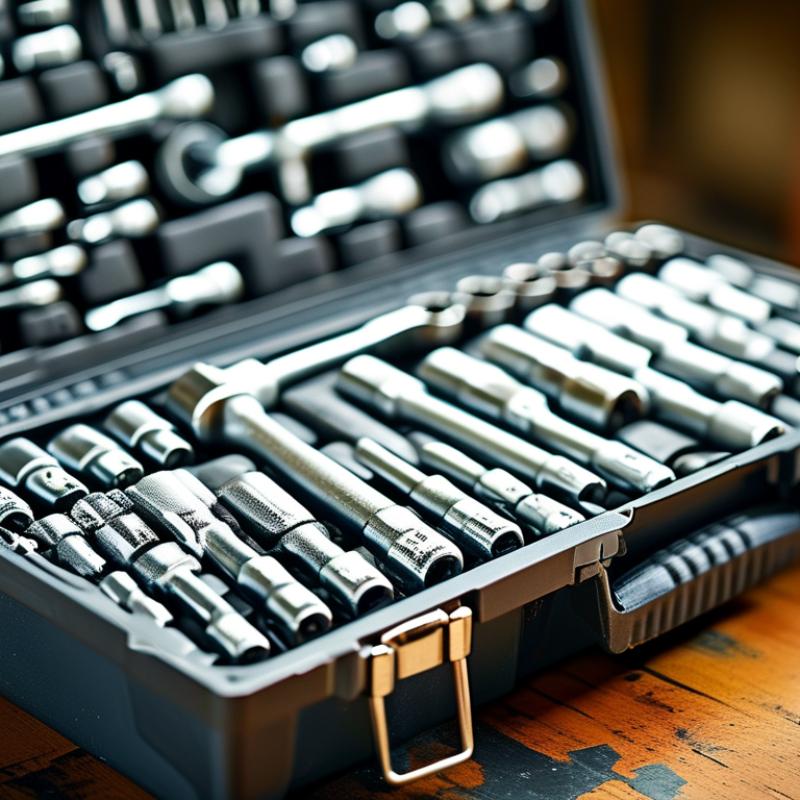
When it comes to building a mechanic's toolbox, selecting the right impact sockets is essential. Mechanics often face various tasks that demand specific tools. Impact sockets come in various shapes and sizes to meet these needs, ensuring durability and efficiency. For common automotive applications, 6-point and 12-point sockets are fundamental. The 6-point type provides a stronger grip, reducing the risk of rounding off nuts and bolts.
Deep impact sockets are also crucial for those tough-to-reach fasteners. Their extended length helps mechanics tackle deeper bolts without hassle. Swivel impact sockets offer unique versatility. They allow access to tight spaces, especially in engine bays, where angles can be tricky. Each socket type is created with the mechanic's workflow in mind, enhancing productivity and overall performance.
Understanding the purpose of each socket is vital. While it may seem easy to select a generic set, the nuances of each type can make a decisive difference. Choosing the right impact socket enhances not just efficiency but also the longevity of both the tools and the vehicles they work on. Mechanics should continually assess their toolkit and adapt as needed, ensuring they have the right equipment for every job.
Deep vs. Shallow Impact Sockets: Which to Choose?
When it comes to impact sockets, the choice between deep and shallow sockets depends on your needs. Deep sockets are designed to reach fasteners that are recessed or buried deep within components. Their longer design allows mechanics to work with longer bolts or studs effectively. This makes them ideal for applications like suspension work, where clearance can be an issue.
On the other hand, shallow sockets are more compact and provide quick access to fasteners in tight spaces. They are perfect for standard applications, especially in engines or vehicle exteriors where space isn’t as restricted. However, the choice is not straightforward. In some cases, using a shallow socket may not give you the leverage you need for stubborn bolts.
Selecting the right type can seem daunting. The right socket can make a repair easier, or it can complicate your task. Many mechanics have faced situations where the wrong socket choice delayed their work. Reflecting on your toolbox and the common tasks you perform will help in building a balanced selection of both deep and shallow impact sockets.
Best Impact Socket Types for Every Mechanic's Toolbox
| Socket Type | Depth | Use Cases | Pros | Cons |
| Deep Impact Socket | Deep | Suitable for recessed fasteners, such as on axles | Better torque application, great for deep access | Bulkier, may not fit in tight spaces |
| Shallow Impact Socket | Shallow | Ideal for standard bolts and screws | Compact, easier to maneuver in tight spots | Limited reach for deep-seated fasteners |
| Impact Socket Set | Various | Comprehensive coverage for various fasteners | Versatile, convenient, great for various applications | Can be more expensive, may have unused sizes |
| Metric Impact Sockets | Varies | For vehicles with metric fasteners | Precise fit, standard for many modern vehicles | Not suitable for imperial fasteners |
| Imperial Impact Sockets | Varies | For vehicles with imperial fasteners | Standard for older vehicles, wide availability | Not suitable for metric fasteners |
The Role of Drive Size in Impact Socket Selection
When selecting impact sockets, the drive size plays a crucial role. Understanding the connection between socket drive size and torque output is essential for any mechanic. Common drive sizes include 1/4 inch, 3/8 inch, and 1/2 inch, each designed for specific applications. According to industry data, a 1/2 inch drive is ideal for heavy-duty tasks, delivering higher torque without compromising durability. In contrast, a 3/8 inch drive suffices for moderate applications, while a 1/4 inch drive suits lighter jobs.
Notably, the proper socket drive size can significantly improve efficiency. The wrong size may lead to stripped bolts or wasted effort. One study reported that using the correct drive size can enhance productivity by up to 30%. Metrics like torque specifications and vehicle service requirements are invaluable in deciding the right size. Yet, not all mechanics prioritize this aspect, leading to frequent mistakes that could easily be avoided.
Reflecting on the impact of socket selection reveals the need for ongoing education. Many mechanics rely on intuition rather than data-driven choices. This oversight can result in costly errors and unnecessary wear on tools. Continually assessing your toolbox and adapting to industry standards can lead to better outcomes. Committing to education and understanding the range of drive sizes available will enhance overall performance in the workshop.
Material and Durability: Understanding Socket Composition
Understanding socket composition is crucial for every mechanic. The material affects performance and durability. Common materials include chrome vanadium and chrome molybdenum. Both metals offer strength but have different properties.
Chrome vanadium sockets are known for their tensile strength. They can withstand high torque without breaking. However, they may show wear sooner than other options. A mechanic might find themselves replacing these sockets frequently.
On the other hand, chrome molybdenum is tougher and more resistant to impact. Mechanics appreciate its ability to endure heavier loads. Yet, it can be slightly more expensive. Choosing the right material depends on your specific needs and budget. Evaluating both options can lead to better decisions in the long run.
Specialized Impact Sockets for Unique Automotive Applications
When it comes to automotive work, having the right tools is essential. Impact sockets are a vital part of any mechanic's arsenal. They are designed to withstand high torque and are built to last. However, not all impact sockets are the same. Different automotive applications require specific types. Understanding these differences can enhance your efficiency and safety.
For instance, deep impact sockets are ideal for reaching fasteners in tight spaces. They allow maximum access without stripping the hardware. Conversely, shallow impact sockets are suitable for more exposed nuts and bolts. Selecting the right socket for your task can mean the difference between ease and frustration.
Specialized impact sockets, such as those for oxygen sensors or brake calipers, serve unique purposes. When working on these components, having the correct socket can streamline the process. Even the most seasoned mechanics sometimes overlook the importance of these specialized tools. Reflecting on your toolbox can reveal gaps that may hinder your efficiency in the shop. Invest time in evaluating what you truly need.
