China Best Turn Mill CNC Machine Suppliers?
Finding China’s best Turn-Mill Cnc Machine suppliers requires more than comparing prices. A reliable supplier must prove machining capability, process control, and after-sales support. Buyers should examine spindle specifications, turning diameter, milling power, tool capacity, and axis configuration. Factory videos are useful, but verified evidence matters more.
Professor Yusuf Altintas, a leading authority in machining science, stated, “The machine tool is the mother machine of all machines.” His observation explains why supplier selection deserves technical attention. A strong Chinese manufacturer should provide test-cut videos, dimensional inspection records, factory references, and clear documentation. Ask whether the machine holds tolerance after continuous production, not only during a short demonstration. Also check control-system compatibility, operator training, spare-parts availability, and remote troubleshooting response times.
Details reveal practical quality. Look for clean cable routing, protected guideways, stable chip evacuation, and repeatable tool changes. Request sample parts made from your actual material. Steel, aluminum, titanium, and stainless steel can expose different weaknesses. Some suppliers present impressive specifications but provide limited production evidence. That is a warning sign.
No supplier is perfect.
Even experienced buyers can misjudge long-term service quality. Therefore, this guide compares Chinese Turn-Mill Cnc Machine suppliers through measurable evidence, application experience, engineering communication, and customer reliability. Certifications support confidence, but they cannot replace a factory audit or acceptance test. The best choice may not be the cheapest quotation. It should be the supplier that consistently converts drawings into accurate, stable, and serviceable production results.
What Is a Turn-Mill CNC Machine?
What Is a Turn-Mill CNC Machine?
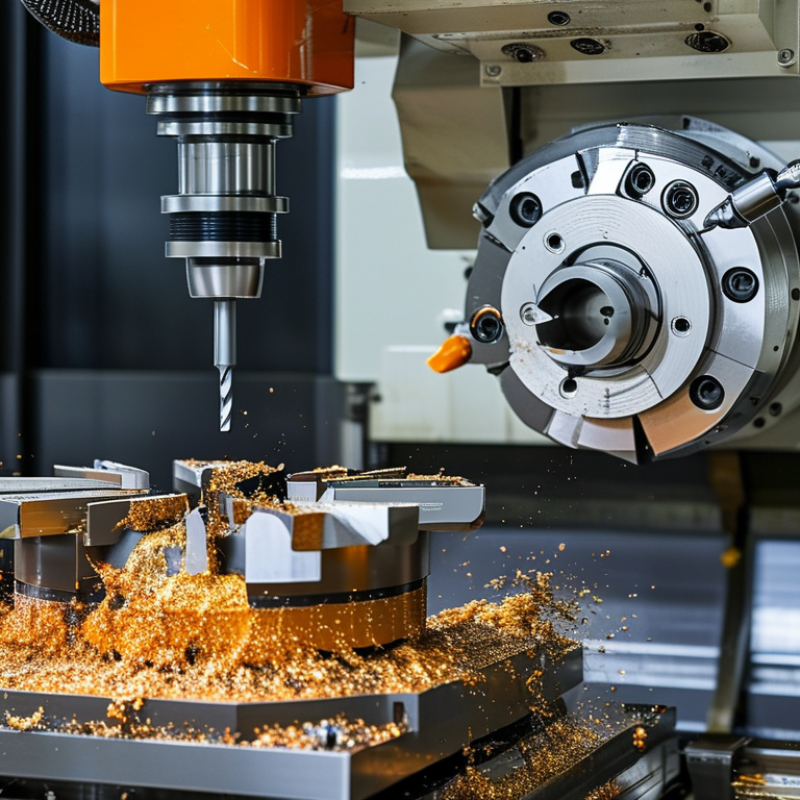
A turn-mill CNC machine combines turning and milling in one computer-controlled platform. The workpiece rotates like a lathe, while driven tools cut slots, holes, flats, and complex contours. C-axis and Y-axis movement can position tools around the component. Some machines also use sub-spindles and automatic bar feeders.
One setup matters. It can reduce repeated clamping, alignment checks, and transfer time. That matters when producing shafts, valve bodies, connectors, or other parts requiring tight concentricity. In practice, a machinist may load a steel bar, turn its diameter, drill a cross-hole, mill a keyway, and part it off without moving the component. Fewer transfers usually mean fewer opportunities for human error. Errors still happen.
Market data supports this technology’s growing role. Grand View Research valued the global CNC machine market at approximately 83.8 billion US dollars in 2023 and forecast continued expansion through 2030. Meanwhile, MarketsandMarkets identifies multitasking and automated machining as important development directions in advanced machine tools. These reports describe broad CNC markets, not turn-mill units alone, so the figures should not be treated as direct sales data.
Choosing a turn-mill machine requires more than checking spindle speed. Buyers should examine machining diameter, tool capacity, axis travel, motor torque, control stability, chip evacuation, and service response. A compact machine may look efficient, but limited tool clearance can create costly compromises. The specification sheet is only part of the truth.
Key Criteria for Evaluating Chinese Turn-Mill CNC Suppliers
China Best Turn Mill CNC Machine Suppliers?
Key Criteria for Evaluating Chinese Turn-Mill CNC Suppliers
Choosing a Chinese turn-mill CNC supplier requires more than comparing machine prices. Check the supplier’s manufacturing experience, engineering team, and documented quality procedures. A strong supplier should provide traceable material records, calibration reports, and clear acceptance standards. Certifications help, but they do not replace direct evidence.
Request a sample-part trial using your actual material and drawings. Examine turning accuracy, milling alignment, surface finish, tool changes, and cycle stability. Ask for inspection data from several parts, not one perfect sample. Watch the machine running. Listen for spindle vibration, observe chip removal, and inspect coolant flow. Small details often reveal poor preparation.
After-sales support matters just as much. Confirm response times, spare-parts availability, remote diagnostics, installation guidance, and operator training. Review export experience and technical documentation in understandable English. A video call with the production and service teams can expose communication gaps early. Do not judge reliability from a polished showroom alone. One practical weakness may remain hidden. I once underestimated documentation quality, and that mistake slowed commissioning. Suppliers should also explain warranty limits honestly. No machine is flawless. A credible partner discusses risks, maintenance needs, and possible improvements before receiving an order.
Leading Types of Turn-Mill CNC Machine Suppliers in China
China Best Turn Mill CNC Machine Suppliers?
Leading Types of Turn-Mill CNC Machine Suppliers in China
Turn-mill CNC suppliers in China usually fall into several practical categories. Integrated manufacturers design and build the machine, spindle, turret, and control cabinet. They offer stronger process coordination and clearer technical responsibility. Specialized factories focus on high-precision turning, milling, or Swiss-type applications. Their machines may suit medical, automotive, or aerospace components. Engineering integrators combine machines, tooling, bar feeders, and inspection equipment. This option helps buyers create a complete production cell.
Experience matters during supplier selection. I would inspect the assembly area, test finished parts, and review machine accuracy records. Ask whether the supplier can cut your actual material and reproduce your drawing tolerances. A sample test should include surface finish, tool changes, chip control, and cycle time. Request videos, inspection reports, and references from comparable applications. Details matter.
Trading companies can provide convenient communication and sourcing support. However, their technical depth may vary. Confirm who handles installation, training, spare parts, and warranty decisions. A factory with its own applications team usually responds more directly to machining problems. Still, factory ownership does not guarantee perfect service. A polished brochure can hide weak documentation. I once trusted specifications without checking the test conditions; that was a costly oversight. Buyers should compare real cutting results, not only price, travel range, or catalog speed. Ask difficult questions early.
How to Compare Machine Specifications, Quality, and Service
Choosing among China’s best turn mill CNC machine suppliers requires more than comparing spindle speed and price. Check turning diameter, bar capacity, spindle torque, live-tool power, axis travel, and rapid-feed rates. These figures must match your parts, not just look impressive.
For quality, request ISO 230-2 positioning accuracy and repeatability test results. Ask for thermal-compensation records, alignment reports, and sample parts measured with calibrated equipment. The International Federation of Robotics reported 541,302 industrial robot installations worldwide in 2023. This growth increases the value of stable interfaces, reliable controls, and automation readiness.
Service deserves equal attention. Confirm spare-parts availability, remote diagnostics, training hours, response times, and technician coverage in your region. I once focused too heavily on cycle time. The machine later needed better operator training. That mistake was expensive.
Tips: Build a weighted comparison sheet. Give specifications 40%, verified quality 30%, service 20%, and total ownership cost 10%. Request a live cutting test using your material and tooling. Measure surface finish, cycle time, chip control, and dimensional drift.
Read the test report carefully. A fast machine may still deliver inconsistent parts. Also check warranty exclusions and software-update policies. No scorecard is perfect, but documented evidence reduces guesswork. Use current data from ISO standards and the IFR World Robotics 2024 report, rather than unsupported supplier claims.
Steps for Selecting the Right Chinese Turn-Mill CNC Supplier
China Best Turn Mill CNC Machine Suppliers?
Selecting the right Chinese turn-mill CNC supplier starts with your parts, not a catalog. Define material, maximum diameter, spindle speed, milling angles, tolerance, and expected monthly volume. Ask for a sample part made from your actual alloy. A polished showroom part proves little.
Check engineering evidence. Request machine accuracy reports, spindle test results, control-system details, and calibration records. ISO 230-2 testing can help compare positioning accuracy across suppliers. Also inspect their quality process, operator training, and corrective-action records.
According to the International Federation of Robotics’ World Robotics 2024 report, China installed 276,288 industrial robots in 2023, representing 51% of global installations. This suggests strong automation capacity, but automation alone does not guarantee careful machining.
Evaluate the supplier’s production experience with complex turning and milling. Review five-axis interpolation, tool management, bar feeding, chip control, and post-sale response times. Ask whether technicians can support remote diagnosis and provide spare parts quickly.
Compare total ownership cost, not only the quoted machine price. Include installation, training, freight, software, tooling, and downtime risks. A low quotation may hide expensive delays.
A spreadsheet can still mislead. Visit the factory if possible, and watch one machine complete a repeatability test. I would also request references from companies producing similar parts, while accepting that no supplier performs perfectly on every material.
