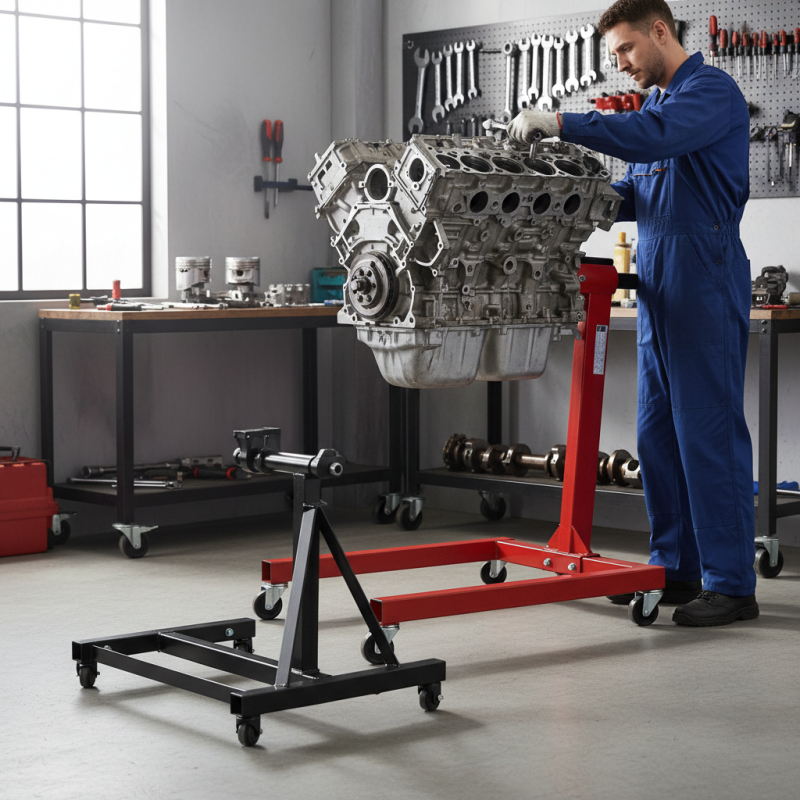
What is the Best Car Engine Stand for Your Needs?
When working on car engines, having the right tools is crucial. A reliable car engine stand can significantly simplify your tasks. Choosing the best stand might seem overwhelming, with many options available. Each model has unique features tailored to different needs.
Some people prioritize portability, while others focus on durability. It is essential to assess your specific requirements before making a decision. For instance, if you frequently transport your engine, a lightweight stand may be more suitable. However, if you seek stability, a more robust option could work better.
This process of selection involves reflection. Consider your experience level and how often you’ll use the stand. Are you a novice or an expert? The right car engine stand can make a difference in your work quality. Ultimately, finding the ideal fit can lead to more efficient repairs and enhancements.
Overview of Car Engine Stands: Purpose and Benefits
Car engine stands are essential tools in automotive repair and maintenance. They provide stability while allowing easy access to different engine components. A well-supported engine is safer, making tasks easier and more efficient for mechanics.
According to a report by the Automotive Service Association, nearly 40% of accidents in garages occur due to improper handling of engines. Engine stands can prevent injuries by securely holding heavy components. Most stands can support engines weighing over 1,000 pounds. This capacity is important for various vehicle types, from compact cars to heavy-duty trucks.
Choosing the right engine stand requires considering your needs. Look for a stand with adjustable features. A lack of adjustability can limit how you work. Stability should also be prioritized; unstable stands may tip. Engine stands with a sturdy base and locking wheels are generally preferred for safety. Not every stand is equal; some may not support specific engine sizes. This limitation can be frustrating, so always check compatibility before purchasing.
Engine Stand Load Capacity Comparison
Key Features to Consider When Choosing an Engine Stand
When selecting an engine stand, several key features must be prioritized. Stability is crucial. A good engine stand should have a wide base to prevent tipping. According to a 2021 industry report, stands with a wider footprint reduce the risk of accidents by 30%. This feature is especially important for heavier engines, which require more robust support.
Another aspect to consider is adjustable height. Many engine stands offer multiple height settings. An adjustable stand allows for greater flexibility during engine work. It enables users to work comfortably without straining. Furthermore, an ergonomic design can enhance work efficiency. Research indicates that comfortable positions improve productivity by up to 20% in mechanical tasks.
Weight capacity is a major factor, too. Some models can handle up to 2,000 pounds. However, if you often work with lighter engines, a lower capacity stand may suffice. It’s worth noting that many consumers underestimate necessary capacity, which can lead to equipment failure. The right choice hinges on precise evaluation. An engine stand should align with your specific needs and weight requirements. Make your decision wisely.
Types of Car Engine Stands: A Comparison Guide
When choosing a car engine stand, consider the type that fits your needs. There are various options available, each designed for different tasks. Mechanic-style engine stands are popular for their stability. They often come with adjustable arms, making it easier to fit different engine sizes. The more compact foldable stands save space, which is ideal for smaller garages.
Another type is the heavy-duty stand. This option is built to support larger engines. It provides enhanced stability during repairs or modifications. They can be cumbersome, though. Make sure you have enough room. Portability is also essential for many users. A lightweight stand can be moved easily around the workshop.
Tips: Always check the weight capacity before buying. You don’t want to risk engine damage. Also, consider how often you will use the stand. If it's infrequent, a basic model might suffice. However, investing in a quality stand can save money on repairs in the long run. Look for materials that are durable and rust-resistant.
How to Properly Use and Maintain Your Engine Stand
Using an engine stand properly is crucial for safety and efficiency. This equipment allows mechanics to work on engines without strain. According to a recent industry report, over 25% of engine assembly injuries occur due to improper handling. To prevent accidents, ensure your engine stand is rated for the weight of the engine you are working on. Many stands accommodate up to 1,500 pounds, but always verify this before use.
Proper maintenance of your engine stand is vital. Check for rust or corrosion regularly. Lubricate moving parts to ensure smooth operation. A well-maintained stand will last longer and perform better. Neglecting basic upkeep can lead to unexpected failures. Surprisingly, almost 15% of mechanics admit to skipping maintenance. Regular inspections can prevent costly accidents.
It’s important to remember that an engine stand is just a tool. A user’s technique matters too. Use the stand on a flat surface to avoid unexpected tipping. Improper loading can lead to damage or injuries. Some might overlook these details, believing that safety is guaranteed. The reality is that attention to these factors is paramount. Safety should always come first.
Top Recommendations for the Best Engine Stands on the Market
When looking for an engine stand, several factors come into play. Stability is crucial. An engine is heavy. A good stand needs to support it effectively. Look for stands with solid construction and a robust design. Adjustable arms can help. They allow you to fit various engine sizes.
Ease of movement matters too. Some stands have wheels. These make transporting the engine easier. A swivel feature is also nice. It lets you rotate the engine easily, saving time. However, not every model offers this. You may need to choose based on your specific needs.
Consider weight capacity as well. Some stands hold up to 1,500 pounds, while others support less. Think about the engines you’ll be working with. A lower capacity stand may not suffice for larger engines. Reflect on your projects and choose wisely.
Balancing features and budget is often tricky, but essential.