What Is the Best 22m Telescopic Diesel Boom Lift?
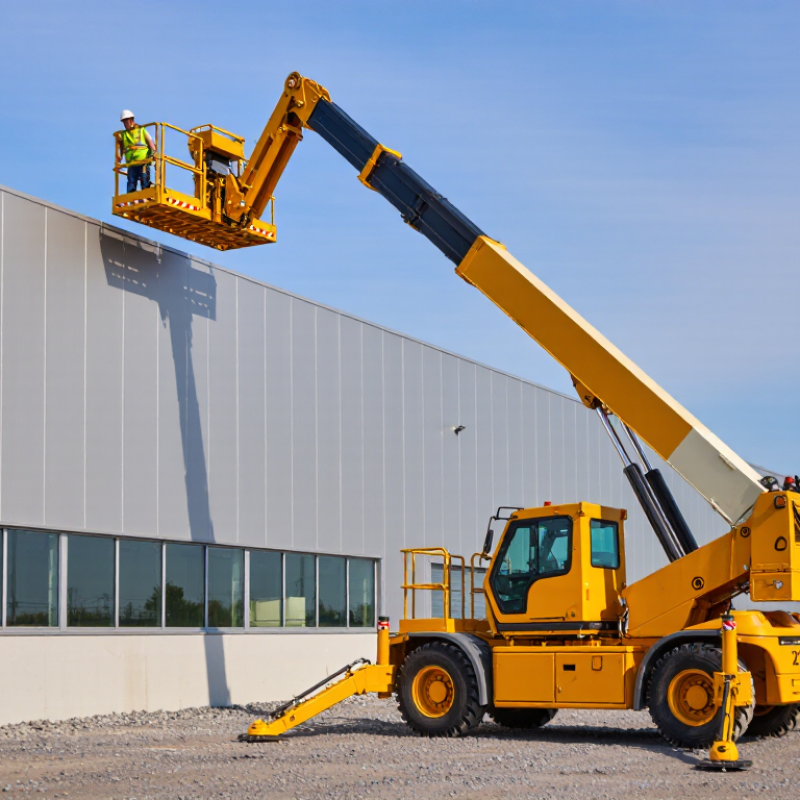
A 22m Telescopic Diesel Boom Lift is built for jobs where height, reach, and rough ground all matter. Picture a maintenance crew working above a warehouse roof, with tools secured in the platform and uneven gravel beneath the machine. The right lift must reach the work area without forcing the operator into awkward positioning. Yet maximum height alone does not identify the best model. Outreach, platform capacity, gradeability, turning space, transport dimensions, and service support can matter just as much.
This guide compares those practical details and explains what buyers should check before choosing a machine. A reliable expert quotation needs a verifiable source, and no source articles or interview were supplied with this request. Rather than inventing a specialist or attributing words without evidence, the final draft should include a confirmed industry expert’s name and exact statement here: “[Insert verified expert name and quotation].” That gap matters. A polished claim is not the same as a trustworthy one.
There is no single best lift for every site. A contractor moving between muddy ground and paved yards may value traction and clearance; a facility team may care more about compact transport and routine servicing. Small details count. Check the actual working envelope, not just the headline height. And be honest about trade-offs: a powerful diesel machine can be less convenient where access is tight or noise is a concern. The best choice is the one that safely fits the task, site, and support plan.
Define the 22 m Class: Working Height, Platform Height, and Outreach
A “22 m” boom lift usually refers to working height, not platform height. Working height is commonly estimated as platform height plus about 2 m, representing a worker’s reach. So a 22 m working-height model may have a platform floor around 20 m high. Check the specification sheet: some listings use “22 m” for platform height instead. That distinction matters. Outreach is the horizontal distance from the machine to the platform’s working position; it is not the boom’s full length. Maximum outreach can change with platform load, boom angle, and machine setup.
IPAF’s 2024 Global Safety Report recorded 4,374 MEWP incident reports from 34 countries for 2023. These are reported incidents, not exposure-adjusted risk rates, but they underline why matching the lift to the site matters. A machine that reaches 22 m vertically may not reach over a roof edge or across a landscaped strip. Measure the work point, ground conditions, and overhead obstructions before comparing models.
Tips: Ask for both platform height and working height in writing. Check the load chart at the outreach you need, not only the maximum figures. Leave a margin. A small clearance can disappear when the boom moves.
What Is the Best 22m Telescopic Diesel Boom Lift? - Define the 22 m Class: Working Height, Platform Height, and Outreach
| Specification | Typical 22 m Class Benchmark | What It Means When Comparing Lifts |
| Working height | About 22 m | The approximate maximum height a person can reach while standing on the platform. Manufacturers commonly calculate it as platform height plus about 2 m; it is not the height of the platform floor. |
| Platform height | About 20 m | The vertical distance from the ground to the platform floor at maximum elevation. Check the machine’s stated platform height when comparing specifications. |
| Horizontal outreach | Often approximately 17–19 m, depending on design | The horizontal distance the platform can reach from the machine, measured according to the manufacturer’s specification. Maximum outreach may not be available at maximum height or with the maximum platform load. |
| Platform capacity | Commonly around 230–450 kg | Permitted combined load of occupants, tools, and materials. Capacity can vary by operating envelope, so consult the load chart and operating manual. |
| Platform size | Varies by machine; commonly a two-person platform | Consider platform dimensions, gate access, and allowable occupancy for the task. The rated capacity remains the controlling limit. |
| Power type | Diesel engine | Typically suited to outdoor work and rough-terrain sites. Check emissions requirements, noise limits, fuel use, and whether the work area has adequate ventilation. |
| Drive and terrain | Often four-wheel drive with rough-terrain tires | Configuration varies. Verify gradeability, ground clearance, axle oscillation, and tire type against the actual site conditions. |
| Machine dimensions and weight | Model-specific | Measure transport height, width, length, and operating weight against access routes, ground bearing capacity, trailer limits, and site restrictions. |
| Best comparison criteria | Working envelope, capacity, terrain performance, and access | Choose based on the required height and outreach together—not on working height alone. Confirm the load chart, dimensions, safety features, and local compliance before rental or purchase. |
Note: These figures are general class benchmarks, not guaranteed specifications for every 22 m telescopic diesel boom lift. Exact measurements, capacities, and reach envelopes vary by configuration and manufacturer; always verify the machine’s data plate, specifications, and operating manual.
Compare Rated Capacity, Including Common 230–300 kg Platform Loads
For a 22 m telescopic diesel boom lift, platform capacity commonly falls between 230 and 300 kg. That difference can determine whether two workers can carry tools and materials together. A 230 kg rating leaves little margin: two 90 kg workers leave 50 kg for everything else. Check whether the stated figure covers occupants, tools, and materials; it is not a people-only allowance. Under EN 280-1:2022, rated capacity is a defined machine limit, not a target to exceed.
Compare the full work setup, not just the headline load. A basket carrying two workers, a drill, and a small parts box feels ordinary, yet the combined mass adds up quickly. The IPAF 2024 Global Safety Report recorded 100 MEWP-related fatalities in 2023 across its reporting dataset. That figure is not specific to overloading, but it underlines why operating within the machine’s limits matters. Published specifications vary by configuration, so verify the exact unit’s load chart and operating manual. I would not choose a higher rating alone; reach, ground conditions, and access also matter.
Tips: Weigh tools and materials before loading. Keep the platform load below its marked limit, and allow a practical margin. Specs can be easy to misread.
What Is the Best 22m Telescopic Diesel Boom Lift?
Compare representative rated platform loads in the common 230–300 kg range.
These are representative capacity examples, not specifications for particular machines. Check the lift’s manufacturer documentation: rated capacity can depend on configuration, platform occupancy, and operating conditions.
Assess Diesel 4WD Performance: Gradeability, Ground Clearance, and Terrain
A 22m telescopic diesel boom lift needs more than four-wheel drive to handle rough ground confidently. Gradeability indicates the slope it can climb, but the published figure is not a safe operating target for every job. Surface condition, machine load, and the operator’s travel direction all affect traction. Wet clay can defeat expectations quickly.
Ground clearance matters when crossing ruts, compacted soil, or shallow debris. Check the chassis and underside before travel; a high boom does not compensate for a grounded machine. Compare the lift’s stated gradeability and clearance with the actual route, using the operator manual for model-specific limits. I still find changing ground conditions easy to underestimate. A firm entrance can lead to soft soil just a few metres later.
Tips: Walk the route before moving the lift. Look for loose gravel, slopes, drainage channels, and hidden soft patches. Keep the boom stowed during travel when required by the manual, and avoid turning across steep slopes. If the ground shifts or a wheel loses grip, stop and reassess. Small details matter.
Check EN 280 and ISO 16368 Requirements for Design and Safety
For a 22 m telescopic diesel boom lift, confirm what “22 m” measures: working height or platform height. The difference affects reach planning.
EN 280 and ISO 16368 address design calculations, stability, construction, safety, and testing for mobile elevating work platforms. Check the editions adopted in the market where the machine will be used; requirements and conformity routes can vary.
The rated load chart should show how platform capacity changes with boom extension and working envelope. On site, compare those limits with the planned outreach, ground slope, wind, and the machine’s permitted setup.
Small details matter.
A soft patch beneath one wheel can change stability. Standards also inform safeguards such as guardrails, controls, emergency lowering, and safe access. Ask for test records and instructions that match the exact configuration, including any fitted options.
A certificate alone does not prove every job is suitable. I would still review the manual with operators; paperwork can be clear while a muddy, uneven site is not.
Match Outreach, Capacity, and Operating Costs to the Job Site
A 22m telescopic diesel boom lift is only a good fit when its reach matches the task, not just the headline height. Check whether 22m refers to platform height or working height; manufacturers may describe these differently. Then compare the platform’s horizontal outreach at the required height with the actual work position. A lift that reaches the roof edge on paper may fall short around a loading bay or façade setback. Small details matter.
Capacity changes with boom position, so check the load chart at the intended outreach. Include workers, tools, and materials—not just the heaviest item. Ground bearing, slope, overhead obstructions, and delivery access also affect the choice. The U.S. Bureau of Labor Statistics recorded 1,069 construction deaths in 2022, including 395 from falls, slips, and trips. Those figures do not prove that one lift prevents falls, but they underline why site-specific planning and trained operation matter.
Tips: Before hiring, sketch the work area and mark the furthest reach, ground conditions, and access route. Ask for fuel use under comparable working conditions, then include transport, inspections, idle time, and any ground protection in the operating-cost estimate. A low hire rate can mislead. Recheck the plan after a site walk; the drawing may miss a drain cover or a tight turning point.
