
Call Us

(905) 670-0113

What Are the 2026 Top Types of Melamine Faced Plywood?

As furniture, cabinetry, and interior construction evolve in 2026, Melamine Faced Plywood is gaining wider attention. Its appeal is practical: a durable decorative surface bonded to a stable plywood core. Yet “top type” does not mean one universal product. The right choice depends on moisture exposure, edge finishing, screw holding, appearance, and expected service life.

Dr. Robert H. Falk, a respected wood-products researcher, once emphasized a principle that remains useful: “The core determines how a panel behaves long after the surface attracts attention.” That idea guides this overview. High-quality birch-core panels may suit premium furniture and visible cabinetry. Hardwood-core options can offer strength with a warmer grain character. MR-grade and water-resistant constructions may perform better in kitchens, bathrooms, and commercial interiors. Fire-retardant versions can support projects with stricter performance requirements, subject to local standards and certification.

Surface details matter too. Matte finishes hide fingerprints. Woodgrain textures add visual depth. Synchronized textures can make printed patterns feel more natural. However, attractive surfaces can distract buyers from weak bonding or uneven core construction. That mistake is common.

The 2026 market will likely reward panels that balance appearance, stability, low emissions, and responsible sourcing. Still, product labels are not perfectly uniform. Specifications should be checked carefully. This guide examines the leading Melamine Faced Plywood types, their practical advantages, and the limitations that designers, manufacturers, and contractors should consider before choosing one. Performance begins beneath the decoration.
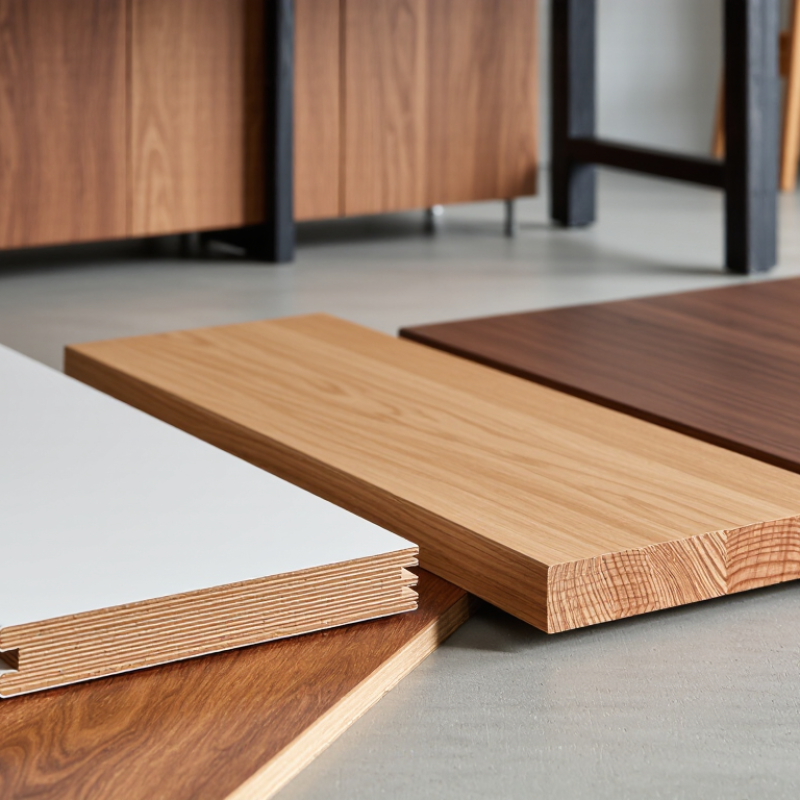
What Are the 2026 Top Types of Melamine Faced Plywood?

What Is Melamine-Faced Plywood?

Melamine-faced plywood is a plywood panel covered with decorative paper saturated in melamine resin. Heat and pressure bond this surface to the wood core. The result is a smooth, uniform face with better resistance to stains, scratches, and everyday moisture than unfinished plywood.

It is not solid melamine. The plywood core provides strength, while the melamine layer provides appearance and easier cleaning. Common types use hardwood, poplar, or birch cores. Their differences appear in weight, screw-holding ability, surface flatness, and exposed edge quality. A cabinet installer should inspect the panel from several angles. Warped surfaces, open core gaps, or weak edge layers can create problems during cutting.

Finish options include matte, wood-grain, textured, and high-gloss surfaces. Some panels are designed for ordinary indoor furniture, while others offer improved moisture resistance. That label still needs careful verification. Moisture-resistant does not mean waterproof. A sink cabinet can fail when water repeatedly reaches an unsealed edge.

Reliable selection depends on more than color. Check thickness tolerance, bonding quality, emission documentation, and the supplier’s test information. Cut a sample if possible. The inside often reveals more than the showroom face. A beautiful surface can hide a mediocre core. That is an easy mistake to make. Clear edge sealing, suitable fasteners, and correct storage also affect service life, sometimes more than the decorative finish.

What Are the 2026 Top Types of Melamine Faced Plywood? - What Is Melamine-Faced Plywood?

Melamine-faced plywood is a plywood panel covered with decorative paper impregnated with melamine resin and bonded under heat and pressure. It combines the structural strength of plywood with a durable, easy-clean decorative surface. The best type depends on the core material, surface finish, moisture exposure, appearance, and intended application.
Comparison of common melamine-faced plywood types and their typical uses in 2026.
Type Typical Core Construction Surface Characteristics Typical Thicknesses Best-Suited Applications Important Considerations
Birch-core melamine plywood Multiple thin birch veneers arranged in cross-laminated layers. Smooth, uniform melamine face with clean edges and consistent machining performance. Commonly 9–24 mm; other thicknesses are available by specification. Premium cabinetry, furniture, shelving, drawers, and visible interior fittings. Usually heavier and more expensive than lighter-core alternatives; the melamine face does not make the panel waterproof.
Poplar-core melamine plywood Lightweight poplar veneers, often combined with face and back veneers for improved appearance. Decorative melamine layer available in solid colors, wood patterns, and other printed designs. Commonly 12–25 mm. Lightweight furniture, wall panels, closet components, retail fixtures, and interior cabinetry. Lower weight improves handling, but softer core veneers may require careful fastening and edge treatment.
Hardwood-core melamine plywood Cross-laminated hardwood veneers selected for strength and screw-holding capacity. Hard, wear-resistant decorative surface with a broad choice of colors and textures. Commonly 12–25 mm. High-use cabinets, work surfaces, shopfitting, storage systems, and commercial interiors. Strong and durable, but its higher density can increase panel weight and machining requirements.
Combi-core melamine plywood A mixed veneer construction combining different wood species or core layers to balance cost, weight, and stability. Consistent melamine face and back with a plywood edge that can be banded or exposed according to the design. Commonly 12–25 mm. General cabinetry, office furniture, shelving, partitions, and interior fit-outs. Performance varies by veneer arrangement and adhesive system, so the technical datasheet should be checked before selection.
Moisture-resistant melamine plywood Plywood manufactured with a moisture-resistant adhesive system and a melamine decorative surface. Non-porous, easy-clean face that helps resist everyday spills and surface staining. Commonly 12–25 mm. Kitchens, bathrooms, utility rooms, laundry areas, and other protected interior spaces. Moisture resistance is not the same as waterproofing; all cut edges, joints, and penetrations should be sealed where necessary.
Fire-retardant melamine plywood Plywood core and surface system tested to a specified reaction-to-fire or flame-spread requirement. Decorative melamine finish designed to maintain the required tested panel system. Commonly 12–25 mm. Public interiors, corridors, transportation interiors, commercial spaces, and projects with fire-performance specifications. Fire performance applies only to the tested construction and installation; verify the required standard and certificate for the project location.
Matte or super-matte melamine plywood Any suitable plywood core with a low-sheen melamine decorative layer. Soft visual appearance with reduced glare and a modern, understated finish. Commonly 9–25 mm. Contemporary kitchens, wardrobes, office furniture, wall cladding, and minimalist interiors. Low sheen can reduce visible reflections, but cleaning and scratch resistance depend on the specific surface formulation.
Woodgrain or embossed melamine plywood Any suitable plywood core faced with printed melamine paper and a registered or non-registered texture. Wood-look print combined with a textured finish that can visually imitate natural grain. Commonly 12–25 mm. Residential furniture, cabinetry, feature walls, shelving, and commercial display units. Texture improves visual depth but may require more careful cleaning than a smooth finish.
Selection note: Before purchasing, confirm the panel’s plywood grade, thickness tolerance, formaldehyde-emission classification, moisture rating, fire-test classification, surface wear performance, and applicable regional standards. Melamine-faced plywood is generally intended for interior use unless the complete panel system is specifically rated for a more demanding environment.

How Are the Main 2026 Types Classified?

Melamine faced plywood is classified mainly by its core, surface, performance, and intended use. The core may be poplar, birch, hardwood, or a mixed veneer structure. Each option changes weight, screw holding, stiffness, and price. A cabinet panel needs different qualities from a workshop bench.

Surface classification usually considers melamine paper, texture, color, and gloss level. Smooth faces are easy to wipe, while textured faces can disguise small scratches and fingerprints. Common performance groups include standard interior grade, moisture-resistant grade, and fire-retardant grade. These labels require careful checking. A moisture-resistant panel is not automatically waterproof.

Thickness and panel size also influence classification. Thin sheets suit doors and drawer sides. Thicker sheets provide better rigidity for shelving and partitions. Edge quality matters too. Cleanly layered edges reduce chipping during cutting, especially around screw holes. In professional purchasing, I check the technical sheet, formal test reports, and production date before approval.

The classification is useful, but not perfect. Two panels may share the same label yet perform differently in humid rooms. Actual results depend on sealing, machining, storage, and installation. I have seen a well-rated panel fail after exposed edges absorbed water. That detail is easy to miss. For 2026 selection, buyers should compare the full specification, not only the surface appearance. A bright finish is not proof of stronger construction.

What Are the 2026 Top Types of Melamine Faced Plywood?

The main 2026 types are commonly classified by plywood core material. Thickness availability varies by manufacturer, but the ranges below represent widely used commercial specifications.

How the types are classified: Poplar-core panels are lightweight and economical; birch-core panels provide higher strength and a more uniform structure; hardwood-core panels offer strong load-bearing performance; and combi-core panels balance weight, stability, and cost by combining different wood species.

What Are the Top Core and Surface Combinations?

In 2026, the strongest melamine faced plywood combinations match the core with the project’s real demands. Birch plywood with a matte melamine surface suits cabinets, shelving, and office furniture. Its dense layers hold screws well and keep edges stable during machining. The surface resists everyday stains, but it still needs protected edges.

Poplar core with a light woodgrain surface offers lower weight and easier handling. It works well for wardrobe doors, wall panels, and movable furniture.

Eucalyptus or mixed hardwood cores provide greater strength for larger shelves and frequent-use fixtures. Pairing them with a textured surface can hide small marks better than a high-gloss finish. That detail matters in busy homes.

Surface choice should not be treated as decoration alone. Matte finishes reduce glare under ceiling lights, while embossed grains improve touch and visual depth. Solid colors make modern interiors look cleaner, though dust may show quickly on darker tones. A melamine face is moisture-resistant, not waterproof. Bathroom or kitchen applications still require sealed edges and careful joint design.

Experienced fabricators should check panel flatness, bonding quality, screw-holding performance, and formaldehyde emission documentation before ordering. Core color can also vary between production batches. It is easy to overlook. One assumption deserves challenge: the most expensive combination is not always the most reliable. For many projects, a balanced core and correctly specified surface perform better than an impressive finish.

Which Melamine-Faced Plywood Types Suit Specific Applications?

What Are the 2026 Top Types of Melamine Faced Plywood?

Which Melamine-Faced Plywood Types Suit Specific Applications?

Melamine-faced plywood is not one uniform product. Its best type depends on moisture, loading, cleaning frequency, and edge exposure. Interior-grade panels suit wardrobes, shelving, and office partitions. They offer a smooth, scratch-resistant surface and consistent color. For kitchens and utility rooms, moisture-resistant plywood cores are safer. They reduce swelling risks around sinks and damp walls. Still, “moisture-resistant” does not mean waterproof.

A 2024 market assessment by Grand View Research places the global plywood market on a steady growth path through 2030. It also identifies construction and furniture as major demand areas. FAO’s Forest Products Annual Market Review reports continued worldwide importance for wood-based panels. These figures support practical selection, not automatic product upgrades. High-density melamine surfaces work well for retail counters and heavily used desks. Lightweight cores can simplify installation but may hold screws less securely. That trade-off is often underestimated.

Tips: Check the technical sheet for core type, formaldehyde class, surface abrasion rating, and thickness tolerance. For humid areas, seal cut edges with a compatible coating. Use a concealed test panel first. It may reveal color variation, weak screw holding, or edge swelling. Ask for third-party test results, because supplier descriptions can be incomplete. The category is not perfectly standardized. A panel labeled “premium” may still fail in a demanding environment.

How Should Buyers Compare Melamine-Faced Plywood Options?

When comparing 2026 melamine-faced plywood, buyers should look beyond surface color and price.

The visible layer may resemble wood, stone, or a solid shade, but the plywood core determines much of the panel’s performance. Check the number of plies, core gaps, thickness tolerance, and edge quality. A clean edge matters when cabinets or shelving remain partly exposed.

Match the panel type to its working environment. Standard melamine-faced plywood suits dry rooms and everyday furniture. Moisture-resistant versions are more suitable for kitchens, laundry areas, and changing indoor humidity. Fire-retardant panels may support specific commercial requirements, but buyers should verify current test reports instead of trusting a label. Wet use is different. Even a resistant panel can fail when water reaches an unsealed edge.

Compare the overlay carefully. A thicker, harder surface usually handles scratches better, while a smoother finish shows fingerprints more clearly. Ask for formaldehyde-emission data, production dates, and independent inspection records. Samples should be checked under strong light and viewed from different angles. Look for bubbles, uneven gloss, chipped corners, and weak bonding. Small defects become obvious after cutting.

A practical test helps.

I often compare two panels after trimming their edges. One may look excellent in the showroom but reveal loose layers during machining. That experience changed my buying method. I now request samples, review tolerances, and confirm whether the stated performance applies to the finished panel, not only the raw plywood. The cheapest option can become expensive after warped doors, visible seams, or repeated replacements.